From orientation to delivery
Buyer's Guide Natural Insulation
Everything you want to know before choosing natural insulation - clear and honest.
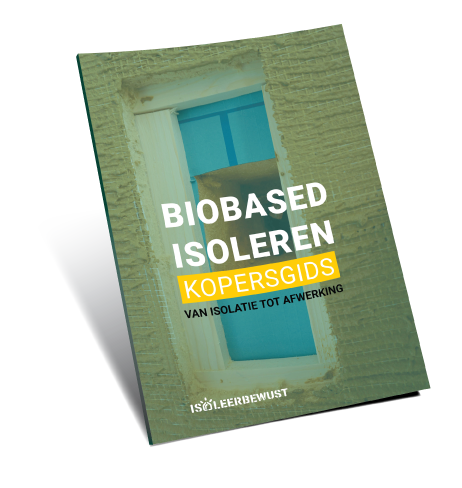
Now also as physical book
Read at your own pace - without a screen
130+ pages with all details, comparisons and practical examples. Take it to the couch, kitchen table or building site - and make the right insulation choice with peace of mind.
- Tangible reference work for at home
- All materials, methods and pitfalls
- Including subsidy checklist & price ranges
Shipped within 2 working days · 14-day return
The Natural Insulation Experience
Table of Contents
Materials & Choice
What exactly is natural insulation?
Natural insulation uses renewable, natural raw materials such as straw, hemp, wood fibre, cellulose, sheep's wool, grass fibre and cork. These materials have been used in construction for centuries - long before synthetic insulation existed.
The difference with synthetic insulation (like PIR, EPS, PUR) is not just the raw material, but especially how it behaves in your home: natural materials are vapour-open, buffer moisture and heat, and contribute to a healthier indoor climate.
Natural insulation is not a niche. It is the original way of insulating - now optimised with modern techniques.
Which materials are there and what are the differences?
The most commonly used natural insulation materials are:
- Straw - Excellent insulation value (λ ≈ 0.045), fully circular, ideal for roof and façade insulation.
- Hemp - Strong fibre, mould-resistant, good moisture buffering. Suitable for walls and roofs.
- Wood fibre - High density provides excellent heat buffering (phase shift). Popular for summer comfort.
- Cellulose - Made from recycled paper, blown-in, very cost-effective. Ideal for roofs, floors and stud walls (not suitable for cavity walls).
- Sheep's wool - Naturally moisture-buffering, purifies indoor air of formaldehyde, luxurious insulation feel.
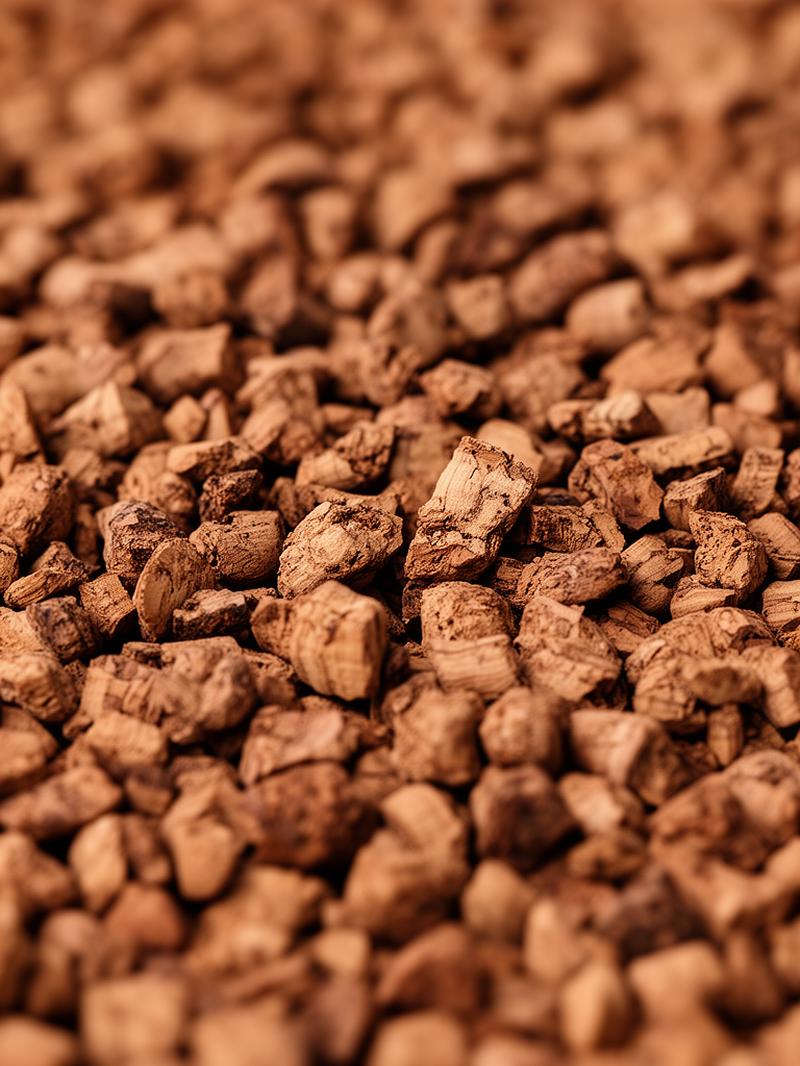
- Cork - Waterproof, vibration-dampening, ideal for floors and façades. Very durable.
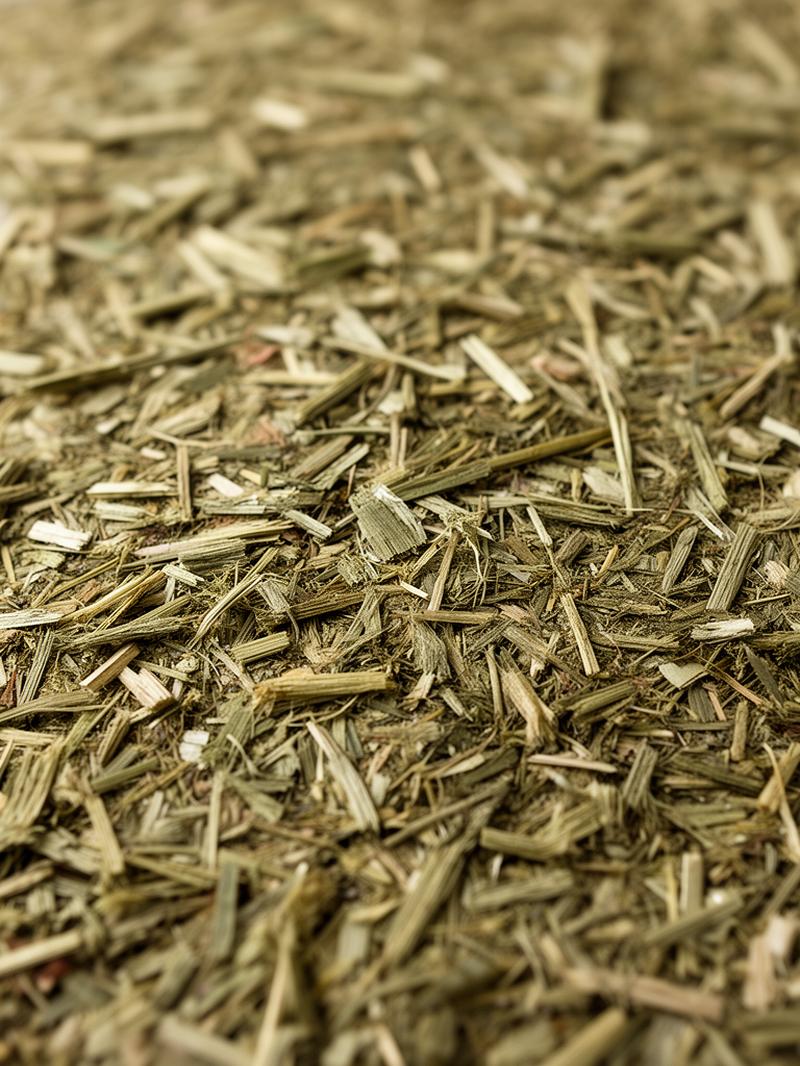
- Grass fibre - New, circular material from residual grass. Comparable to wood fibre.
Each material has its own strengths. The choice depends on your building component, budget, housing type and climate requirements.
What does vapour-open mean and why is it important?
A vapour-open construction allows moisture (water vapour) to migrate through the structure, instead of trapping it. This is how buildings worked for centuries - and it is building-physically logical.
Advantages of vapour-open insulation:
- The structure can dry after moisture exposure
- Less risk of mould and condensation
- Better indoor climate and humidity levels
- More forgiving of installation errors
Synthetic insulation is often vapour-tight: it traps moisture. This only works if installation is 100% perfect - and in practice, that is rarely the case.
How does natural insulation compare to PIR, EPS and PUR?
| Property | Natural | Synthetic (PIR/EPS) |
|---|---|---|
| Vapour-open | Yes ✓ | No ✗ |
| Heat buffering | High | Low |
| Moisture buffering | Yes ✓ | No ✗ |
| Circular | Yes ✓ | No ✗ |
| Rc value | Good | Higher per cm |
| Health | No harmful substances | Potentially harmful emissions |
| Price | Slightly higher | Slightly lower |
Natural insulation is not necessarily "better" in every category - but it is more forgiving, healthier and more future-proof.
Costs & Subsidies
What does natural insulation cost?
Prices vary by building component, material and housing type. The following indications include material and labour costs:
Roof insulation
€ 60 – 110 /m²
Depending on structure and material
Façade insulation
€ 55 – 100 /m²
External or internal façade
Floor insulation
€ 35 – 75 /m²
Crawl space or top side
Natural insulation is on average 10–20% more expensive than synthetic, but you get a healthier, vapour-open and more comfortable home in return. Moreover, attractive subsidies are available.
Which subsidies are available?
Several subsidies make natural insulation even more affordable:
- ISDE subsidy - Investment Subsidy for Sustainable Energy. Depending on surface area and Rc value: on average €800 – €3,500 per home.
- Biobased bonus (RVO) - Choose natural insulation? You receive an extra bonus on top of the standard ISDE subsidy. This makes natural insulation financially even more attractive.
- Municipal subsidies - Many municipalities offer their own insulation subsidies, often stackable with ISDE. Some municipalities provide an additional surcharge for natural materials, making the total subsidy very attractive.
- National Heat Fund - Energy-saving loan with 0% interest for lower incomes.
By combining ISDE + biobased bonus + municipal subsidy, natural insulation can be just as affordable or even cheaper than synthetic insulation. Isoleerbewust helps you with the complete subsidy application - from calculation to submission.
How quickly will I recoup my investment?
The payback period depends on your current situation, energy consumption and chosen insulation. Average guidelines:
- Roof insulation: 5 – 8 years
- Façade insulation: 6 – 10 years
- Floor insulation: 4 – 7 years
With subsidy this is often 2–3 years shorter. Additionally, your property value increases and your energy label improves - often by 1 to 2 steps.
When do I pay for my insulation project?
Blow-in projects under €5,000 ex VAT
After signing the quote
Down payment upon agreement
After project completion
Final invoice after delivery
Projects over €5,000 ex VAT
For larger projects we work with payment terms, linked to project progress.
⚡ Execution always takes priority
Execution phases always take priority over payment terms. We never stop work due to a term - the project continues.
All payment agreements are clearly documented in your quote. No surprises, no fine print.
What is not included in the price indication?
We strive for a complete and transparent quote. However, there are activities that are not included as standard. We believe in transparency and want you to be fully informed.
Execution & Process
How does the insulation process work at Isoleerbewust?
Our process is transparent and personal. This is how we work:
Online scan
Fill in your home details and get an instant price indication.
Home inspection
A specialist visits to assess and measure your home.
Advice & quote
You receive clear advice with material choice, construction and price.
Planning
We schedule the work at a time that suits you.
Execution
Our team carries out the insulation - neat, fast and skilled.
Delivery & aftercare
Inspection, explanation and help with subsidy applications.

How long does an insulation project take?
The execution duration depends on the building component and the size of your home:
Floor insulation
1 day
Minimal disruption, often without moving furniture
Roof insulation
2–4 days
Interior side, including finishing and vapour barrier
Façade insulation
3–7 days
Exterior, including scaffolding and finishing
From contact to execution
On average 4–8 weeks, depending on planning and material availability.
How do you prepare for the home inspection?
Allow enough time
A home inspection takes 45–90 minutes, depending on the size and complexity of your home.
Make sure all residents are present
So we can discuss all wishes and answer questions directly - no surprises afterwards.
Make crawl space and attic accessible
Our specialist wants to assess the existing structure. The better the access, the more accurate the advice.
Gather your energy bill
With your current energy consumption we can calculate your savings and payback period much more precisely.
How to get the most out of your home inspection?
Good preparation ensures more accurate advice, a sharper quote and a smoother project.
Schedule your home inspectionIs my home suitable for natural insulation?
In the vast majority of cases: yes. Natural insulation is suitable for:
Detached
Semi-detached
Terraced
Apartment
Suitable for
- • All building periods, including listed buildings
- • Renovation and new build
- • Roof, façade and floor
Not suitable for
- • Cavity walls (use cavity wall insulation instead)
- • Damp areas and below ground level
Special situations
For listed buildings or special structures we explore the possibilities together.
Take the roadmap quizWhat can you expect during an insulation project?
What are your responsibilities during the project?
Back to table of contentsClear the space
Make sure the work area is accessible. Move furniture and belongings in the attic or crawl space so our specialists can start right away.
Parking for the van
Our team arrives with a company van. Provide a parking spot as close to the home as possible for quick material transport.
Electricity and water available
We need access to a power outlet and sometimes a water point for machines and tools. We discuss this in advance.
Pets and children
During the work there may be dust and noise. Keep pets and small children at a safe distance from the work area.
Protect fragile items
With roof or floor insulation, light vibrations or dust may occur. Protect breakable items near the work area.
Stay reachable
Sometimes we have a quick question or want to show you something. It's helpful if you're reachable by phone or via the online dossier.
Your personal online dossier
Every Isoleerbewust client receives a personal online dossier. Here you follow the entire process of your insulation project:
Photos & progress
Follow your project's progress with photos - from the starting situation to the final result.
Checklist & steps
See exactly which steps are completed and what's still needed for your subsidy application.
Direct contact
Ask questions, share documents and communicate directly with our team via your dossier.
Subsidy? We help you with it
Our dossier guides you step by step through the complete ISDE subsidy application - from required documents to submission at RVO.
Interior insulation of exterior walls
Customer question
Which natural materials are suitable for interior wall insulation?
Back to table of contentsInterior insulation of solid exterior walls is a common solution for homes where cavity wall insulation is not possible. Here's everything you need to know.
Blown-in variants
Blown-in insulation prices are close to glass wool - not yet cheaper, but the difference is small.
- Cellulose (blown-in) - Blown-in between studs, cost-effective and excellent gap-filling. Good thermal and acoustic performance.
- Wood fibre (blown-in) - Blown-in wood fibre between studs. Good moisture buffering and heat storage, seamless insulation.
- Straw (blown-in) - Blown-in straw between studs. Affordable, vapour-open and good thermal performance.
- Cardboard insulation (blown-in) - Made from recycled cardboard, vapour-open and good moisture buffering. Sustainable and affordable.
Board and mat variants
- Wood fibre boards (semi-hard) - Excellent moisture buffering and heat storage (phase shift). Can be bonded directly or used in stud wall construction. Ideal for solid walls due to vapour-open properties.
- Flax insulation - Flexible mats, vapour-open and easy to install in a stud wall construction.
- Hemp insulation - Mould-resistant, good moisture buffering. Suitable for stud walls.
Block and cast variants
- Lime-hemp (calcarite) - Available as cast (wet or dry) or as building blocks. Breathable, seamless and excellent moisture regulation. Cast directly against the wall or built up block by block.
Wall thickness determines the approach
- Single-leaf wall (≥ 1 stone / ≥ 21 cm) or thicker - Insulation materials can be placed directly against the wall. Ideally with a lime base coat (vertinlaag) of 1–1.5 cm for moisture buffering. Condition: no existing moisture problems - otherwise resolve those first.
- Half-stone wall (½ stone / ~10 cm) - A small air gap (spouwtje) is required between the façade and the bio-based insulation, combined with a vapour-open membrane. This prevents moisture from the thin wall from reaching the insulation.
Technical application (system construction)
There are two main methods for interior wall insulation:
1. Stud wall construction
SLS wood studs (38×120mm or other sizes) placed 2 cm from the wall → lime plaster base layer (1–1.5 cm) for moisture buffering → insulation between studs → vapour-variable membrane → finishing board (gypsum/fermacell). Thickness varies by insulation material and desired Rc-value.
2. Direct bonding
Lime-hemp (cast or blocks) or semi-hard wood fibre boards applied directly on the masonry → no frame needed → finished with lime plaster or clay plaster.
Preparation of the existing wall
- Moisture check - The wall must be dry. Rising damp or penetrating moisture must be resolved first.
- Lime plaster base layer - Best practice: apply a 1–1.5 cm lime plaster base layer on single brick walls. This buffers moisture and creates a flat surface. Then place SLS studs 2 cm from the wall.
- Half-brick walls - For half-brick walls, a cavity must be maintained between the façade and the bio-based insulation, with a vapour-open foil in between. This allows moisture to escape.
- Flatness - Uneven walls may need to be levelled or addressed with adjustable studs.
- Vapour openness - Never apply a vapour-tight layer on the cold side (wall side). The construction must be able to dry out.
- Joints - Check joints for cracks or open spots. Repair if necessary before insulating.
Moisture and vapour regulation
Interior insulation shifts the dew point into the wall. This makes moisture management critical:
- Use a vapour-variable (intelligent) membrane on the warm side - not a fully sealed vapour barrier.
- The entire construction must be vapour-open from inside to outside (decreasing vapour resistance).
- Natural materials like wood fibre and lime-hemp can buffer moisture, which provides extra safety margin.
- Good ventilation in the room is essential - always assess the ventilation situation.
- Warning: exterior wall becomes colder - The more you insulate on the interior, the colder the exterior wall becomes. This increases the risk of moisture and frost damage on the outside. Always ensure the wall can dry properly and consider the exterior condition.
Indicative costs
€ 80 – € 150
per m² incl. labour and finishing
Depending on material choice, insulation thickness and finishing method. Lime-hemp is generally at the higher end.
Finishing options
- • Lime plaster - vapour-open, natural look
- • Clay plaster - excellent moisture regulation, warm appearance
- • Gypsum plaster - smooth finish, paintable
- • Fermacell boards - robust, directly paintable or tileable
Attention points & risks
- Thermal bridges - Pay attention to window reveals, floor connections and corners. These must be insulated as well.
- Loss of living space - Interior insulation reduces room size by 6–10 cm per wall. Consider this for smaller rooms.
- Relocation of electrical points - Sockets and switches in the insulated wall need to be relocated - arrange this with an electrician.
- Window sills and reveals - These must be extended or adapted when the wall becomes thicker.
- Listed buildings - Interior insulation is often the only option, but may require permits. Always check with your municipality.
Comfort & Health
How does natural insulation improve my indoor climate?
Natural insulation materials act as a climate buffer in your home:
Heat buffering
8–12 hours
Phase shift keeps heat out in summer - no aircon needed.
Moisture buffering
Stable
Absorbs moisture and releases it gradually for constant humidity.
Healthy
0 emissions
No formaldehyde, isocyanates or microplastics in your indoor air.
The result?
A noticeably more comfortable, healthier and quieter home - all year round.
Does it also insulate against sound?

Yes, and often better than synthetic insulation.
Natural materials have a high density and an open fibre structure that absorbs sound waves.
Best materials for sound dampening
Residents notice the difference immediately: less traffic noise, less wind and less impact sound.
Risks & Myths
Is natural insulation fire-safe?
Yes. All natural insulation materials we use are certified for fire safety according to Dutch and European standards. Most materials achieve Euroclass B-s1,d0 or higher. Some materials, such as certain wood fibre boards, carry fire class E - these form a charred protective layer when exposed to fire, which slows down the spread.
In general, biobased materials have a somewhat lower fire classification than glass wool or rock wool. But that doesn't mean they can't be applied safely. Fire safety is about the entire wall or roof assembly - not just the insulation material itself. With the right combination of cladding, membranes, and fire stops, biobased insulation can be applied perfectly safely.
Safer than you think
Natural materials burn more slowly and produce less toxic smoke than PIR or EPS, which melt and release toxic gases when on fire. Research by Nieman confirms that biobased insulation can be applied fire-safe in practice when the overall construction is designed correctly.
Can it get mouldy or rot?
Yes, but so can any insulation material. If insulation gets soaking wet - for example due to a long-lasting roof leak - mould can develop. That applies to glass wool, rock wool, PIR, and biobased materials equally.
The big difference
Biobased insulation is vapour-open: moisture can escape on its own. With vapour-tight synthetic materials, moisture gets trapped - and that's exactly when mould and rot problems start.
In addition, materials like hemp and sheep's wool naturally contain mould-resistant substances. The key: don't let leaks go on for too long, and ensure good execution. That's what Isoleerbewust stands for.
Does the material settle over time?
This is a persistent myth. With correctly applied insulation, settling is minimal to negligible.
Cellulose blow-in insulation is applied under pressure. Wood fibre boards and straw bales are dimensionally stable.
30+
years of proven performance
We still measure the original Rc values
Does natural insulation attract pests?
No - researched and confirmed by TNO
Commissioned by Building Balance, TNO researched whether natural insulation materials attract more pests than conventional materials. The conclusion is clear: not the material, but the quality of design, construction and maintenance determines the risk of pests.
Pests enter through cracks and openings - regardless of the insulation material. The fibres in natural materials are not digestible for animals. Some animals use insulation as nesting material, but they do this just as readily with glass wool, rock wool or polystyrene.
Additionally, natural insulation materials are treated with mineral salts (such as borax) that make the material extra unattractive. In the 15+ years we've been working with these materials, we've seen no problems with pests in correctly executed constructions.
About Isoleerbewust
Why choose Isoleerbewust?
Isoleerbewust is not an ordinary insulation company. Our priority is the environment and climate - for you that means a healthy and energy-efficient home. We always work with natural insulation materials, unless it truly isn't possible otherwise.
Always natural
We insulate exclusively with natural materials - that is our standard, not an option
In-depth knowledge
The knowledge platform for natural insulation in the Netherlands
Honest advice
Always the best for your situation, not the most expensive
Complete peace of mind
From advice to subsidy application, everything under one roof
Transparent prices
No surprises afterwards
In which area is Isoleerbewust active?
We are active throughout the Netherlands and are continuously expanding our network of brigades.
Noord-Brabant
Zuid-Holland
Utrecht
Gelderland
What guarantee does Isoleerbewust provide?
10 years
Guarantee on material and execution
VLOK
Member of VLOK with disputes committee
WKB
Delivery document upon completion of every project
We are a member of VLOK - including an independent disputes committee - and provide a WKB delivery document for every project. Our materials are certified through various quality marks and systems.
Ready to take the next step?
Take the insulation scan and discover what natural insulation means for your home - including price indication and subsidy options.
Cookies on Isoleerbewust.nl
We use functional cookies to make the website work properly and analytical cookies to understand our traffic. We place no tracking or advertising cookies.
Read our privacy policy for more information.