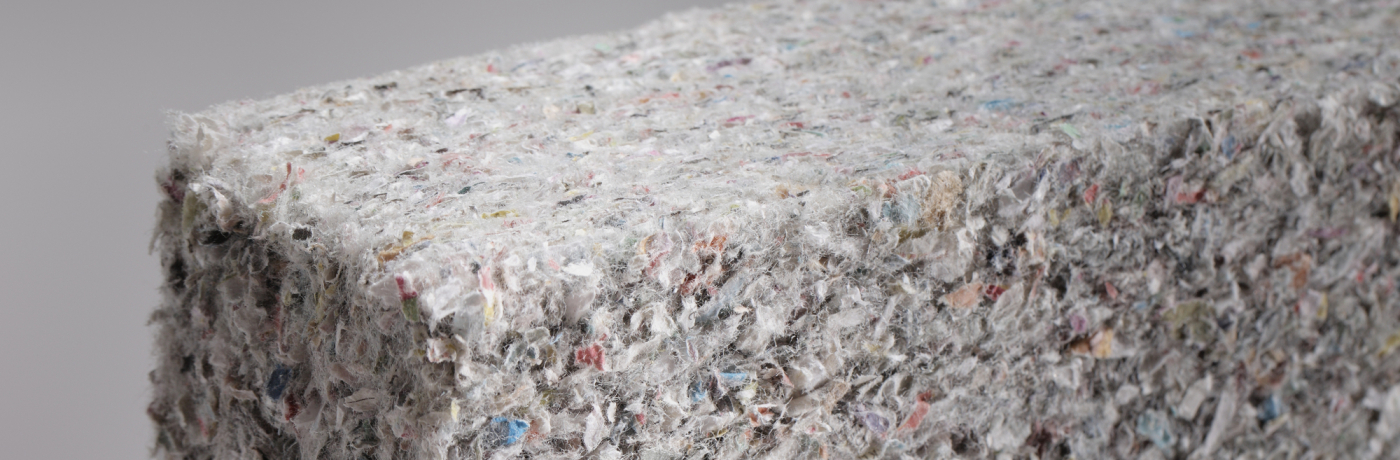
Wood fibre insulation is a relatively new type of insulation material that is becoming increasingly popular due to its sustainability and environmental friendliness. Wood fibre insulation has good thermal insulation value and good sound insulation properties, including its mass. In addition, wood fibre insulation naturally has a moisture-regulating effect. It can absorb moisture and release it back into the environment, making the indoor climate in the house more pleasant.
Wood fibre insulation has a high heat storage capacity, which ensures that it keeps the heat out for a long time in the summer. In addition, wood fibre insulation is: breathable, easy to process, and not harmful to health.
It is made from natural wood fibres and can be used for both roof insulation, floor insulation
and wall insulation.
Wood fibre insulation is naturally fire-retardant and, in combination with other materials such as clay plaster, can meet the highest fire safety standards.
In this article, we will discuss what wood fibre insulation is, its benefits, and why it is a sustainable option.
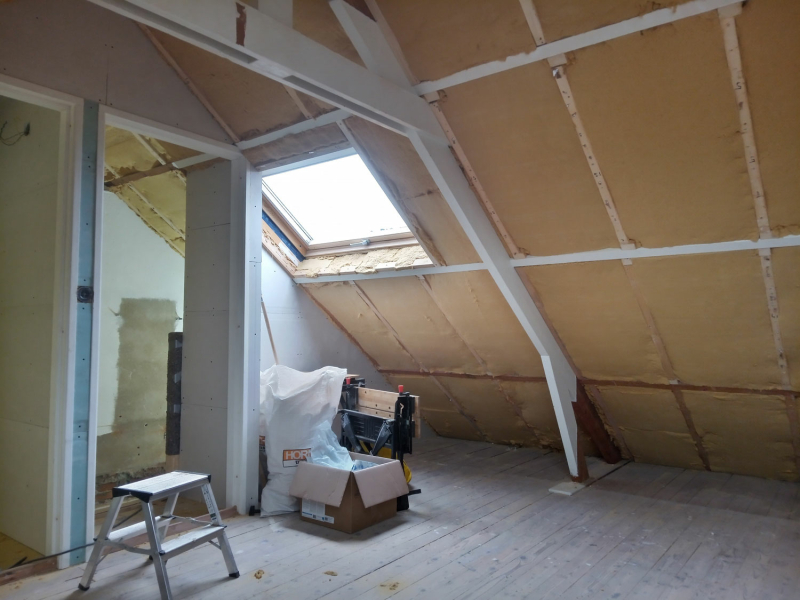
wood fibre insulation applied in a pitched roof
How is wood fibre insulation made?
Wood fibre insulation is made from residual streams from sawmills. The ecological wood fibres come from PEFC and FSC-certified renewable softwood such as pine and spruce from sustainable forestry, including the German Black Forest.
Wood fibre insulation production process
Wood fibre insulation is made from residual streams of untreated spruce, spruce chips, and shavings that are treated in the factory with 160 °C steam and then pressed to obtain wood fibres. The wood pulp thus created is then mixed with a natural binder, water-repellent substance, and fire-retardant additives. The fibres are then compressed and dried in an oven. Finally, the sheets are cut to size. The residual material is reused in the production process.
Wood fibre insulation is produced by Pavatex, Gutex, Steico, and Hunton, among others. These companies use PEFC and FSC-certified wood.
Wood fibre insulation advantages
natural material
wood sourced from sustainably managed forests in Germany, France, and Norway
CO2 positive due to plant-based CO2 absorption
keeps heat out up to 3 times longer in summer than glass wool and PIR
Good insulation value (0.036 - 0.045 W/mK)
contributes to optimal living comfort by absorbing moisture, being breathable, and having sound-insulating properties
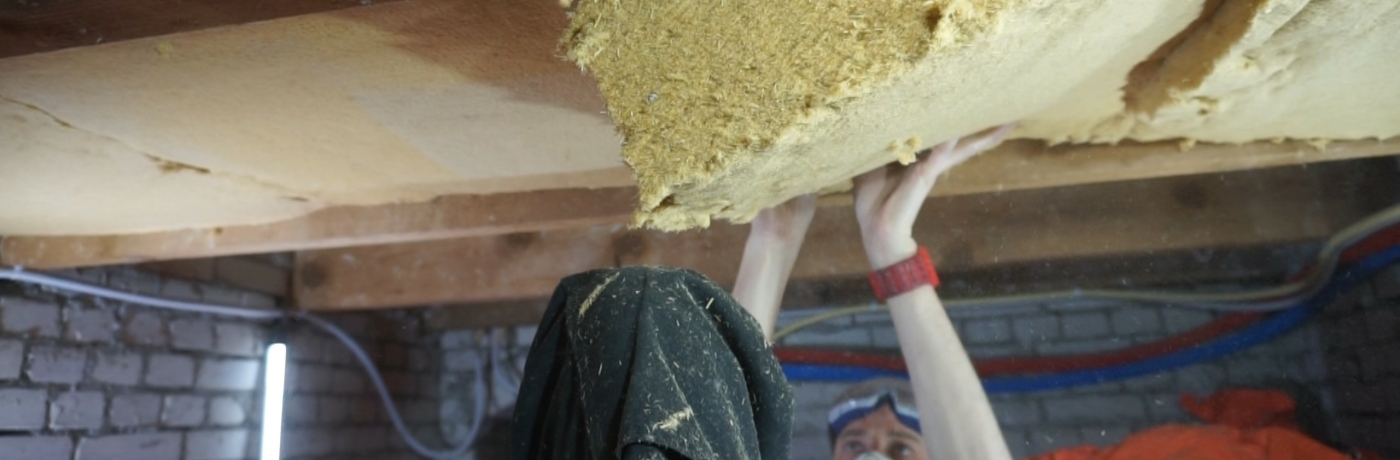
easy to clamp between roof and floor joists
Good sound insulation
easy to process
various brands and types available on the Dutch market
Wood fibre insulation disadvantages
Some variants contain textile fibres and ammonium polyphosphate as fire protection and fungicide.
Polyolefin (plastic) is used as a binder in flexible wood fibre mats.
A lot of dust is released during processing and installation, especially overhead in floors; this requires wearing safety glasses and a face mask.
Natural material from sustainably managed European forests
Wood fibre insulation is made from residual wood chips from sawmills in Europe. The wood sawn here comes from conifers from sustainably managed forests in, among other places, the Black Forest and Norway. Sustainably managed forests mean there is no clear-cutting. The forest is selectively thinned. Consideration is given to the flora and fauna of forests, the soil, and water management. In a sustainably managed forest, carbon storage in the forest is maintained, and biodiversity is preserved.
CO2 positive
These plant-based insulation materials grow as trees by converting CO2 from the air into biomass growth and oxygen. Wood fibre insulation thus acts as a carbon sink, meaning it absorbs and stores carbon dioxide from the atmosphere. This makes it an excellent choice for those who want to reduce their ecological footprint and contribute to the fight against climate change.
The CO2 absorption during the natural growth process is many times higher than the CO2 emissions from sawing and transporting. Glass wool is also made from a natural material. Sand is used to make glass, and glass is used to make glass wool. However, high temperatures are required to turn it into