Do you need insulation in your house and are you looking for more information about a more traditional material like cellulose?
Cellulose insulation is the oldest form of domestic insulation and is still found in homes today. Old newspapers and cellulose insulation are still regularly found when renovating monuments and old buildings. It can be a loose-fill or blown-in insulation and can be used in both new and existing homes.
Cellulose Insulation: Advantages and Disadvantages
All insulation materials have some good and less good aspects. This article is structured to teach you everything you need to know about cellulose insulation based on its advantages and disadvantages.
Advantages of Cellulose Insulation
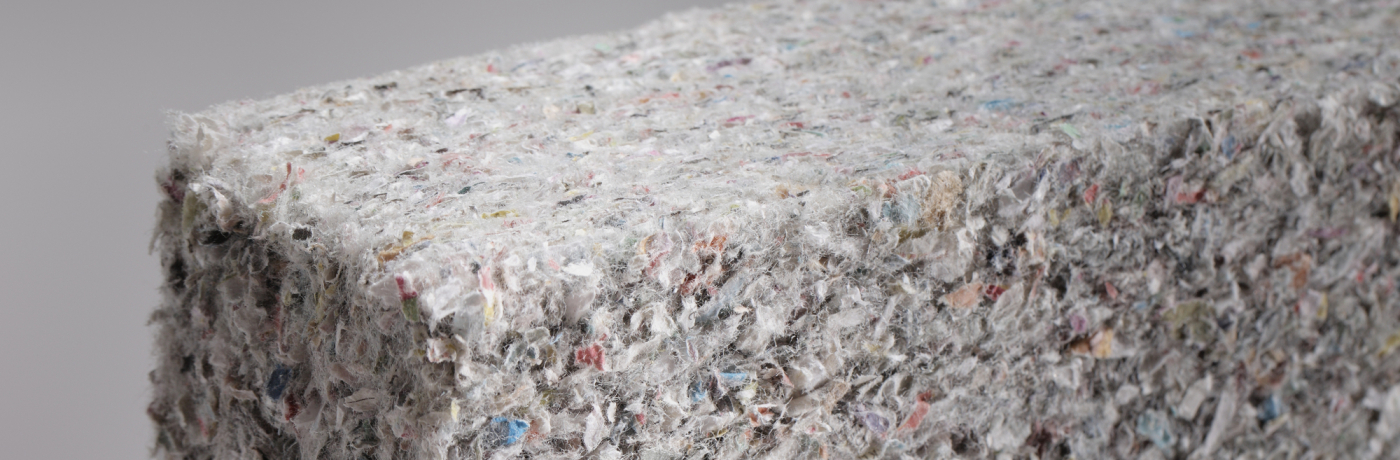
Cellulose insulation is made from recycled newspaper
Cellulose does not use greenhouse gases as a blowing agent
Easy to blow into hollow structures; with the right pressure and experience, it can reach all corners
Cellulose insulation is very inexpensive
Cellulose insulation has a high heat storage capacity
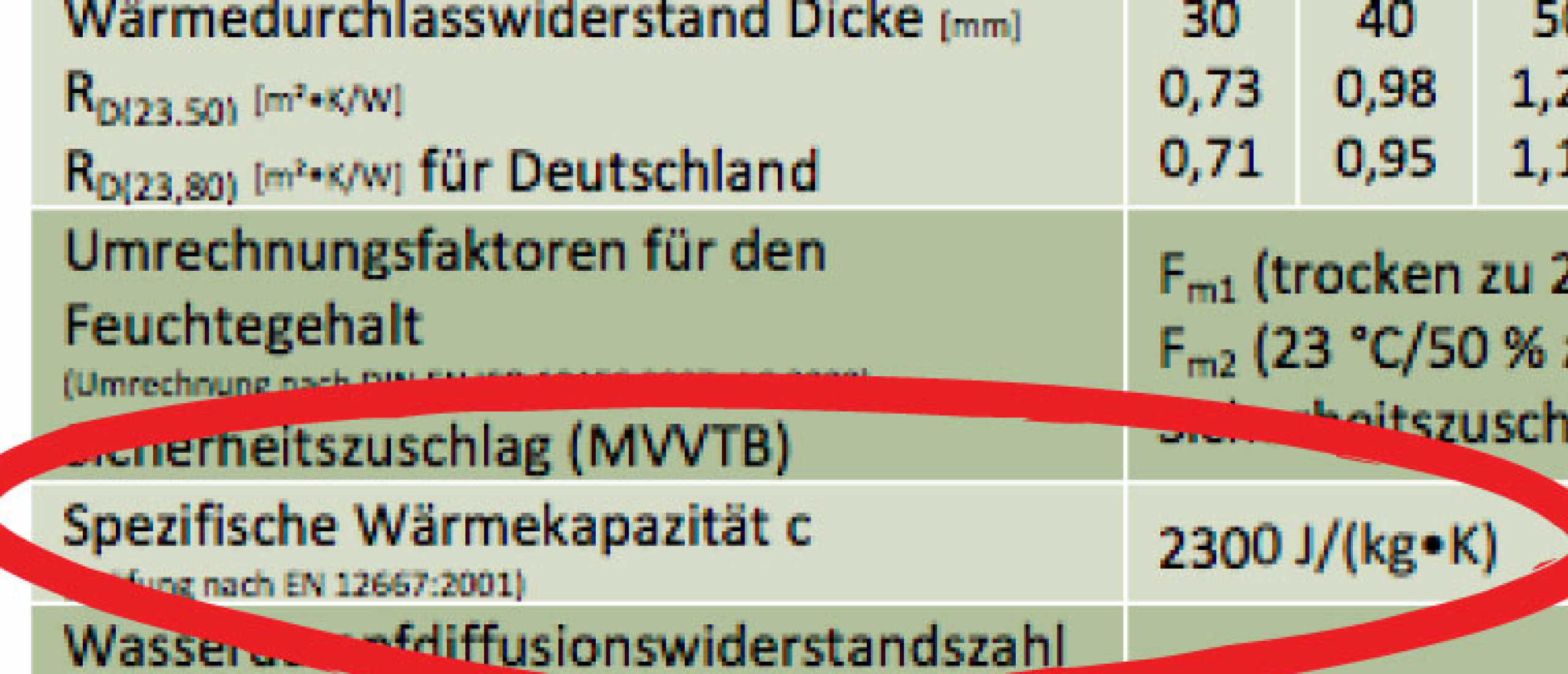
The higher the heat storage capacity (also known as thermal capacity), the greater the material's ability to store heat. And thus, the cooler the house stays during hot summers because not all heat... thereby keeping heat out for a very long time
Dense-packed cellulose of 10 cm has a European Fire Class standard of B (applied)
Boric acid, borax, or aluminium sulphate used in cellulose insulation provide resistance against mould, pests, and fire
Disadvantages of Cellulose Insulation
If cellulose insulation is not 'dense-packed' when blown in, the material will settle
Cellulose must be kept dry as it can absorb up to 130% of its own weight in water
Once it gets wet, it takes a long time to dry
After cellulose insulation absorbs water, the chemical fire retardant treatment is destroyed
Cellulose is blown in under considerable pressure, which can cause it to enter your home through gaps
Cellulose cannot be used in damp areas such as cavity walls
There is increasingly less newspaper to recycle; the raw material is becoming scarcer
What is Cellulose Insulation?
Cellulose insulation is a fibre insulation often used as dry blown-in insulation in hollow structures such as floors, (partition) walls, roofs, and internal facades. Various companies produce cellulose insulation, and it is primarily made from recycled newspaper. These small particles form an insulating material that adapts to most spaces without disturbing the structure or finish.
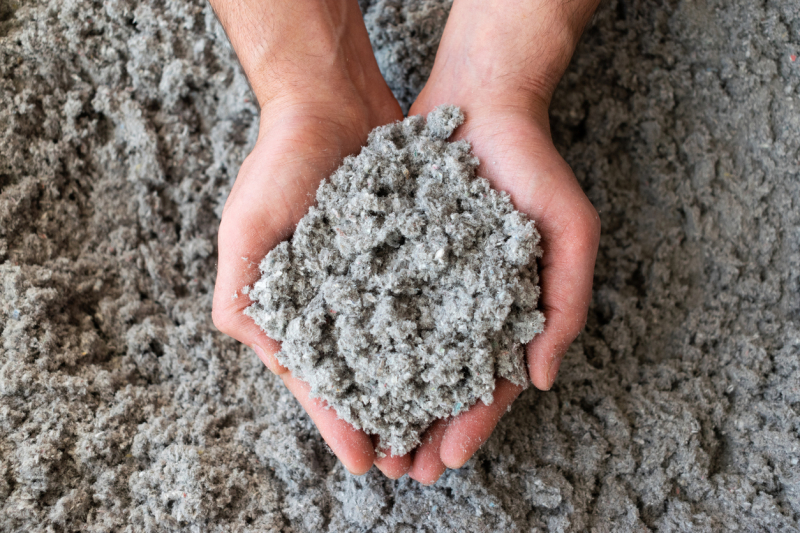
Cellulose is one of the oldest insulation materials, but only became a popular choice in the 1950s when fire retardants were added to the material.
What is Cellulose Insulation Made From?
Modern cellulose insulation is made from 75 to 85 percent shredded recycled paper or recycled denim. Approximately 15 percent additives are included, which act as fire retardants and help against pests. Additives include boric acid, borax, or ammonium sulphate.
How Cellulose Insulation Works
Cellulose insulation can be applied in both existing homes and new builds. Cellulose insulation helps to retain heat and is effective in dampening sound.
Dense-packed cellulose is now more frequently used for post-insulation. The dense filling in hollow structures adds thermal insulation while also providing a certain degree of sound insulation.
It can also be sprayed with added moisture. This mainly happens in North America. Water is added to cellulose and then sprayed onto walls and floors. The material has the same thermal and sound-dampening properties as the dense-packed variant. Wet cellulose is almost always applied in new builds before a finishing board is used.
What is the R-value of Cellulose Insulation?
R-value is the capacity of an insulation material's resistance to heat flow. This essentially means that the higher the R-value, the greater the insulating capacity of the material. The R-value for dense-packed cellulose at 14 centimetres is: 3.8 m² K/W.
Reducing insulation to a single number doesn't tell the whole story, as heat flows in and out through radiation and convection. Heat loss through convection or airflow can account for almost 40 per cent of the total energy loss in a home. This is a problem if you only use the R-value to choose your insulation.
Process of Installing Cellulose Insulation
Cellulose insulation can be applied in two ways.
It can be blown in or applied as insulation mats. In North America, they also spray it wet onto walls.
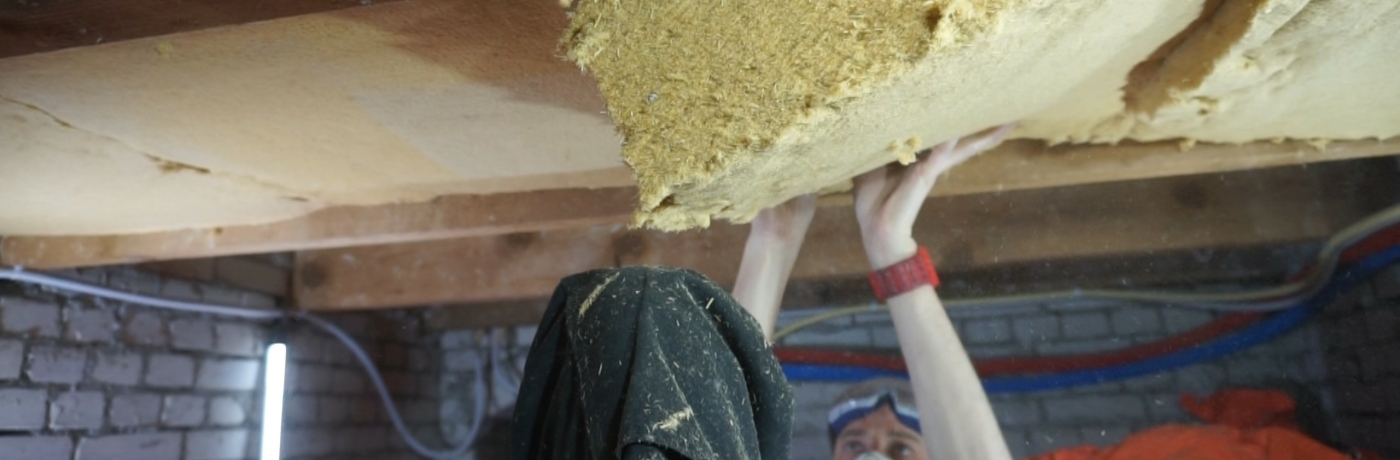
The dry blown-in insulation is applied using a blowing machine. One person feeds the cellulose bales into the machine, and the other operates the hose for blowing it in. An experienced installer can blow in up to 150 m² per day at a thickness of 14 centimetres.
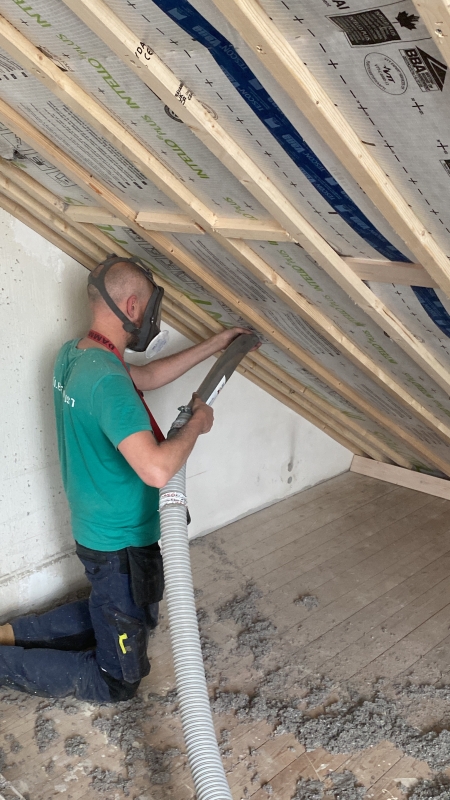
In existing houses, installers remove a strip of exterior cladding at hip height. They then drill a row of 8.5 cm holes – one in each cavity. A special filling tube is then inserted, and the insulation is blown into the hollow space. When the installation is complete, the holes are sealed with a cork plug, and the cladding is replaced.
For new builds, cellulose can either be wet-sprayed or installed dry behind reinforced foil with battens.
How Much Does Cellulose Insulation Cost?
For blowing dry cellulose into hollow structures, you pay an average of €30-50 per m² at a thickness of 14 centimetres (sufficient for subsidy eligibility). If a new hollow structure needs to be created with reinforced foil or a cover plate, factor in additional costs for this.
Choosing the Best Insulation for Your Project
You now have a good understanding of cellulose insulation and whether it will meet your expectations for energy efficiency and comfort in your home.
With this knowledge, you might want to learn more about other insulation materials that better suit your needs, or you might simply want to keep your options open.
The knowledge base on our website has many excellent resources to help you on your journey towards ecological and healthy home insulation.