You may want to 'do good' and save energy. You want to insulate your home with material that is good for the environment, instead of it having to be produced in a factory that emits a lot of CO2.
But someone has to be willing to carry out the work in your home.
Perhaps you even post about it on social media and ask for help. If you're not careful, terms and offers will be flying at you, and you still won't know what and whom to choose.
That's why I wrote this article to help you get started. Read more about the different terminology, such as ecological, biobased insulation, in this article.
Are you looking for biobased insulation and wondering if it is for you?
Whether you are a homeowner or property owner, this article is designed to tell you more about biobased insulation.
🌍 Most people looking for biobased insulation are looking for: an environmentally friendly option, insulation that is good for your health. Many people who delve into biobased insulation want to drastically reduce their ecological footprint.
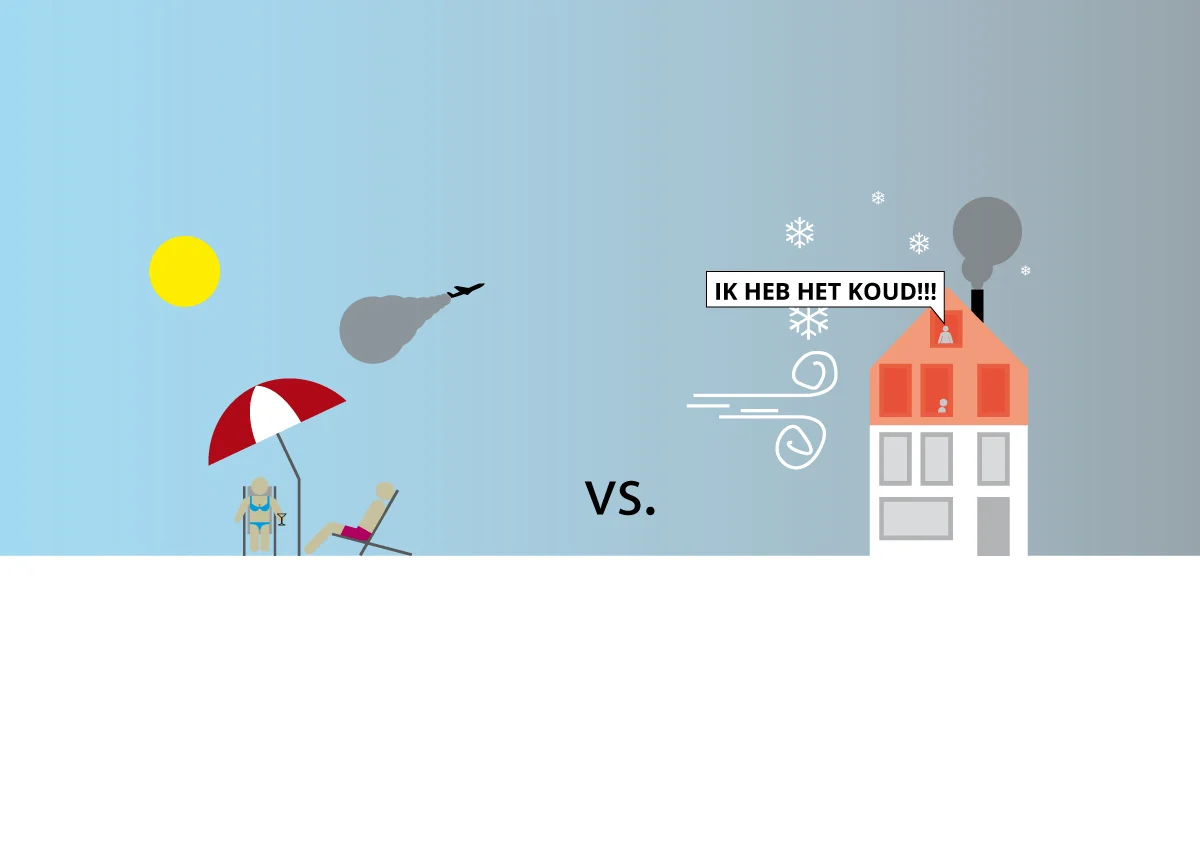
☀ Many people looking for biobased insulation also do so because it keeps the heat out for up to 3 times longer during hot summers than, for example, glass and rock wool.
🫰 Most people who buy biobased insulation realise that it is not the cheapest option and not a budget solution compared to mineral insulation, for example. Although the price of mineral insulation does increase with high gas prices.
Biobased insulation vs. other types of insulation
When comparing biobased insulation with other insulation, there are a number of differences. I will try to mention a few.
When comparing biobased insulation with mineral insulation, the main difference is the cost. The material costs are currently 1.5-2 times higher. Although this difference is becoming smaller due to the high gas consumption required for the production of mineral insulation, combined with high gas prices.
The biggest difference between biobased insulation and other more common insulation such as glass and rock wool, and PIR and PUR, is that biobased insulation keeps heat out for up to 3 times longer. This makes it suitable for both winter and summer insulation.
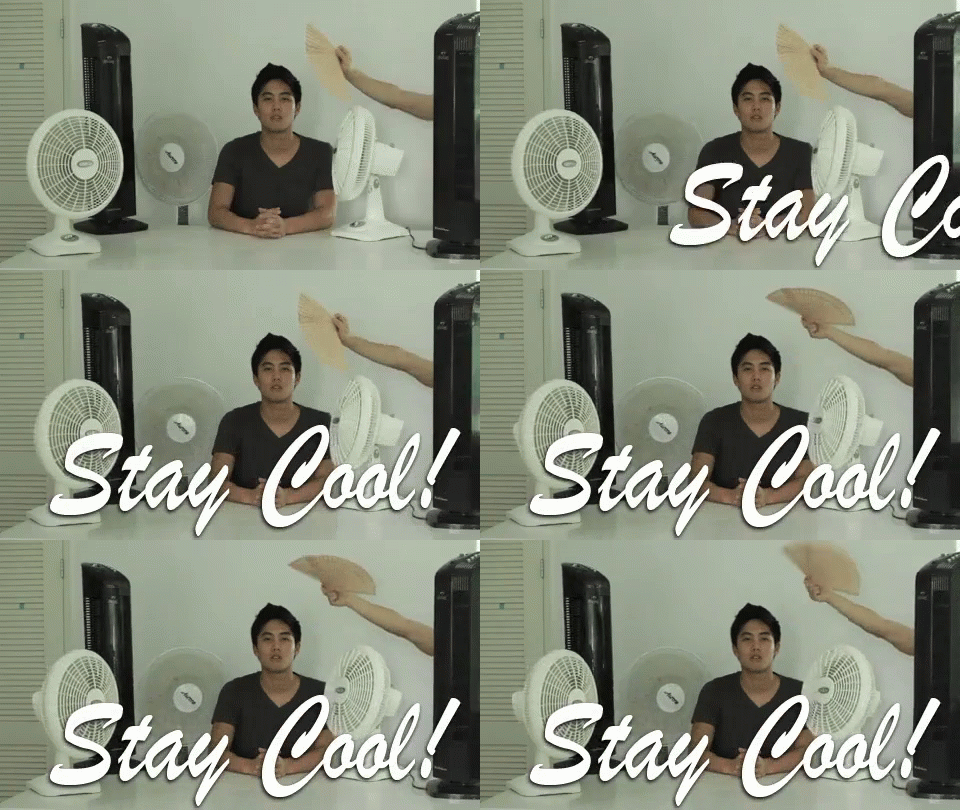
With climate change and warmer summers, you can also save a lot on electricity costs for cooling.
If you compare the total costs of installing biobased insulation versus mineral insulation, it is around €10-20 more expensive per square metre. Compared to installing synthetic insulation, the costs are virtually the same.
Another important advantage of biobased insulation over mineral and synthetic insulation is that it stores a lot of CO2 because it grows as a plant. Thus, biobased insulation materials contribute to reducing climate change.
Is biobased insulation material flammable?
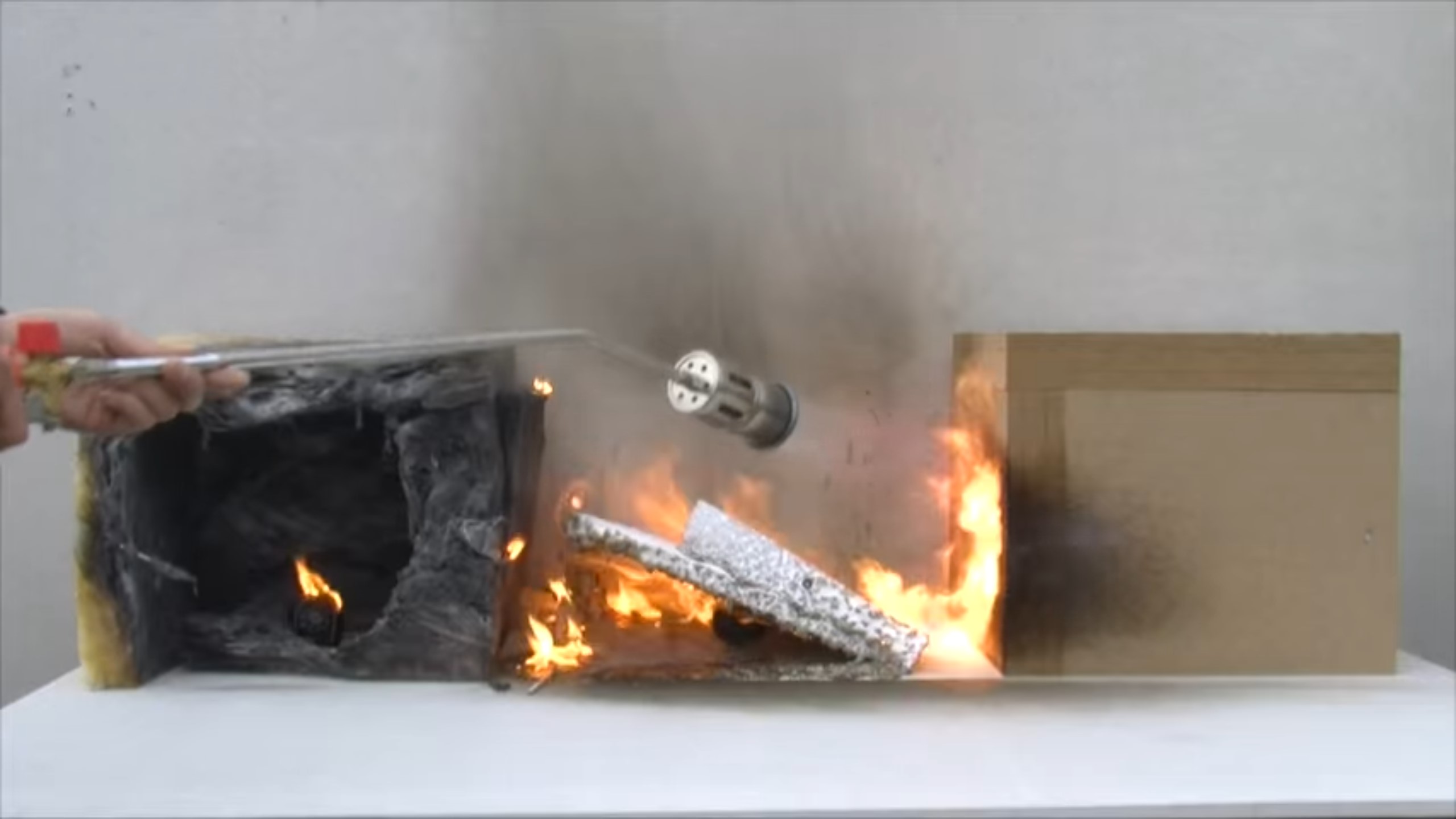
It is true that biobased insulation materials have been given a much lower fire class according to European standards than mineral and synthetic insulation materials. This may lead contractors, for example, to prefer another choice. However, that does not mean that they are super flammable. On the contrary, most biobased insulation materials partly char, which creates a protective layer that protects the rest of the insulation material from fire. Thus, most biobased insulation materials are 'self-extinguishing'. Biobased insulation materials are also often treated with natural flame retardants. For example, flax insulation, along with grass fibre insulation, has European fire class C. Cellulose insulation even goes up to fire class B.
A common misconception is that the new-build requirement of fire class D applies to the insulation material, whereas it applies to the entire construction. For example, wood fibre insulation in combination with a plasterboard finish also meets this requirement.
What can you expect from biobased insulation?
If you are looking for biobased insulation and insulation in general, you should start with your budget. If you don't have a lot of money to spend, consider what it takes to get biobased insulation. Whether you finance it yourself, include it in your mortgage, or if it's just not feasible. If you don't know where to start. You know your budget, you know what you want it to look like. But now what? Find someone who can actually deliver what you are looking for. If you are looking for a contractor to install the biobased insulation, you want to make sure you find someone who has experience installing biobased insulation and can also show reference projects.
How long does it take to insulate my house biobased?
In general, biobased insulation takes longer than synthetic insulation with spray insulation.
Is biobased insulation more expensive than other types of insulation?
Now that you know your budget and are considering the types of insulation you can buy: glass wool, rock wool, PIR, PUR, PIF, biobased? How is the price of biobased insulation structured in your home compared to the other options?
Compared to mineral insulation, biobased insulation is slightly more expensive in terms of material costs, but the labour costs are comparable. Supplement 2024: biobased blown-in insulation is cheaper in terms of material costs than glass wool mats, and it is 3 times faster to install, so that is also cheaper.
Synthetic insulation, such as PIR and PUR, are comparable in terms of material costs and slightly cheaper in terms of labour costs. However, you should also consider the long-term savings of the different systems and how they increase or decrease the value of your house or property, as has recently been in the news with sprayed PUR insulation.
Can I install biobased insulation myself in my house?
People regularly ask during an intake interview or viewing whether they can reduce costs by doing the insulation themselves, or by helping out. Often with biobased insulation materials, it is perfectly feasible to do it yourself because you do not need special tools or protective equipment. Especially when it comes to simple wooden floors and a roof with floor and roof beams, where you can easily clamp the biobased insulation mats in between. However, we do recommend finding an experienced installer who ensures a good airtight and vapour-open construction.
Blown-in insulation should really be left to the professional to avoid poorly filled insulation.
How long will biobased insulation function properly?
If you are wondering how long your biobased insulation will last? Assuming good installation and proper moisture management in your home, your biobased insulation should last at least 75 years. This is based on good maintenance and such. So, if you have a defect and let it go, your insulation can quickly deteriorate. Potential problems may arise that affect the lifespan of your insulation.
Which biobased insulation material is the best choice?
So, you have decided to insulate your home as biobased as possible. But which material do you choose: flax, wood fibre, cellulose, hemp, grass, cork? There is a lot of choice. The best option for your situation depends, among other things, on the part of your house you want to insulate, accessibility, cost, moisture management, and fire class. For example, flexible flax mats are easy to push into your crawl space through a manhole and produce less dust than, for example, wood fibre insulation. This is especially good if you are applying insulation overhead. Wood fibre insulation, like cellulose, is a good choice for your roof because its density and mass keep heat out longer than, for example, flax.
Can I also apply biobased insulation in my 200-year-old house?
The short answer is: absolutely. A point of attention when insulating old houses is trapped moisture. If you apply biobased insulation correctly, it prevents moisture from accumulating in the construction and thus prevents wood rot and mould. This is called vapour-open insulation and is therefore extremely suitable for old houses. Vapour-closed insulation was common until the last century with glass and rock wool, and PIR and PUR. If moisture then enters a vapour-tight construction, it can be difficult for it to escape and can cause wood rot and mould.