If you're insulating your home, you quickly face a choice that's bigger than it seems:
Will you opt for conventional insulation materials like glass wool and PIR?
Or choose ecological (biobased) insulation such as wood fibre, cellulose, or straw?
On paper, it seems a simple trade-off between price and sustainability.
In practice, it's about comfort, health, building physics, and how your home performs over the next 30 years.
In this article, we explain the difference.
Without marketing jargon. But with the nuances often missing from quotes.
What is conventional insulation?
Conventional insulation materials are those that have become dominant in construction over the past ±70 years.
Think of:
glass wool
rock wool
PIR / PUR boards
EPS (expanded polystyrene)
These materials were developed with one main goal:
The highest possible insulation value (Rc) at the lowest possible cost.
And they are good at that.
But that is also their limitation.
What is ecological (biobased) insulation?
Ecological insulation consists of materials of natural origin.
Examples:
wood fibre
cellulose (recycled paper)
hemp
cardboard
cork
straw
What makes these materials different isn't just what they're made from.
It's primarily how they behave in a building.
They don't just insulate against the cold; they actively contribute to:
moisture regulation
heat storage
cooling in summer
a healthy indoor climate
And that changes everything.
The biggest misconception: insulation = only Rc-value
In almost every quote, everything revolves around one number:
Rc-value.
But this is often where things go wrong.
Because:
Two materials with the same Rc-value can perform completely differently in practice.
Why?
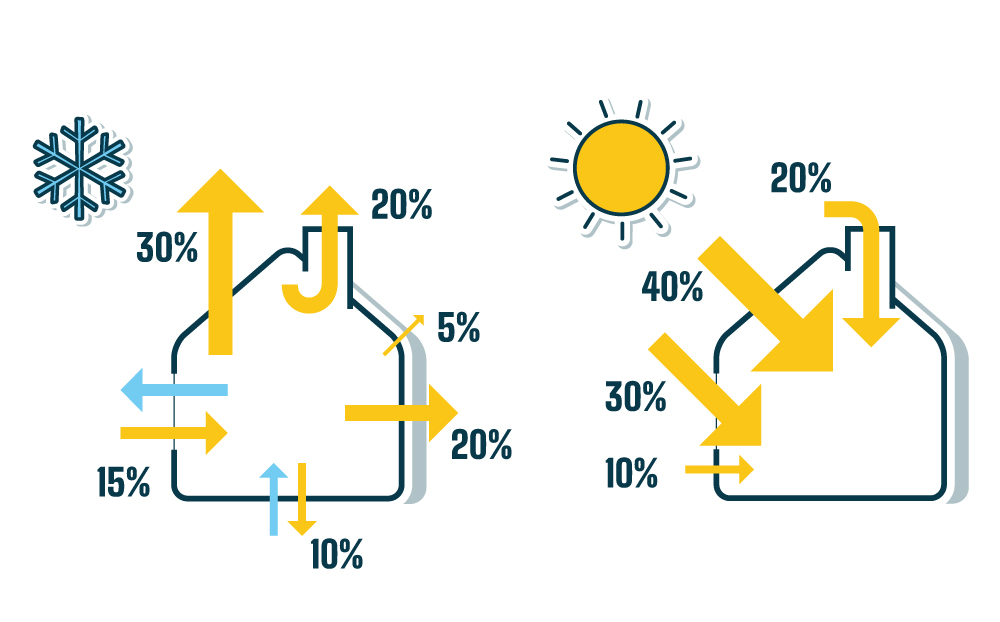
Because Rc only says something about heat loss in winter.
Not about:
what happens in summer
how moisture behaves
how air currents affect your insulation
how comfortable a home truly feels
And that's precisely where the difference between conventional and ecological lies.
Difference 1: Summer comfort (phase shift)
Conventional insulation effectively keeps heat out in winter.
But in summer, something different happens.
Heat still penetrates.
Just with a slight delay.
With lightweight materials like glass wool and PIR, this delay is minimal.
Result:
Your house heats up quickly.
Ecological insulation has a higher mass and heat capacity.
This ensures a phase shift:
heat enters later
and often only in the evening
when you can ventilate
Result:
Cooler homes without air conditioning.
This is not a minor detail.
This is a completely different indoor climate.
Difference 2: Fire safety and fire class: an honest assessment
Fire safety is a topic often considered in black and white terms.
And that is dangerous. Because the reality is more nuanced.
Conventional insulation materials like rock wool and glass wool naturally have a high fire class (often A1 or A2).
This means they hardly contribute to a fire.
Synthetic materials such as PIR and EPS also score well technically in tests but can melt or release smoke gases during a fire.
Ecological insulation materials often have a lower fire class (e.g., B, C, or D).
That sounds worse - and on paper, it is.
But that's not the whole story.
Many biobased materials are treated to be fire-retardant.
For example, they char on the outside, which reduces the rate at which oxygen reaches the core.
As a result, fire development can proceed more slowly in practice than you might expect.
Furthermore, insulation is rarely visible in a home.
It is always incorporated behind finishes such as plasterboards, which themselves play an important role in fire resistance.
And therein lies a crucial point:
The fire safety of a construction is determined by the overall system, not just by the insulation material.
Think of:
finishes (e.g., plaster)
detailing
compartmentation
installations
A perfectly chosen insulation material with poor installation can be less safe than a "less ideal" choice that is well-constructed.
What does this mean in practice?
In situations where fire class is paramount (e.g., in apartments or strictly regulated construction), mineral or synthetic materials may be preferred.
In many home renovations, fire safety can be adequately ensured with biobased materials, provided they are applied correctly.
The most important conclusion:
Fire safety is not solely a material choice. It is a design and execution issue.
Difference 3: Moisture and vapour-open construction
Many existing homes - especially older brick houses - are naturally vapour-open.
That means:
Brick walls absorb moisture and release it again.
Conventional insulation often works differently:
vapour-retardant or vapour-proof
susceptible to condensation if errors occur
dependent on perfect vapour-proof membranes and detailing
If this isn't done perfectly (and it often isn't):
moisture accumulation occurs
you lose insulation value
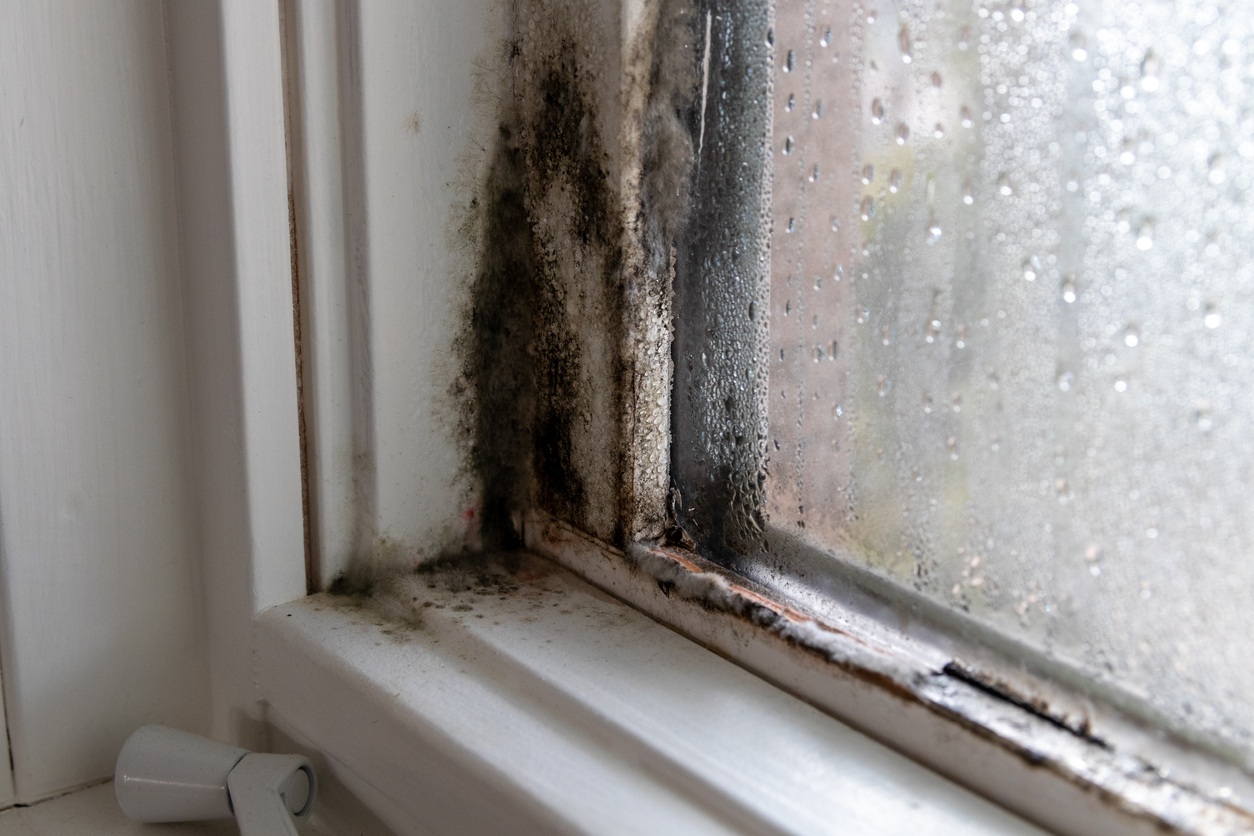
mould problems can arise
Ecological insulation is more forgiving in this regard:
can buffer moisture
distributes moisture better
helps prevent damage
Please note:
This doesn't mean you can "just do anything".
But it DOES mean:
The system is more robust.
Difference 4: Airtightness (where things often go wrong)
One of the biggest mistakes in insulation projects isn't in the material itself.
But in the execution.
Poor airtightness = insulation value ÷ 2 or ÷ 3
And you rarely see this reflected in quotes.
Cheap quotes often skimp on:
connection details
craftsmanship
membranes
time
Result:
draughts remain
comfort stays low
energy savings are disappointing
This applies to all forms of insulation.
But with conventional insulation, the effect is often greater, as it buffers less and "corrects" less.
Difference 5: Health and indoor climate
Conventional insulation materials are industrially produced.
There is nothing wrong with that in itself.
But it does mean:
higher environmental impact during production
less natural moisture balance
dependence on airtightness and ventilation
Ecological materials often contribute to:
more stable humidity
fewer peaks and troughs
a more pleasant indoor climate
And you