When you first hear about biobased insulation, you might wonder if this type of insulation material is suitable for your home.
You have recently decided to make your home more sustainable, and in your online search for insulation, you have also come across biobased

insulation material.
The websites you visited may have stated that biobased insulation is more expensive than conventional insulation materials like glass wool and rock wool, that it may not handle moisture as well, and that it is thicker than PIR insulation.
You are curious about biobased insulation but immediately wonder if it's right for you and your home. Since you want to assess whether it's suitable, you are looking for insightful information.
At Isoleerbewust, we and our partners have insulated many different buildings with biobased insulation. And we see time and again that it is a good choice for almost any building and almost any building component, regardless of construction year or method.
“Great,” you'll probably think. But that doesn't tell you whether biobased insulation can be used in your home. You currently have many questions about biobased insulation and are wondering if you should just choose insulation you're familiar with. After all, you have little time or inclination to delve into all the options.
In this article, we will briefly explain what you need to know about biobased insulation. Then, we will show you what types of houses and which building components biobased insulation is suitable for, and for which building components or facade types you might be better off choosing a different material.
After reading this article, you will know whether biobased insulation is a suitable choice for you and your home. You can then make an informed decision about whether or not to proceed.
This will prevent you from investing time and money in something that doesn't fit your home well, allowing you to take the next step with confidence.
>You have recently decided to make your home more sustainable, and in your online search for insulation, you have also come across biobased insulation material.
Does biobased insulation fit your budget?
To make your home more sustainable, you will probably need to apply for a loan from your bank. You don't want to spend even more money on more expensive insulation material. So, it's logical that you're thinking about costs.
When you read on the consulted website that biobased insulation is more expensive, you started to have serious doubts.
You want an energy-efficient home, to reduce your ecological footprint, and to create a healthy indoor climate for yourself and your loved ones.
But you don't want to struggle to pay back the sustainability loan. Every extra euro counts.
Fortunately, biobased insulation is often no longer more expensive than the cheap competitor: glass wool.
With blow-in insulation, for example, made from wood fiber, the material costs are comparable to glass wool. An added advantage is that blowing in is much faster than installing mats, and thus cheaper.
Additional subsidies for applying biobased insulation make it even cheaper. In addition to the standard ISDE subsidy from RVO, you receive a bonus subsidy if you opt for biobased insulation. This can yield an extra €5-6 per m2.
Blow-in insulation in partition walls against your facade is interesting if you can blow in at least 60 m2 of insulation, potentially in combination with your roof and floors.
Further cost reduction is possible with biobased blow-in if you install the reinforced climate foil and wooden battens yourself. Subsequently, a blowing company will then blow the biobased fibers into the hollow structure.
For this, use the handy guide from Warmteplan (Warmteplan is also affiliated with Isoleerbewust).
>Additional subsidies for applying biobased insulation make it even cheaper.
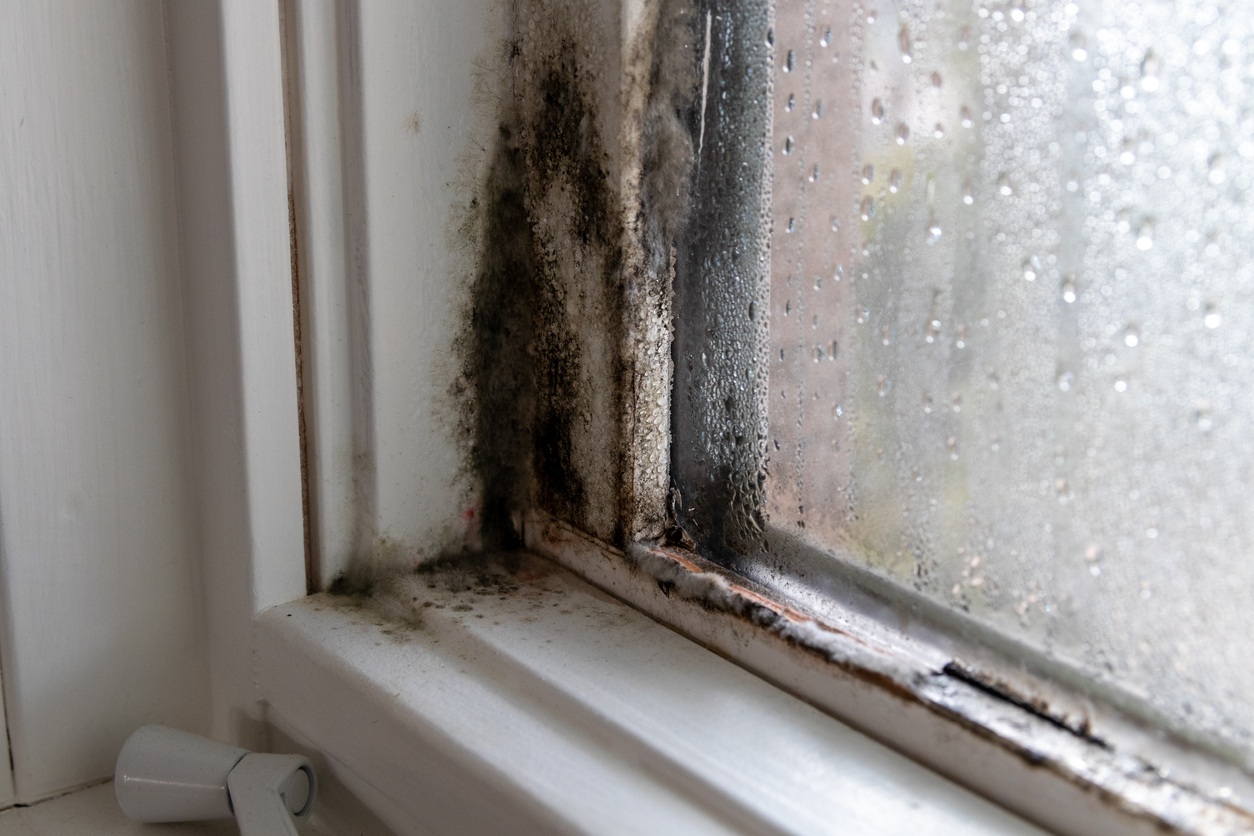
Can biobased insulation be used if you have damp walls?
If you have damp walls, you must always resolve this first.
No matter which insulation material you choose. Because moisture in your walls can damage your facade and cause mold. You don't want that.
So don't just install insulation against damp facades. Not even with a cavity between the damp wall and your insulation without proper provisions. Moisture will then accumulate if it is not ventilated away.
Therefore, resolve your damp walls first. After that, you can apply all types of insulation materials to the facade, including biobased.
The advantage of biobased insulation compared to glass and rock wool, and PIR and PUR, is that it can absorb and transport moisture. So, if some moisture does penetrate your facade, it can also be carried away indoors as vapor.
Naturally, biobased insulation material contains moisture. Sometimes up to 30% of its weight, as with sheep's wool, without losing insulation value or developing mold and rot.
Biobased insulation material can therefore handle moisture quite well.
However, this does not mean it is a “miracle cure” for damp walls.
Insulation material should not get soaked wet. Eventually, any insulation material will degrade.
So, solve your moisture problems, for example, by hydrophobizing your single-skin wall on the outside or applying a lime plaster to the inside which can buffer moisture.
>Biobased insulation material can therefore handle moisture quite well. But this does not mean it is a “miracle cure” for damp walls.
Do you lose more floor space and room with biobased insulation?
Biobased insulation materials generally have a lower lambda value than PIR boards.
Therefore, you lose square meters of floor space for walls and room for roofs if you only consider the insulation material itself.
But also look closely at the total thickness of the construction.
For example, we have encountered in practice a thin PIR board of 8 centimeters applied between roof rafters of 18 centimeters, with gypsum boards then mounted with battens on the roof rafters. So, there was a lot of “air” in the construction.
PIR boards have a better lambda value so they can be made thinner for the same Rd-value
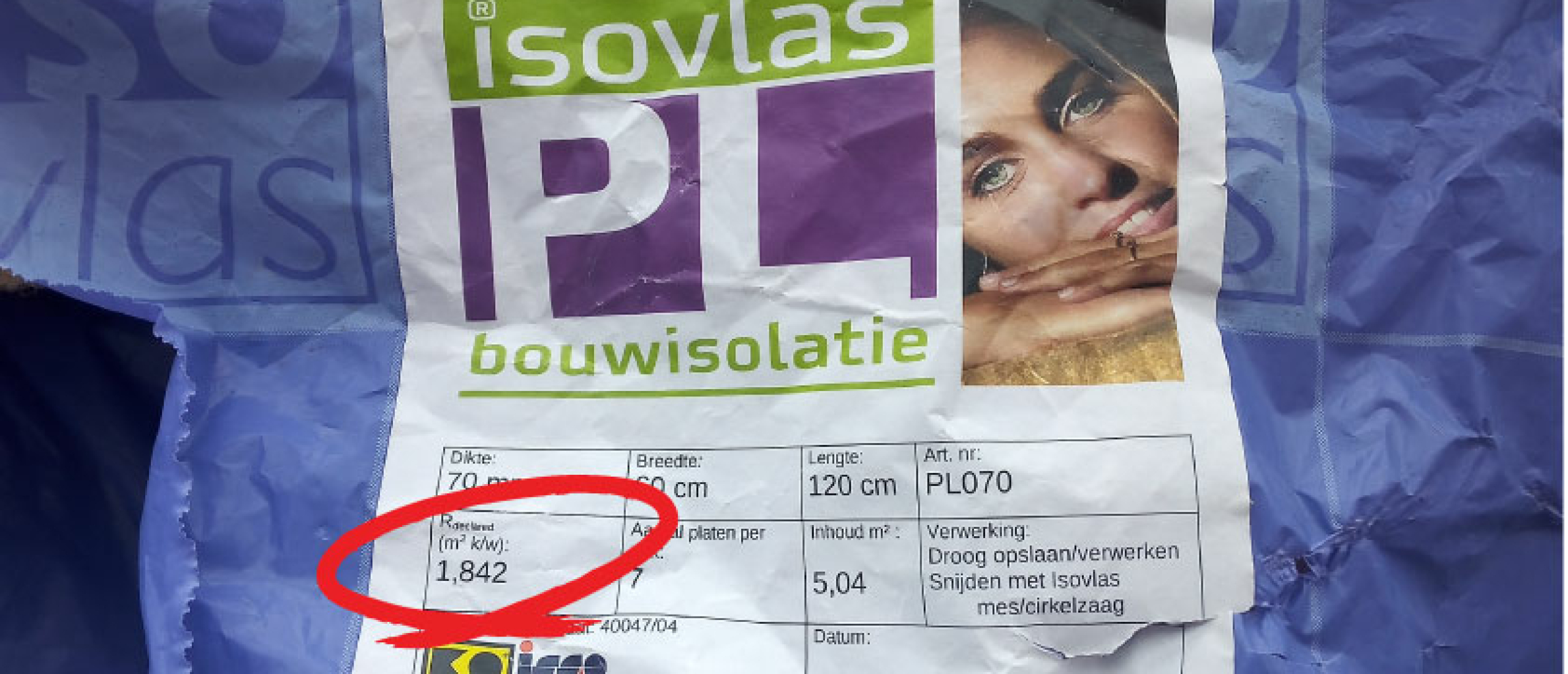
.
However, this can be negated if the finishing is subsequently attached to the roof rafters. This can also apply if thinner PIR boards are installed between deeper studs of a partition wall.
When considering wall constructions, biobased insulation generally does not win out over PIR boards in terms of total thickness.
There are also versions of PIR boards with gypsum board directly attached to them. This makes it even thinner. For an Rd of 3.5, a wall with PIR, gypsum board, and gypsum plaster would result in a total thickness of: 8.1 + 0.7 = 8.8 centimeters.
There is a 'trick' to insulate somewhat thinner with biobased insulation…
Wood fiber plasterboard (semi-rigid variant) as an alternative to gypsum board can be counted as insulation for subsidy purposes.
For biobased insulation, 14 centimeters is needed for an Rd