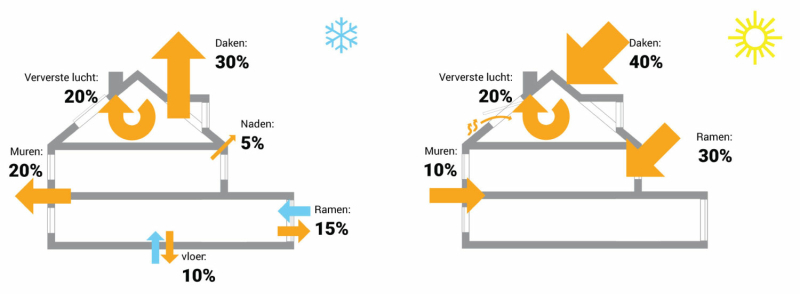
Are you considering insulating your attic? Excellent! Your house loses most of its heat through the roof, as much as 30%. And it's also through your roof that most of the heat enters in the summer, up to 40%. Insulating your attic is therefore a worthwhile investment.
In this blog post, we discuss the different ways to insulate your attic, with the pros and cons of each option.
_ _
_
_This article was first published on December 17, 2022, and updated on September 28, 2023._
Insulate the Roof or the Attic Floor?
Do you want to insulate your attic? You can insulate either the roof or the attic floor. The short answer to what you should insulate is determined by the following questions:
- Is your attic only suitable for storage and not as a living space? Then it is advisable to insulate your attic floor. Can you stand upright in your attic? Then we often recommend insulating the roof.
- But if you use the space under your roof as a living area? Then insulating your roof is the best option. Because even if you have an insulated attic floor, you will still be cold under your uninsulated roof.
_3 Experts Speak_
Following a LinkedIn post of mine on this subject:
- "For monumental buildings, insulating the roof is not always the most monument-appropriate solution." (Eefje van Duin, Monumentenwacht Drenthe)
- "If the attic is not accessible via a fixed staircase? Then the pitched roof is always considered the thermal envelope. If the attic is accessible via a fixed staircase and is higher than 1.50 meters? Then the attic always belongs to the thermal zone." (Erwin Reuterink, Energy Advice)
- "Roof insulation weighs more heavily in the energy label determination. Besides increasing comfort, reducing heat loss, and lowering energy bills, this investment also adds future value to the home. The energy label is mandatory for selling to the future resident. Moreover, a higher energy label adds value." (Ingeborg van Goor - Ytsma, Sustainability Coach)
1. Insulating the Attic Floor
Insulating the attic floor is the most effective way to keep heat in your home. The heat from the underlying rooms and floors will no longer escape to the attic space and outside. This means you don't have to heat the attic space, which significantly reduces your heating costs. Attic floor insulation is also cheaper than roof insulation because you have fewer square meters to insulate.
Points of attention:
- Do you have a loft hatch/pull-down stairs? Don't forget to ensure your hatch is also well insulated and draft-free, otherwise you will lose heat here.
- Thick insulation boards on your wooden or concrete attic floor will reduce the height. So, consider the available space beforehand.
- Consider in advance whether your attic floor needs to be walkable.
Attic Floor Insulation Advantages
- Your attic floor is generally a smaller area to insulate than your roof.
- Insulating an attic floor is less labor-intensive because you don't have to work around difficult corners with roof beams and skylights.
- No heat is lost to warming your 'storage space'.
- The finishing is often simpler and cheaper than with roof insulation.
- If your attic floor has a hollow construction, you can have it filled with insulation.
Attic Floor Insulation Disadvantages
- The items in your attic can freeze because the attic no longer warms up from rising air from your house.
- Pipes and the central heating system in the attic can experience low temperatures, even below freezing.
- You seal off the attic from the rest of your house and limit future use of the space under your roof.
- It is often quite difficult to insulate your existing loft hatch, causing heat loss. In that case, you might be better off purchasing a new insulated loft hatch.
- All your belongings must be moved off your attic floor.
- The attic becomes lower if you insulate on the floor.
Insulating Your Attic Floor Between Wooden Beams
Attic floor insulation can be easily placed between the floor joists in a wooden floor, especially if there is no floor covering yet. If your floor is finished with planks, you will first need to remove them. In both cases, it is best to choose an insulation thickness as high as the floor joists. This way, you fill everything nicely, and there is no 'air' in your floor.
It is wise to place a vapor-retarding foil on the underside, on the warm side. This prevents too much moisture from entering your insulation from the house. If you carefully flatten the foil with special tape all around, you also make it airtight. This prevents unwanted air movement through your insulation and avoids a 15% loss of insulation value.
Is your attic floor a hollow construction? Like the second case mentioned above? With a ceiling on the bottom and a floor on the top? Then you can also consider blown-in insulation, for example cellulose insulation
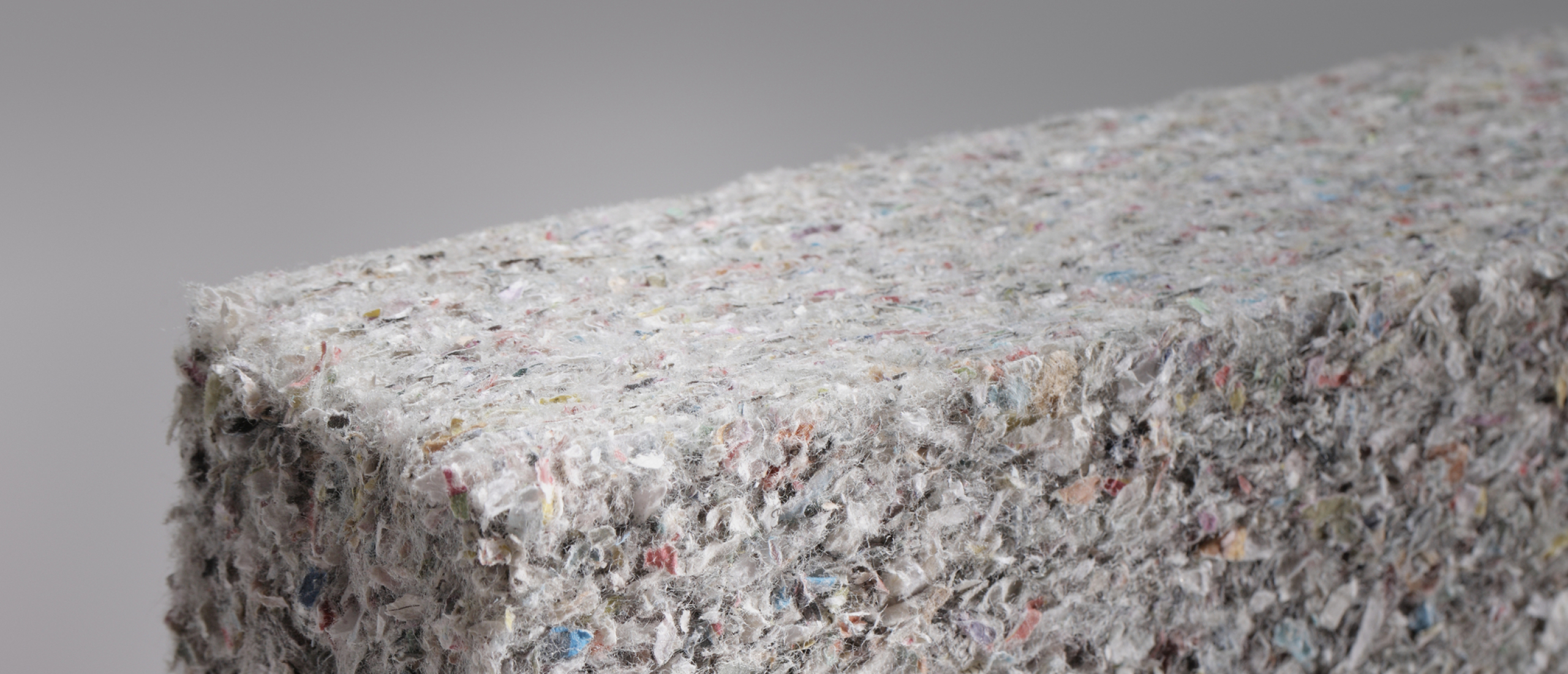
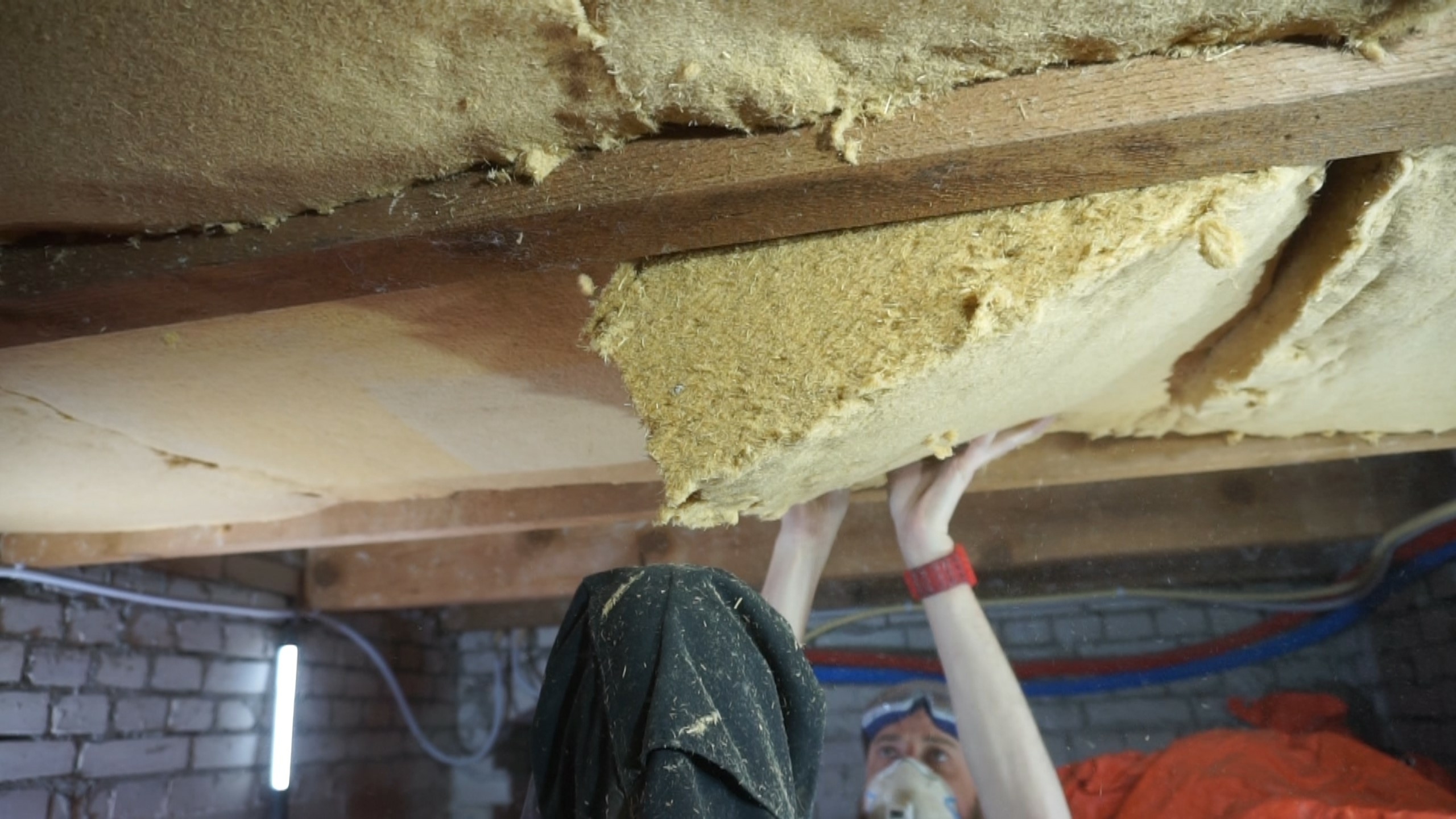
Wood fiber insulation is a relatively new type of insulation material that is becoming increasingly popular due to its sustainability and environmental friendliness. Wood fiber insulation has good thermal insulation value and good.., straw. This is then blown into the hollow floor construction. In that case, your floorboards can remain in place.
What is the Right Insulation Material for an Attic Floor?
You have decided to insulate your attic floor. But which type of insulation should you choose? That depends, among other things, on your budget, the available space, the construction of your floor, and whether you are also investing for the future. This last point is interesting when selling your house and if potential future residents want to use your old storage attic as a living space.
Good insulation keeps the warmth in during winter and keeps the heat out during summer. You are therefore looking for insulation with a high insulation value and a high phase shift. Since Isoleerbewust encourages the use of biobased insulation materials as much as possible, rather than traditional materials like mineral wool, we often choose wood fiber insulation, cellulose insulation, straw, etc. These materials, with a thickness of 14 centimeters, keep the heat out for 8 to 9 hours, in contrast to 3 hours with the same insulation thickness for mineral wool.
Insulating Your Attic on a Solid or Concrete Floor
Do you have a wooden or concrete floor without a hollow space? Consider whether your attic floor needs to be walkable. You can also insulate on the attic floor with pressure-resistant insulation boards or soft insulation boards between a framework, with a sturdy board of your choice on top. Pressure-resistant insulation boards provide a higher insulation value than when using an extra wooden support structure. This is because there will be less insulation and more wood in your construction.
Pressure-resistant insulation boards provide a higher insulat