There's often a lot to gain when it comes to indoor thermal comfort.
It's either far too hot or far too cold, and maintaining a constant temperature is simply not feasible right now. You've tried all the tricks, from ice in front of your fan to having wool blankets in every room, so it's time to find new solutions.
You're in luck, because we're happy to help people with solutions to their home's thermal comfort problems.
Isoleerbewust from Rotterdam has been helping homeowners manage the comfort of their homes since 2020. In that time, we've insulated more than 15 homes and created an airtight seal that keeps outdoor temperatures out where they belong.
But you didn't come here to read about us; you want to know what you can do if your house is too hot or too cold.
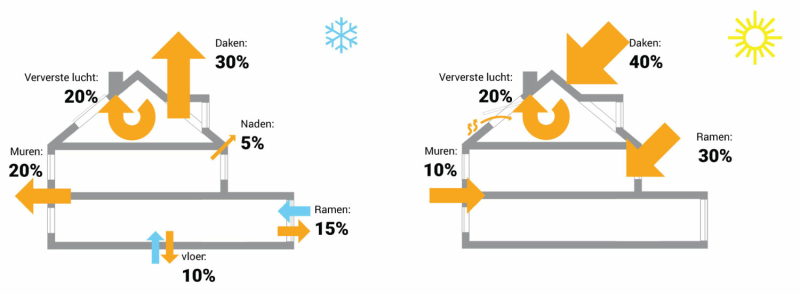
...first, take a look at this image
To show that your house loses most heat in winter through an uninsulated roof. And that most heat also enters your house through an uninsulated roof.
5 things to do if your house is too hot or too cold
There are a number of things you can do to make your indoor climate much more comfortable in summer and winter:
- Prevent draughts in your home
- Create stable humidity
- Have your ventilation, heating, and air conditioning checked
- Replace single glazing and double glazing older than 15 years
- Insulate your home with ecological materials that keep heat out for a long time
Prevent draughts in your home
Draughts are uncontrolled airflow that enters your home through cracks and gaps around doors and window frames, as well as at connections between floors, walls, and roofs. Air movement can blow away the insulating layer of warm air around your skin, causing your perceived temperature to drop. Draught excluders and draught tape are often used to keep cold air movement out in winter. An additional benefit of making your home draught-free is that it also makes it harder for warm air to enter in summer.
Hotspots for draughts in your home:
- Roof
- Front door
- Letterbox
- Windows
- Meter cupboard
- Crawl hatch
- Back door
Tips:
- Use a lighter to locate draughts in and around cracks and gaps. On a windy day, this method makes draughts easier to detect. In the video clip below, you can see the benefit of draught exclusion and how to detect draughts in your home. The video clip is from an instructional video on how to make your home draught-free.
- Applying airtight tape, draught strips, and draught tape ensures that hardly any cold air enters through gaps around your doors and windows and through seams in your roof, for example. Make sure your house is not completely sealed or that fresh air can still enter.
Saving energy: tackling draughts in the home - YouTube
Isoleerbewust
412 subscribers
Saving energy: tackling draughts in the home
Isoleerbewust
Search
Watch later
Share
Copy link
Info
Shopping
Tap to unmute
If playback doesn't begin shortly, try restarting your device.
More videos
More videos
You're signed out
Videos you watch may be added to the TV's watch history and influence TV recommendations. To avoid this, cancel and sign in to YouTube on your computer.
CancelConfirm
Share
Include playlist
An error occurred while retrieving sharing information. Please try again later.
0:00
0:00 / 0:52
•Live
•
Create stable humidity
The perceived temperature in the home is largely determined by humidity. For example, high humidity in summer makes the air feel warmer and more oppressive, and in winter, it makes it feel colder and chillier than the temperature displayed on a thermostat. In winter, humidity is often on the low side. This is mainly because the cold, dry air from outside is heated considerably, and there is also ventilation, whether controlled or uncontrolled, through cracks and gaps. Read more tips on what to do about excessively high or low humidity in the article Healthy indoor climate - Winter check.
Ideal temperature and humidity
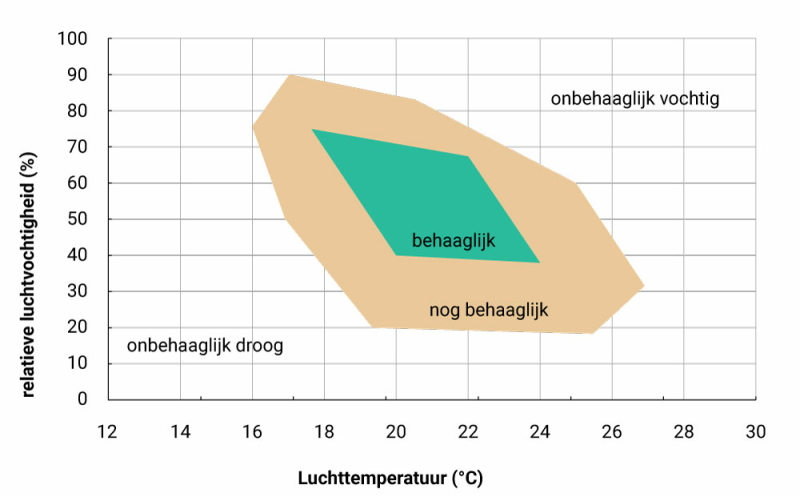
Please note that excessively high humidity above 60% or excessively low humidity below 40% can be accompanied by health complaints. With low humidity, you risk mould formation in the house, colds, bronchitis, and eczema. Conversely, with excessively low humidity, you can suffer from dry skin and dry eyes, among other things.
The image below beautifully illustrates how 'feeling comfortable' is related to relative humidity and temperature. The extreme sharp points of 'comfort' are interesting to mention: 17.6 °C with 75% humidity and 24 °C with 37% humidity.
Tips:
- First, measure your humidity with a hygrometer, or moisture meter. Such a device costs €10 to €20. This way, you'll know what to do with the following steps to make it comfortable in winter and summer.
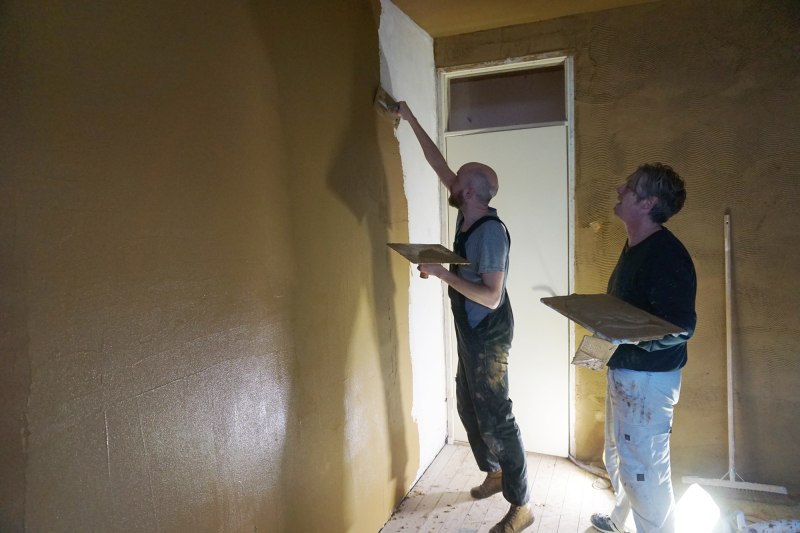
- Apply natural plaster such as lime and clay to interior walls. Lime and clay plaster absorb excess indoor moisture and release it back into the air when it becomes drier. Gypsum plaster, on the other hand, cannot store moisture and therefore contributes nothing to more stable humidity.
- Insulate and build vapour-permeable. Excess moisture produced indoors can partly escape through the vapour-permeable construction.
Address damp walls
Damp walls are bad for your health and also cost a lot of energy to dry them out. The heat 'lost' here can no longer be used to warm up the room. In summer, as described above, it can cause a stuffy feeling if it drives up the humidity.
It is therefore vital to tackle damp walls. This can be done, for example, by injecting the walls at the bottom or hydrophobing the facades on the outside.
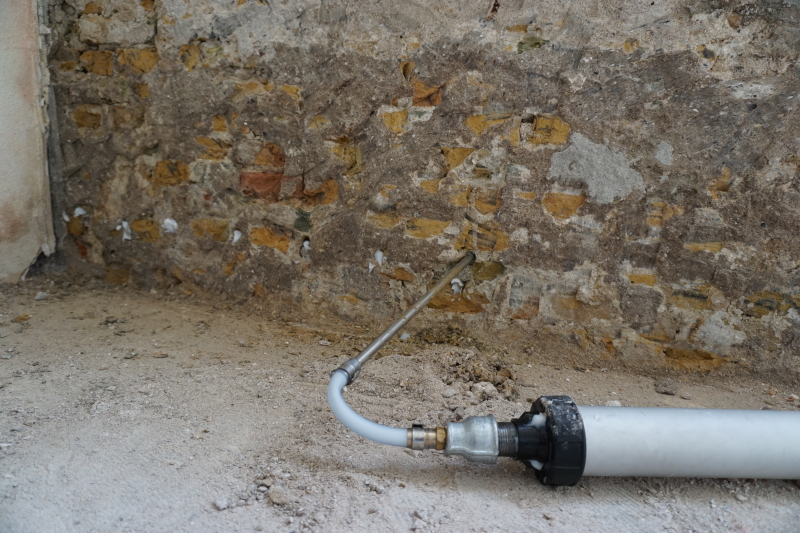
_RC Drygel 80; the most environmentally friendly injection gel according to European standards._
Solving rising damp
Rising damp mainly occurs in walls and floors that are in direct contact with the ground. Rising damp is a consequence of the absence of a properly functioning damp-proof course, a common problem in older homes. Moisture from the ground rises through the masonry and mortar and can cause damp patches and/or whitish stains. The latter means that there is salt in the water, and it originates from the ground. If rising damp is suspected, you must first remove the skirting boards to rule out a bridge. This is caused by plasterwork that extends below the damp-proof course, thus drawing up moisture and leading to damp patches at the bottom of the wall.
Tips:
- For a wall, you can stop rising damp by applying a damp-proof layer in the wall between bricks or by forming a damp-proof layer by injecting gel into the wall.
- If there is plasterwork, first remove the damp parts of the walls. Do this to a minimum height of 1.2 metres and at least 50 cm above the highest stain of wall moisture and salts. With the latter, you exclude that existing plasterwork draws up the moisture.
- Then, every 10 to 12 cm, you must drill a hole, slightly less deep than the total wall thickness, to inject gel.
- The holes must be at least 10 cm above ground level. But also not too far from it. The gel spreads and ultimately forms a permanent damp-proof layer.
Please note: In case of moisture in stone walls, it can sometimes take up to six months to a year for it to disappear. To quickly finish the wall anyway, there are special foils and mortars that ensure that the still-present moisture in the wall does not come into contact with the finish.
A floor can be treated with an impregnation agent (for example, the ecological Hydrablock Pro) that penetrates up to 4 cm deep into the floor. This forms an impenetrable waterproof layer.
Stopping penetrating damp
Penetrating damp is usually caused by driving rain on porous masonry in the facade. This occurs when large amounts of precipitation hit a wall due to wind force or, in the worst case, get under the roof finish. The moisture is then further dispersed and causes damp patches on the inside of your exterior wall. This can often be recognised by wall paint, wallpaper, and plasterwork coming loose. You often see it in higher places in the house than with rising damp.
Tips:
- The most common approach to penetrating damp is to impregnate the facade. However, impregnation is not very environmentally friendly because it uses a chemical solution. For environmentally friendly alternatives, people often speak of hydrophobing instead of impregnating. Products are then used that are biodegradable, water-based, and contain no toxic volatile substances. In terms of price, hydrophobing is no more expensive than impregnating. Not every facade finish is suitable for impregnation or hydrophobing. This applies, for example, to painted and glazed facades. In the case of brick, limestone, natural stone, plaster, and concrete, impregnation or hydrophobing is possible.
- You can also apply vapour-permeable paint to the facades, such as lime or silicate.
Dry your laundry outdoors
Make sure the humidity doesn't get too high. Otherwise, it will feel like a sauna indoors. So, in summer, it's best to dry your laundry outdoors. Also, cook as much as possible with the lids on the pans. This will prevent an unpleasantly high humidity level in your home.
Have your ventilation, heating, and air conditioning checked
Your HVAC systems are the systems for Heating, Ventilation, and Air Conditioning. If these systems are unbalanced, certain rooms in your house may be more uncomfortable than others. Another thing to consider is the size of your HVAC systems. If a system is not large enough, it cannot get rooms to the desired temperature, so your home will be uncomfortable.
You also have something called night ventilation, where you ventilate the heat out of the house by opening a window. You can even open two opposing windows. In summer, it is useful to open the windows on the shaded side of your house, where it is still a bit cooler. And keep the windows on the sunny side closed if you want to keep the heat out.
Tips:
- Install a mini MVHR (Mechanical Ventilation Heat Recovery) system in multiple rooms. This way, you refresh the air with minimal heat loss. A demand-controlled system has sensors that measure when (extra) ventilation is needed. With such a unit, you can also ventilate well in summer without too much warm air entering.
- Check if your mechanical ventilation system has an enthalpy exchanger, which maintains humidity levels.
- Have your radiators hydraulically balanced.
- Place special fans under your old radiators. These radiator fans ensure that warmed air is distributed more quickly throughout the room.
- Make your 'dumb' heating system 'smart' with smart radiator valves by monitoring the temperature per radiator valve and adjusting it to the desired pre-programmed temperature per room.
Read all tips for energy-saving measures here >>>
Replace single glazing and double glazing older than 15 years
You can see quite easily whether you have single glazing or double glazing. And often, you already know this. Ronald Bosma of Bouwgezond states in his book "Isoleren kun je leren" (Learning to Insulate) that glass older than 10 years doesn't do much in terms of insulation, and double glazing of 15 years is equivalent to single glazing. So, there is a lot to lose with old and poorly insulating glass.
Tips:
- If you want to know how old your glass is, look in the silver-coloured strip in your glass; it should show the year of manufacture.
- Ronald's book advises tapping the glass with your ring. What you should hear is a dull sound; if it sounds sharp, your glass is almost certainly leaky and no longer insulates.
- Well-insulating glass keeps the heat in during winter and better keeps the heat out in summer.
Insulate your home with ecological insulation that keeps heat out for a long time
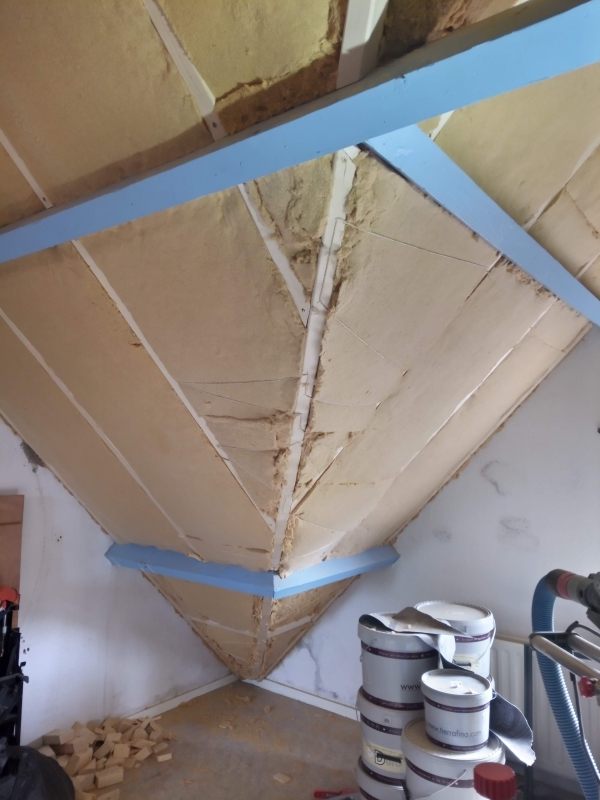
If you have little to no insulation in your home, the steps above will only partially help. Ecological insulation is the most effective way to keep heat in during winter and keep heat out during summer. Buying insulation for your home is not something you do every day, so make sure you choose the insulation material that best suits you. We specialise in airtight and vapour-permeable insulation of existing homes with ecological materials. We do this with the conviction that this provides much added value for the health of residents and the environment.
Tips:
- When choosing insulation, also pay attention to the heat storage capacity.
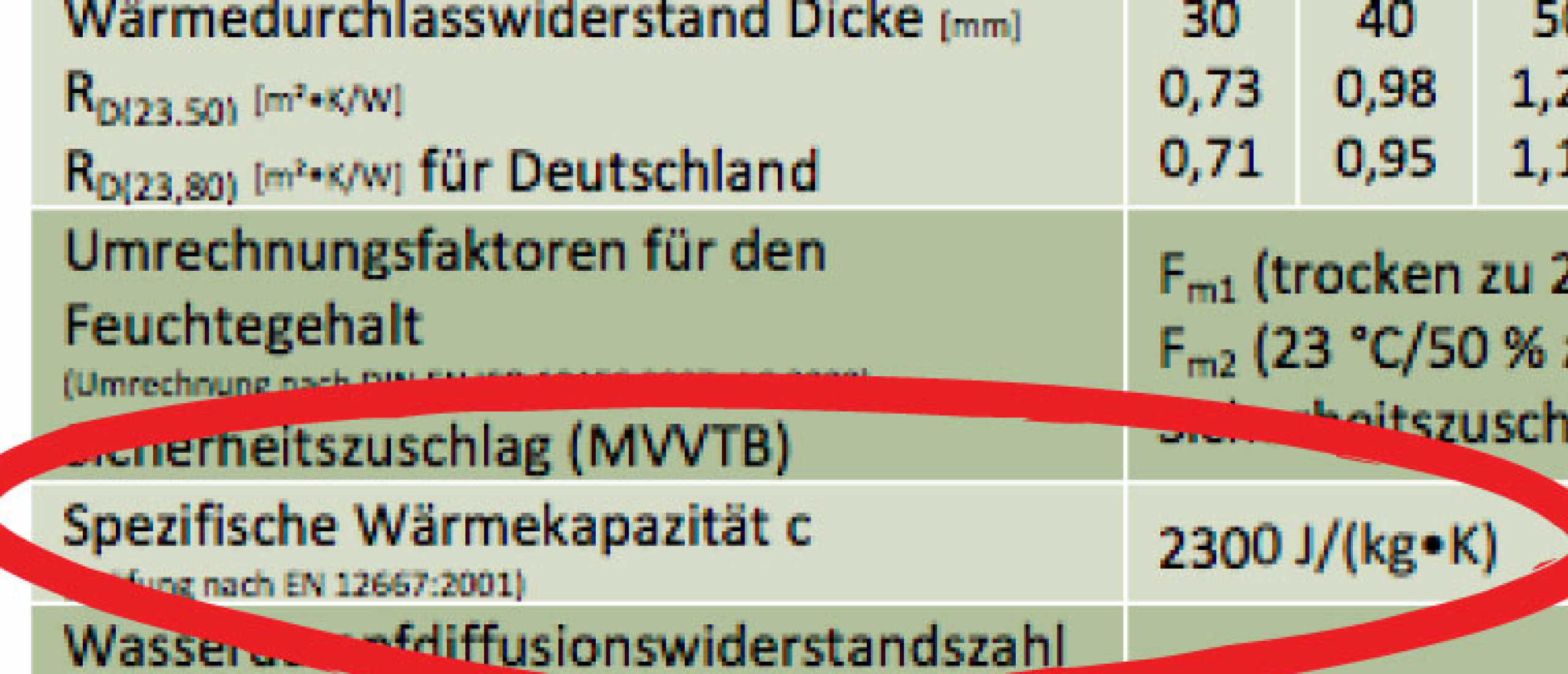
The higher the heat storage capacity (also called thermal capacity), the greater the material's ability to store heat. And thus, the cooler it stays indoors during hot summers because not all heat.... With a high heat storage capacity, insulation also effectively keeps the heat out in summer. Ecological insulating materials score well here, with a delay of 10 hours before heat enters at a thickness of 14 centimetres.
- If you insulate vapour-permeably, excess indoor moisture can partly escape outwards through the newly insulated structure.
- Insulate airtightly to avoid uncontrolled and unpleasant air movement in your home and ensure your insulation functions properly.
- Good insulation also means good ventilation.