Glass wool: who hasn't heard of it? Everyone has heard of glass wool. It's available in every DIY store. Glass wool is incredibly popular. Glass wool is everywhere 😉. But with the price of glass wool (>€9.50 per m2 for 14 centimetres) rising and ecology becoming increasingly important, you're looking for a sustainable alternative. The best option for you depends on factors like your budget and the current state of your house.
You might be insulating your own home, you might be a contractor, or you might be a client for an insulation job. You may have already seen in the news that glass and rock wool factories are among the largest air polluters in the Netherlands. So much so that the producer of glass wool, Saint Gobain in Etten-Leur, is the largest ammonia emitter in Noord-Brabant. Glass wool is jokingly called 'gas wool' because a lot of gas is needed to produce it. So, its production is not very environmentally friendly. The price of glass wool is rising due to higher gas prices.
Good to know: we install ecological insulation, but that doesn't mean ecological insulation is the best solution in every situation. That's why we've listed 5 alternatives to glass wool insulation, so you can decide what's the best choice for you.
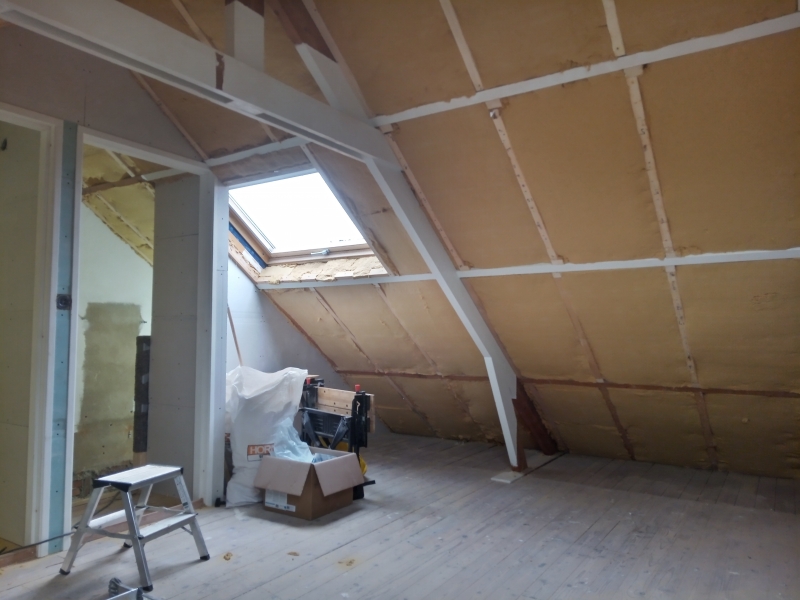
1. Wood Fibre Insulation
Features and Strengths
- natural material
- easy to process
- CO2 positive due to plant-based CO2 absorption
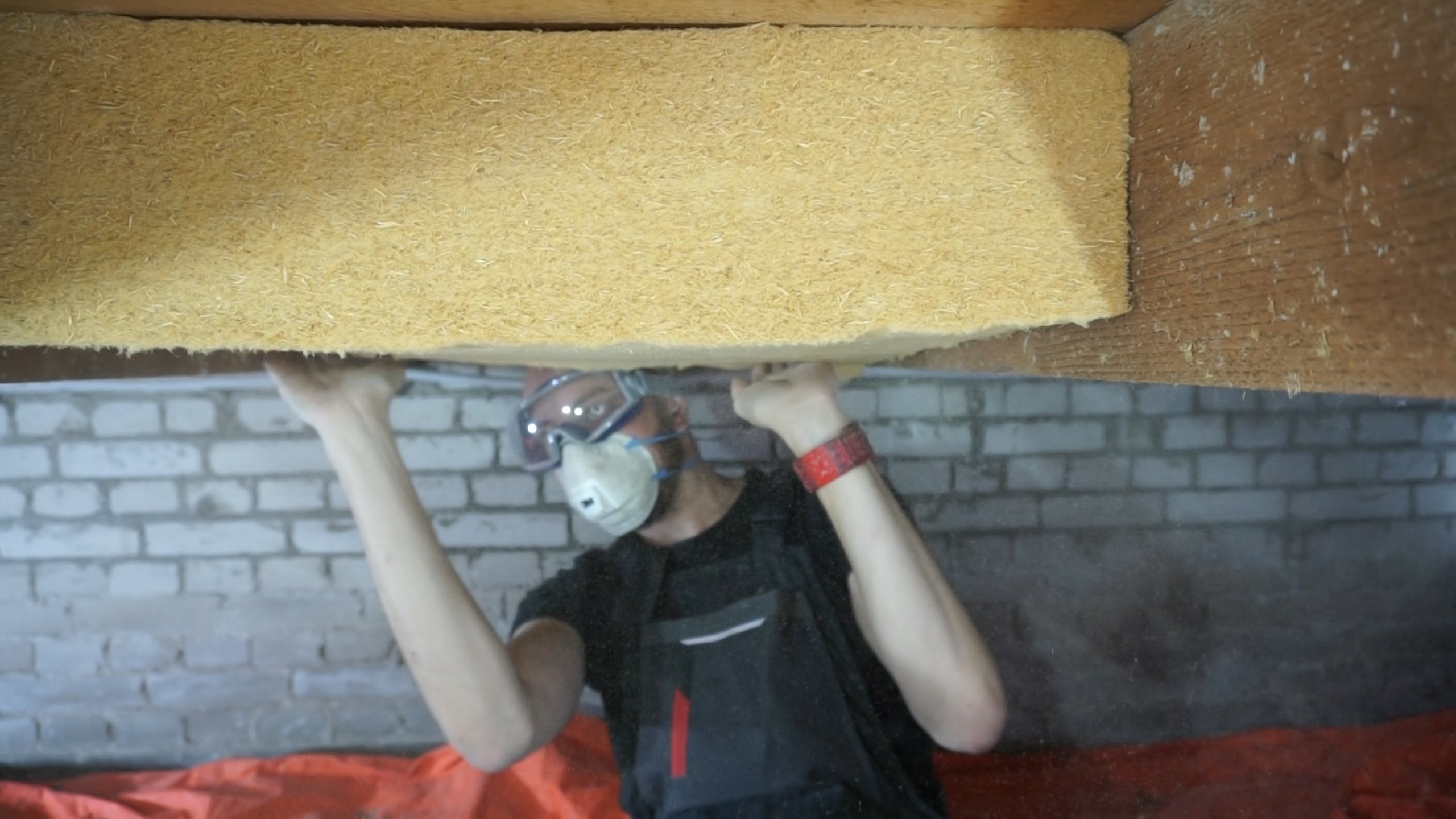
- easy to clamp between roof and floor joists
- keeps heat out up to 3 times longer in summer than glass wool
- various brands and types available on the Dutch market
- wood sourced from sustainably managed forests in Germany, France, and Norway
- contributes to optimal indoor comfort by absorbing moisture, being vapour-open, and providing sound insulation
Natural material from sustainably managed European forests
Wood fibre insulation is made from residual wood chips from sawmills in Europe. The wood sawn here comes from conifers in sustainably managed forests in, among others, the Black Forest and Norway. Sustainably managed forests means there is no clear-cutting in the forests. The forest is selectively thinned. Consideration is given to the flora and fauna of forests, the soil, and water management. In a sustainably managed forest, carbon storage in the forest is maintained and biodiversity is preserved.
CO2 Positive
Because these plant-based insulation materials grow as trees by converting CO2 from the air into biomass growth and oxygen. The CO2 absorption during the natural growth process is many times higher than the CO2 emissions from sawing and transporting. Glass wool is also made from a natural material. Sand is used to make glass, and glass is used to make glass wool. However, high temperatures are needed to turn it into 'cotton candy' of glass, which eventually becomes glass wool insulation.
Wood fibre insulation keeps heat out up to 3 times longer than glass wool
A major advantage of wood fibre insulation over glass wool is that it keeps heat out up to 3 times longer in summer. At a thickness of 14 centimetres, it keeps the heat out for up to 10 hours, compared to only 3 hours for glass wool. This makes it a good alternative to glass wool in the roof. The roof is where you lose the most heat, but also where most heat enters your house.
Wood fibre insulation contributes to optimal indoor comfort
The hollow cell structure in wood fibre insulation has many advantages. These natural 'air chambers' ensure that, among other things, heat is retained and that moisture can be stored and transported. The cells still perform exactly what they served in the tree: transporting moisture through the tree.
Thanks to its natural cell structure, wood fibre insulation is vapour-open and has a moisture-regulating effect. It absorbs moisture and releases it again when the air is drier. This contributes to a more stable humidity.
Easy to process and clamp between joists
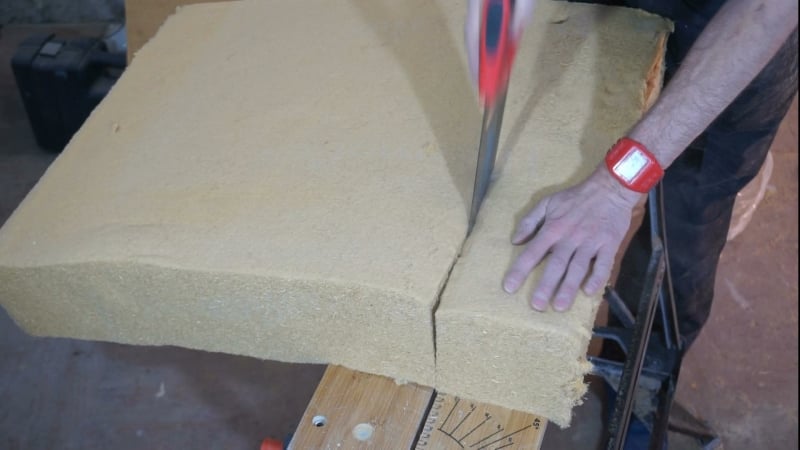
Wood fibre insulation is easy to cut with an insulation saw. Because wood fibre insulation is somewhat firmer than glass wool, you can easily clamp it between roof and floor joists.
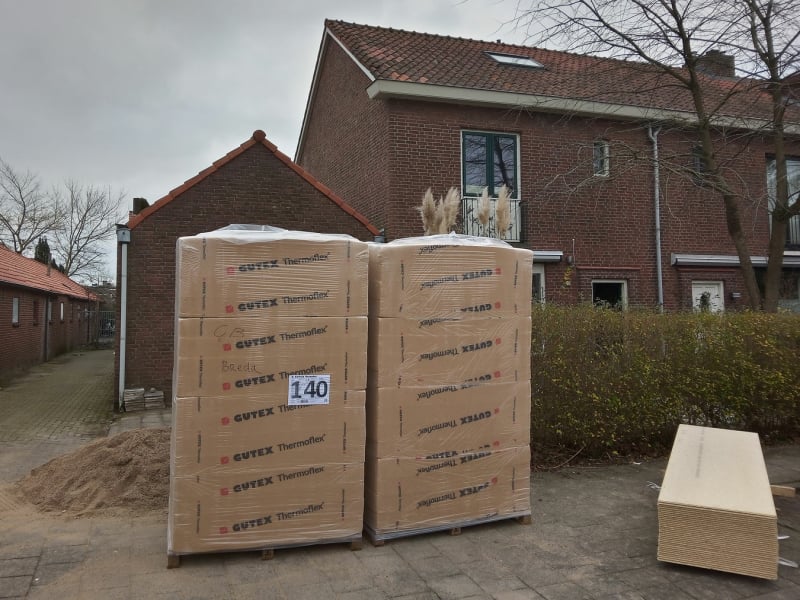
Various brands of wood fibre insulation are sold on the Dutch market
- Gutex: all different types of Gutex insulation products have a Natureplus certificate.
- Hunton: the most affordable of the 3, but with a slightly lower Rd-value at the same insulation thickness
- Pavatex: available through many sales channels
- Steico; available through Houtgroep van Drimmelen, among others
2. Blown-in Insulation
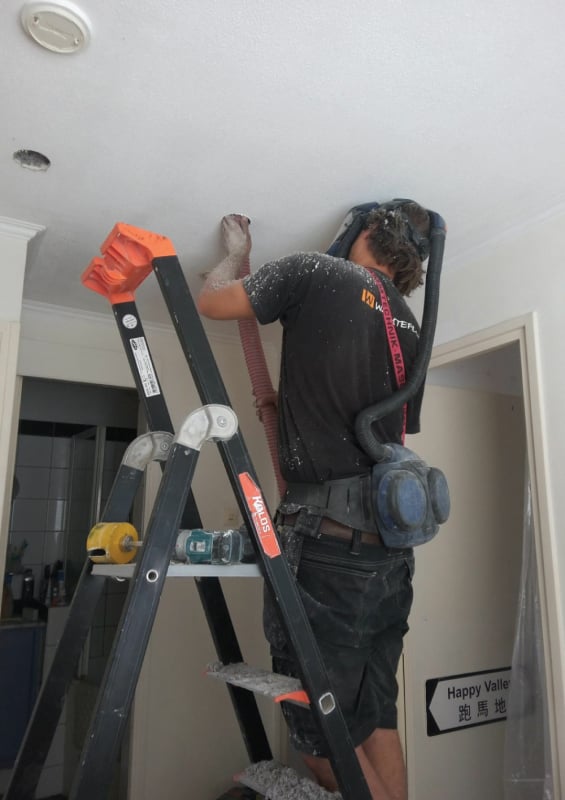
Do you have a limited budget and hollow structures in your house, such as a suspended ceiling or a partition wall? Then blown-in insulation is an interesting option for you. This type of insulation material can be easily blown into existing hollow structures or newly constructed partition walls, floors, and ceilings.
There are 4 types of ecological blown-in insulation materials on the Dutch market:
- wood fibre
- cellulose
- straw
- cork
blown-in insulation video - YouTube
Isoleerbewust
412 subscribers
Isoleerbewust
Search
Watch later
Share
Copy link
Info
Shopping
Tap to unmute
If playback doesn't begin shortly, try restarting your device.
More shorts
More shorts
You're signed out
Videos you watch may be added to the TV's watch history and influence TV recommendations. To avoid this, cancel and sign in to YouTube on your computer.
CancelConfirm
Share
Include playlist
An error occurred while retrieving sharing information. Please try again later.
Watch on
0:00
0:00 / 0:20
•Live
•
_Wood fibre blown-in insulation. In this video, you can see how to blow wood fibre insulation into a hollow wall construction._
Features and Strengths
- good fire rating
- natural material
- keeps heat out up to 3 times longer in summer than glass wool
- no need to demolish your existing ceiling or partition wall first
- made from residual streams from the linen industry, agriculture, sawmills, and paper trade
- an experienced installer can blow in 150-300 m2 of insulation per day at an insulation thickness of 14 cm
With wood fibre and cellulose blown-in insulation, you achieve an Rd-value of 3.5 at 14 cm thickness. With blown-in straw, you reach the same Rd-value at 15 cm.
Blowing in 300 m2 of insulation per day
An experienced installer can blow in 300 m2 of insulation with the help of a blowing machine with sufficient power and a colleague who ensures that blown-in insulation continuously comes out of the hose. This is at a thickness of 14 cm and applies to straw blown-in insulation. For cellulose and wood fibre blown-in insulation, it is around 150 m2 per day.
Costs of blown-in insulation
In terms of material costs, for an insulation thickness of 14 cm, you're looking at approximately €5-8 per m2 for blown-in insulation. This is comparable to glass wool insulation. With labour costs included, blown-in insulation costs a total of around €15 per m2 for an insulation thickness of 14 cm. If a new hollow structure needs to be made with reinforced foil or a cover plate, factor in extra costs for this. Also, consider a starting fee. Installers prefer to blow in a minimum of 30 m3 at €90 per m3. With 60 m2 and 14 centimetres of insulation thickness, you're looking at 0.14 x 60 = 8.4 m3 in total. In this case, the installer will charge for the minimum 30 m3. It's better to combine it with neighbours or have more insulation blown in.
3. Flax Insulation
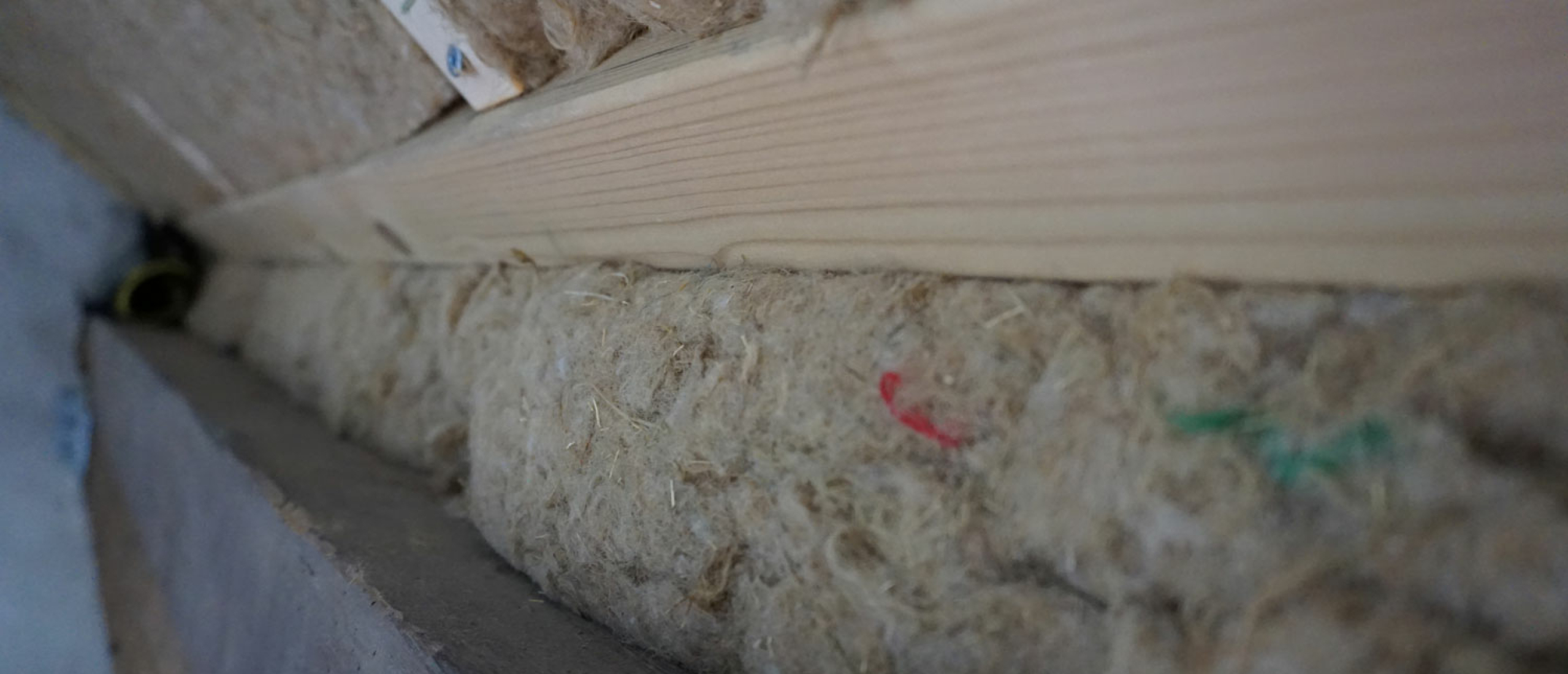
is made from residual streams from the linen industry. Isovlas has strong marketing and is available at many sales outlets for construction professionals.
Features and Strengths
- natural material
- easy to process
- CO2 positive due to plant-based CO2 absorption
- available at many different trade suppliers
- comparable material properties to glass wool
- keeps heat out up to 2 times longer in summer than glass wool
- various brands and types available on the Dutch market
- contributes to optimal indoor comfort by absorbing moisture and being vapour-open
- flax from the linen industry in Poland where it is collected as residual material
- easy to bend and fold, making it ideal for tight spaces such as crawl spaces
Under the brand Isovlas, it is available for contractors at, among others: Bouwmaat, Raab Karcher, and Bouwcenter. Please note that this is more expensive than ordering online. Flax insulation is available online at, among others:
- Eco-bouwers
- Bouwgezond
- Eco-bouwmaterialen
Your contractor can therefore go to their usual outlets. However, it might also be possible to get some contractor's discount through online sales channels.
Comparable material properties to glass wool
Flax insulation is very similar to glass wool insulation. It is easy to process. The advantage of flax insulation over glass wool insulation is that it doesn't irritate your skin. Flax insulation, like glass wool, is easy to bend, push in, and fold in half. This makes flax insulation a good alternative to glass wool, for example, as floor insulation via the crawl space. It is easy to push through a narrow crawl hole without breaking.
4. Grass Fibre Insulation
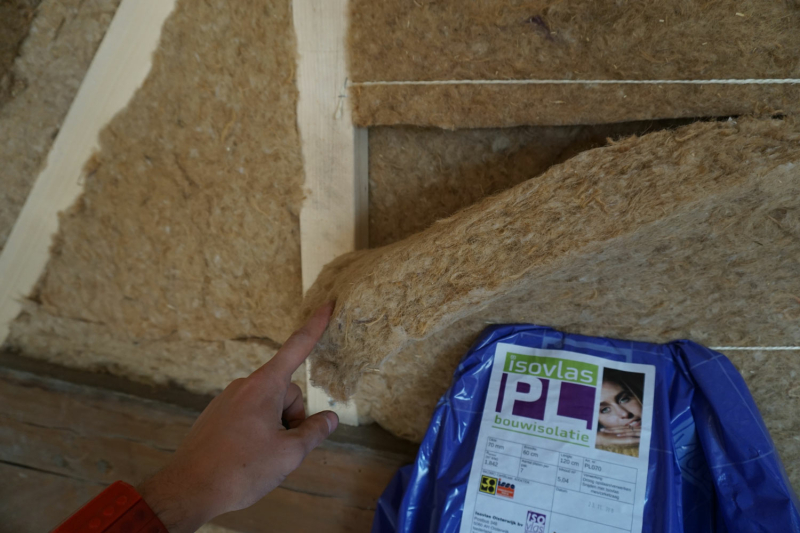
Grass fibre insulation is made from verges and nature reserves in the Netherlands and Belgium.
Features and Strengths
- natural material
- grass from the Netherlands and Belgium
- CO2 positive due0 to plant-based CO2 absorption
- available at many different trade suppliers
- keeps heat out up to 3 times longer in summer than glass wool
- contributes to optimal indoor comfort by absorbing moisture and being vapour-open
Grass from the Netherlands and Belgium
Grass fibre insulation is made from residual material from mown grass and recycled jute fibres from nature reserves of Natuurmonumenten (NL) and Natuurpunt Vlaanderen (BE) that would otherwise not be used as animal fodder.
Available at many different trade suppliers
Under the Gramitherm brand, it is available for contractors at, among others: Stiho, Pontmeyer, and Jongeneel. Please note that this is more expensive than ordering online. Grass fibre insulation is available online at, among others:
- Eco-bouwmaterialen
5. Hemp Insulation
Hemp insulation is made from bast fibres of industrial hemp from Europe, including Groningen.
Features and Strengths
- natural material
- grows 10 times faster than forest
- CO2 positive due to plant-based CO2 absorption
- improves the soil with its root structure
- industrial hemp from the Netherlands and Germany
- available at many different trade suppliers
- keeps heat out up to 3 times longer in summer than glass wool
- contributes to optimal indoor comfort by absorbing moisture and being vapour-open