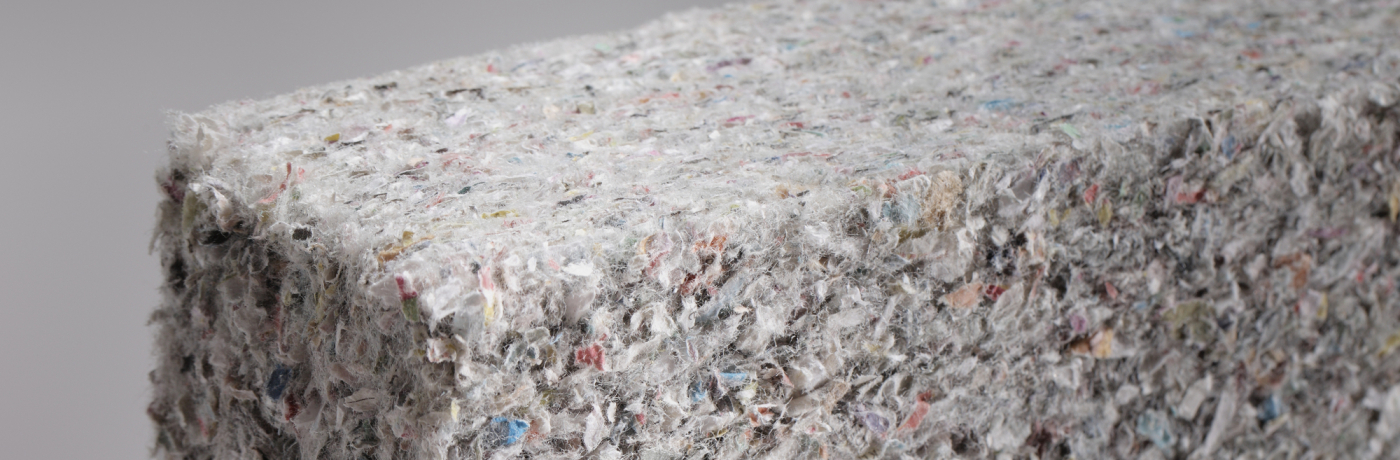
Grass fibre insulation is made from residual material from mown grass and recycled jute fibres originating from nature reserves of Natuurmonumenten (NL) and Natuurpunt Flanders (BE) that would otherwise not be used as animal fodder. It was developed as part of the Interreg project 'Grasgoed - Natural Green as Raw Material'. Nature managers, various government organisations, green companies and startups Newfoss and Grassa work together on this. For example, Dutch roadside grass and residual grass from our nature reserves are processed in the Gramitherm factory in Sambreville, between Namur and Charleroi. Newfoss, together with Rijkswaterstaat, Port of Amsterdam, Province of North Holland and Zuiderzeeland Water Board, has started a consortium -Grassbloxx- to realise a grass fibre insulation factory in Amsterdam by the end of 2023.
Insulation mats made from mown grass - YouTube
NewFoss
15 subscribers
Insulation mats made from mown grass
NewFoss
Search
Watch later
Share
Copy link
Info
Shopping
Tap to unmute
If playback doesn't begin shortly, try restarting your device.
More videos
More videos
You're signed out
Videos you watch may be added to the TV's watch history and influence TV recommendations. To avoid this, cancel and sign in to YouTube on your computer.
CancelConfirm
Share
Include playlist
An error occurred while retrieving sharing information. Please try again later.
0:00
0:00 / 2:40
•Live
•
How is grass fibre insulation made?
Grass fibre insulation is made from mown grass from nature reserves in the regions: Altena-Biesbosch/Vlijmens Ven, Grenspark De Zoom-Kalmthoutse Heide and the Dommeldal and Zwarte Beek Valley.
Gramitherm grass fibre insulation mats contain 72% grass fibres, 20% jute fibres (originating from jute sacks in which cocoa beans were transported to the port of Antwerp) and mineral additives that increase fire safety and prevent mould growth.
Insulation made from Grass - Gramitherm® - #1000solutions - YouTube
SOLAR IMPULSE
30.4K subscribers
Insulation made from Grass - Gramitherm® - #1000solutions
SOLAR IMPULSE
Search
Watch later
Share
Copy link
Info
Shopping
Tap to unmute
If playback doesn't begin shortly, try restarting your device.
More videos
More videos
You're signed out
Videos you watch may be added to the TV's watch history and influence TV recommendations. To avoid this, cancel and sign in to YouTube on your computer.
CancelConfirm
Share
Include playlist
An error occurred while retrieving sharing information. Please try again later.
0:00
0:00 / 1:16
•Live
•
Advantages of grass fibre insulation
- Protection against overheating in summer
- High moisture-regulating capacity; vapour-open
- CO2-positive; stores CO2 during growth
- Easy to process and firmly clamped between rafters and beams
- Good insulation value (0.036 - 0.045 W/mK)
- Recyclable and compostable
Disadvantages of grass fibre insulation
- Strong hay smell
- Fibres are released during processing
Protection against overheating in summer
Grass fibre insulation has a high heat storage capacity
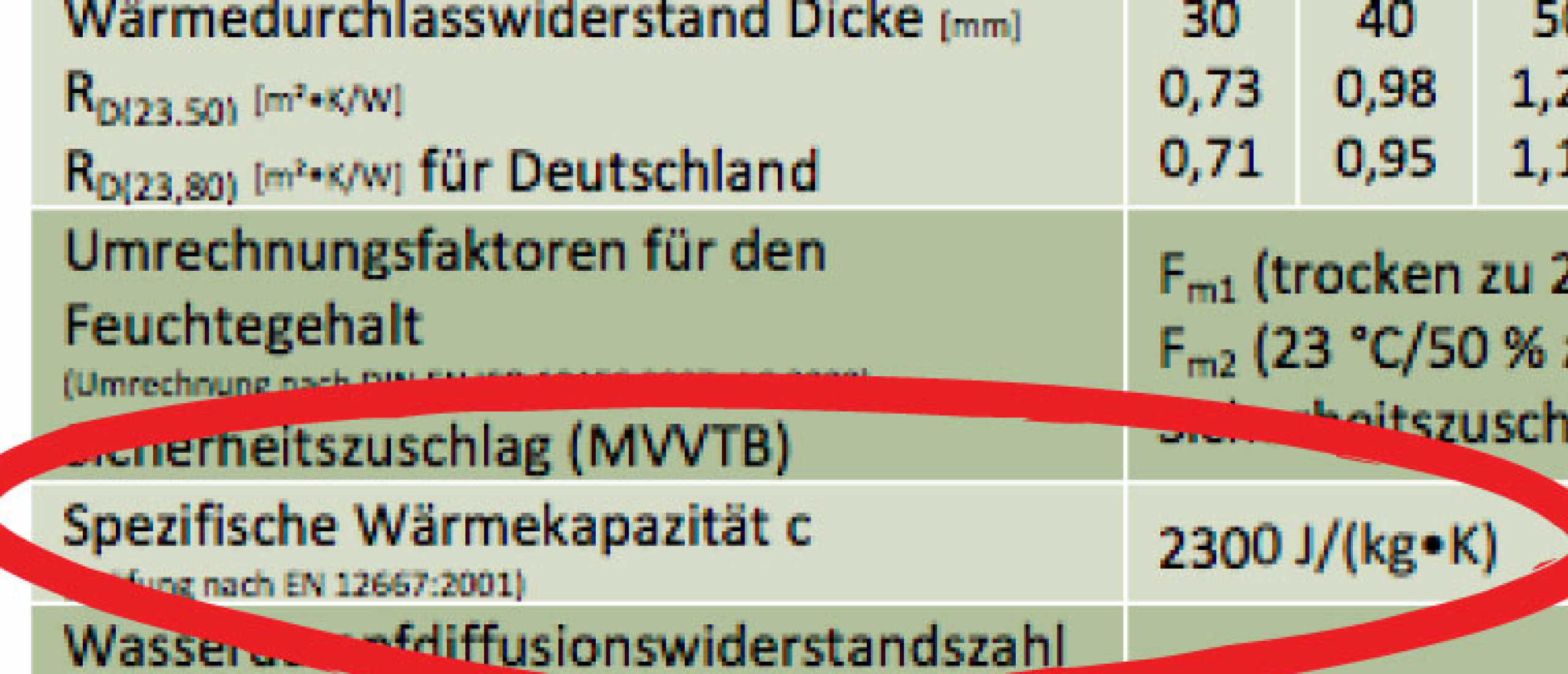
, which supports energy efficiency. This means that the material is able to retain heat, which contributes to reducing energy costs and improving energy efficiency. Grass fibre insulation thus not only offers protection against heat loss in winter, but can also help to prevent overheating during the summer months. In warm climates, the use of grass fibre insulation in walls and roofs can help to keep the indoor temperature comfortable and reduce the need for air conditioning.
CO2-positive
Grass fibre insulation helps to reduce global CO2 emissions. By using grass as an insulating material, the need to use non-renewable resources, such as oil, is reduced. In addition, grass fibre insulation produces fewer carbon dioxide emissions in the production phase compared to other insulating materials.
In addition, it is important to emphasise that grass fibre insulation has a negative CO2 emission. This means that the material absorbs and stores more CO2 than is emitted during production and transport. This is because grass absorbs CO2 from the air during growth and stores it in the plant. When the grass is harvested and processed into insulating material, this CO2 remains stored in the material.
Easy to process
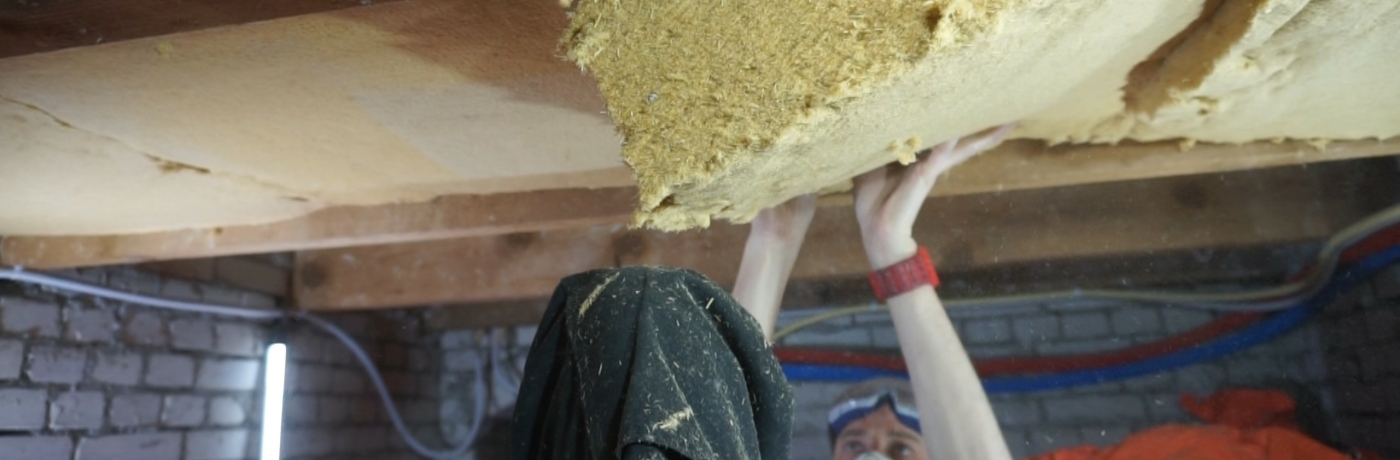
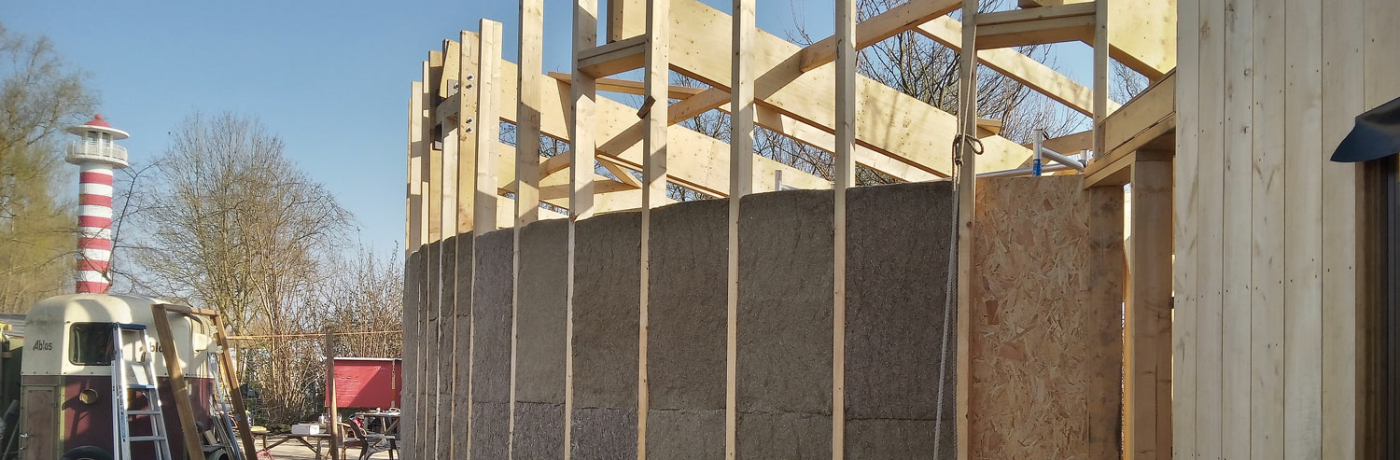
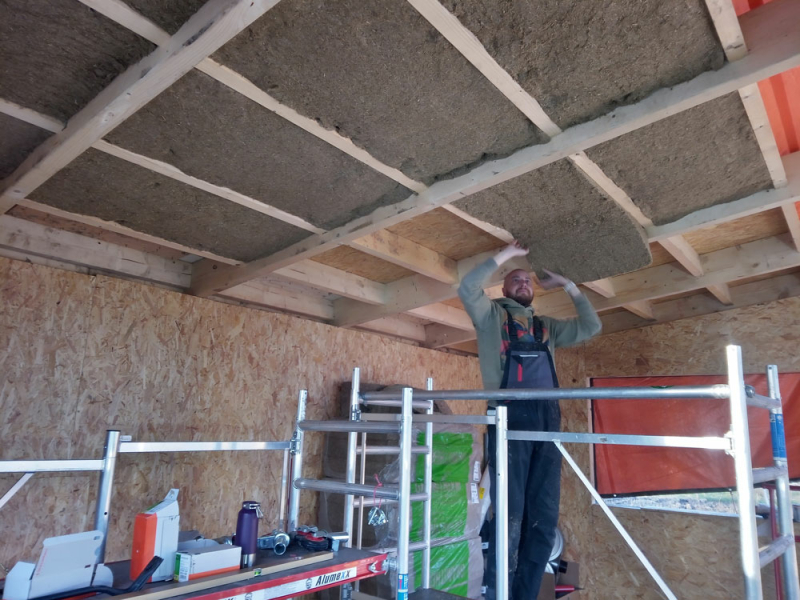
Due to its rigidity, grass fibre insulation can be easily clamped between rafters and beams. If the centre-to-centre distance is 60 cm, then grass fibre insulation mats clamp perfectly.
Excellent insulation values
Grass fibre insulation has excellent insulation values compared to other insulation materials. It retains heat and prevents cold air currents. This results in a comfortable and temperature-controlled environment.
But did you know that grass fibre insulation not only has excellent insulation values, but is also a sustainable choice? The material is completely biodegradable and recyclable. This means that it is environmentally friendly and does not harm the environment.
Strong hay smell
Grass fibre insulation has a strong hay smell. Some find it disturbing, others find it smells like freshly mown grass. The smell usually disappears 4-6 weeks after installation.
Fibres are released during processing
Grass fibre insulation releases fibres during processing and installation. If you are insulating above your head, safety glasses and a face mask are recommended. The advantage is that it mainly concerns larger fibres and less fine dust. In addition, it contains no harmful substances.
Grass fibre insulation: price per m2
The flexible grass fibre insulation mats cost at a thickness of 14 cm:
€ 22.00 per m2