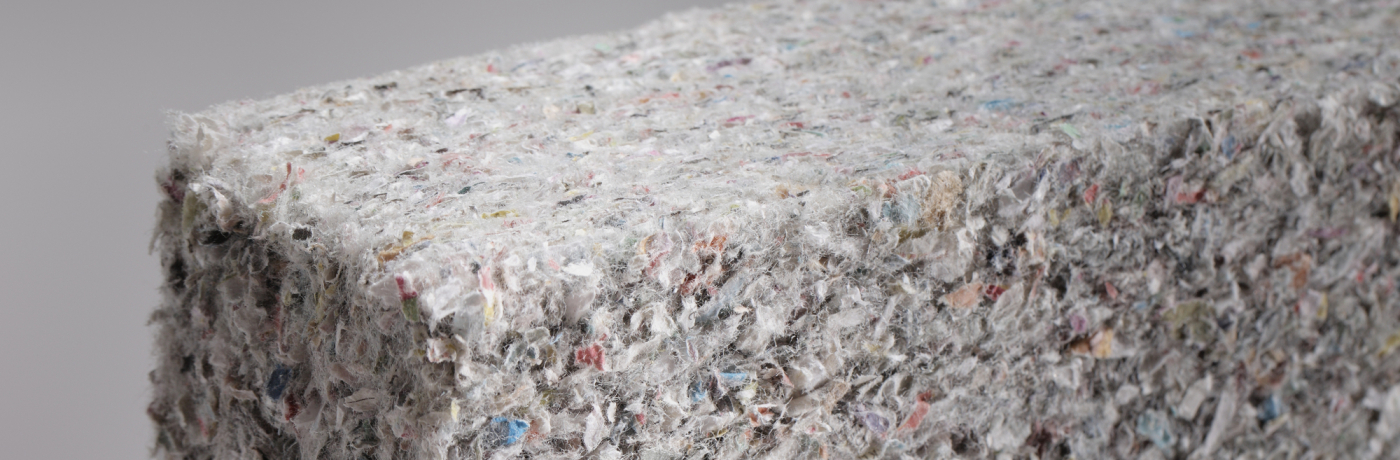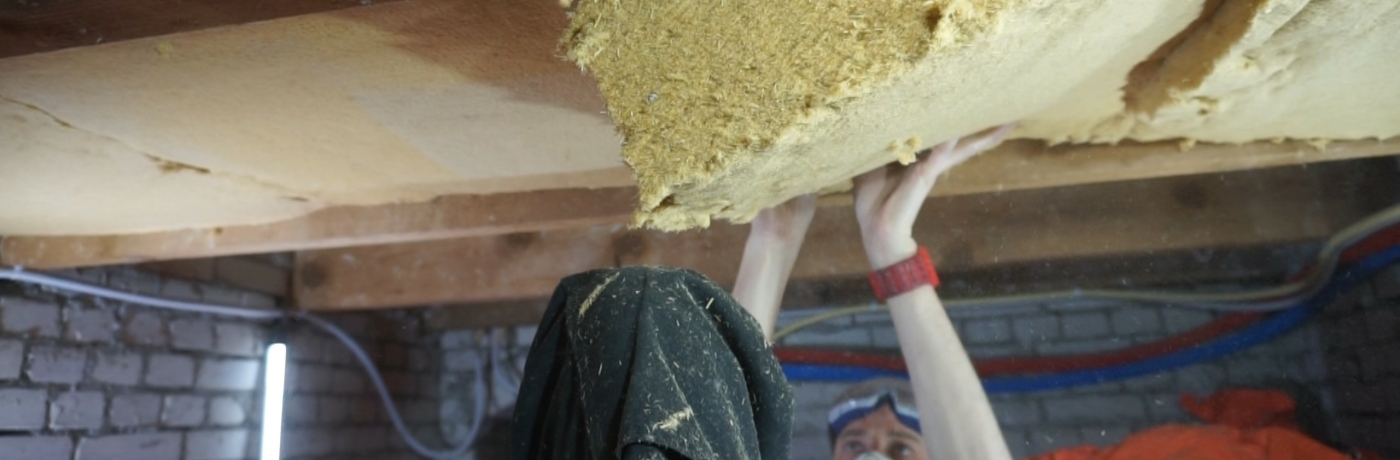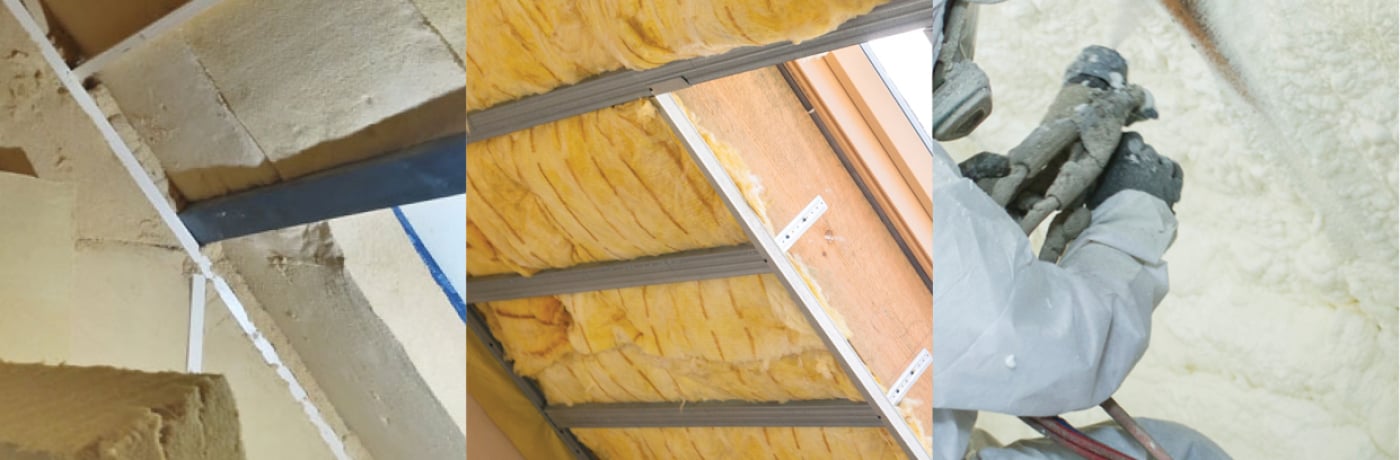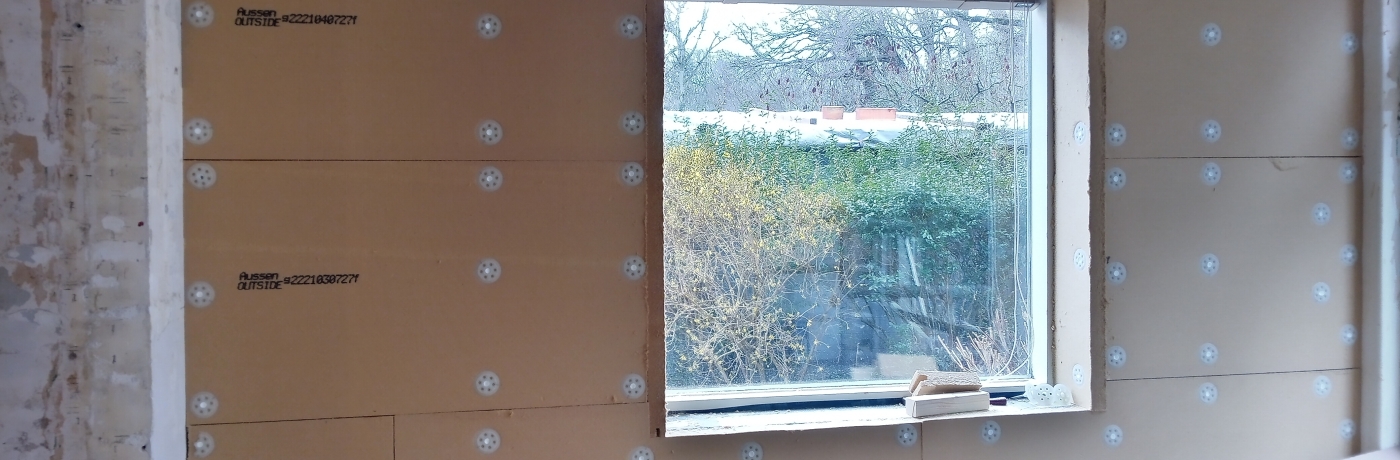
Wood fibre board is a robust ecological insulation material that insulates well in both winter and summer. Wood fibre board is vapour-permeable and has a moisture-regulating effect. It absorbs moisture and releases it again when the air is drier, thus contributing to more stable humidity. Additionally, wood fibre board provides good sound insulation, partly due to its high density and mass. Wood fibre board is the rigid variant of wood fibre insulation mats, which are more flexible. Wood fibre boards can be used in roofs, facades, and floors. It is often used as a finish for walls and facades, as a rainproof sarking, or as floor insulation
under a new screed. And a good number of variants can be directly plastered with clay and lime.
How is wood fibre board made?
Wood fibre board is made from residual streams from sawmills. Wood from sustainably managed European forests is sawn here. The leftover sawdust from woodchips is steamed to extract the fibres. Ultimately, it is compressed into wood fibre board.
The hollow cell structure forms air chambers that retain heat. This same hollow structure can transport moisture.
Wood fibre board should not be confused with wood fibre cement board (also known as cement-bonded wood fibre board), which is much less environmentally friendly due to the addition of cement.
WinterWarm and SummerCool
The high heat storage capacity
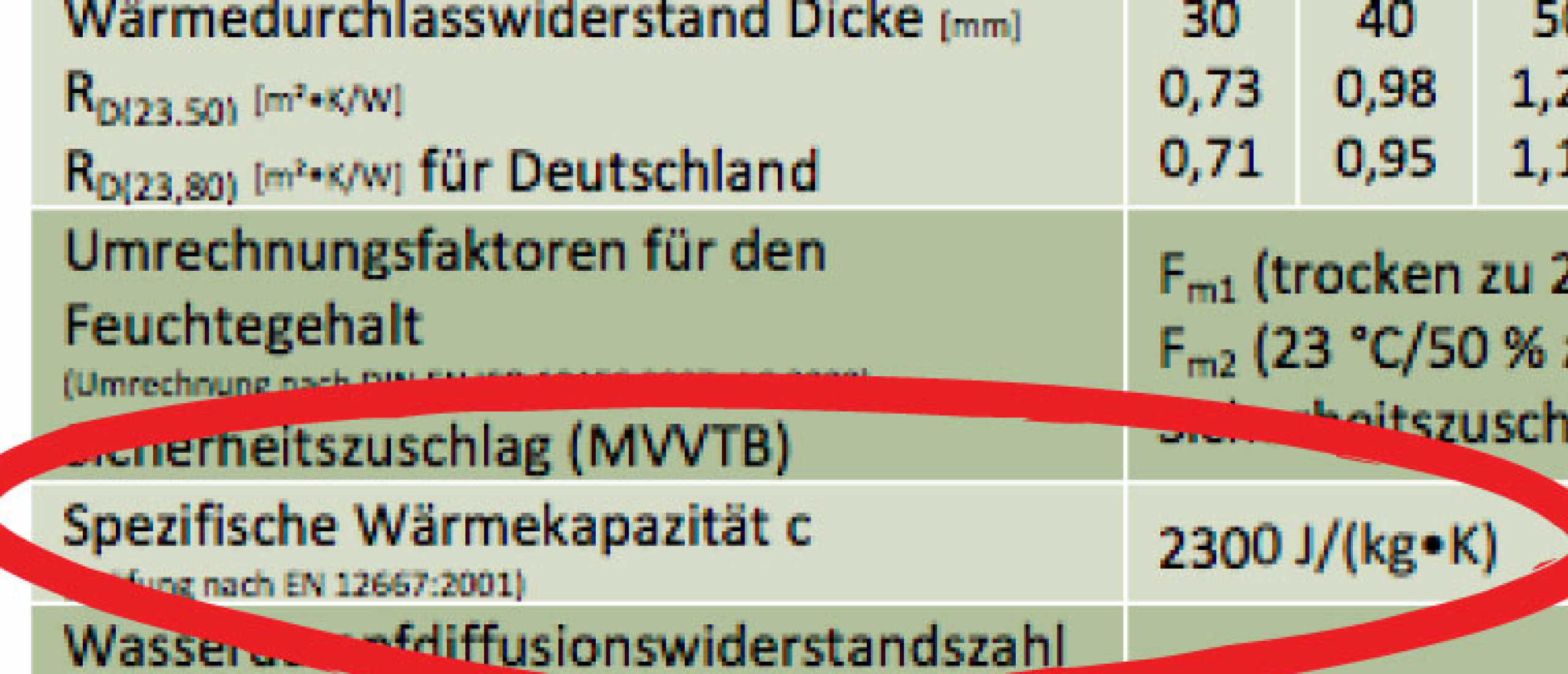
of wood fibre board ensures that it keeps the heat out for a long time in summer. And in winter, it retains the internal heat and gradually releases it as it cools down. The hollow cell structure contains moisture that can transition from water vapour to water. This 'phase transition' consumes energy. In this case, heat remains in the insulation.
Fire class wood fibre board
Insulation materials are classified into European fire classes from A to F. Fire class A represents non-combustible materials, and fire class F represents highly flammable materials. Wood fibre board has fire class E. For a higher fire class, the boards would need to be saturated with impregnating agent.
Wood fibre board vs. plasterboard
Both wood fibre board and plasterboard are finishing boards and can be plastered. With wood fibre board, this can be done with clay and lime. With plasterboard, it can also be done with gypsum. An advantage of wood fibre board over plasterboard is that it also insulates and can therefore be included for the ISDE subsidy. This and other differences between wood fibre board and plasterboard can be read in this article.