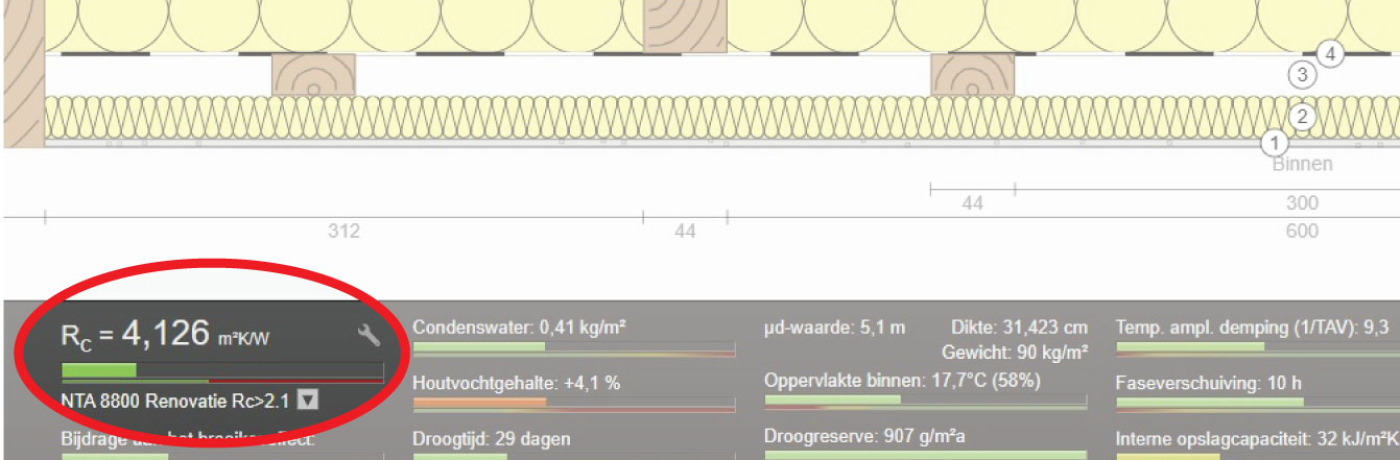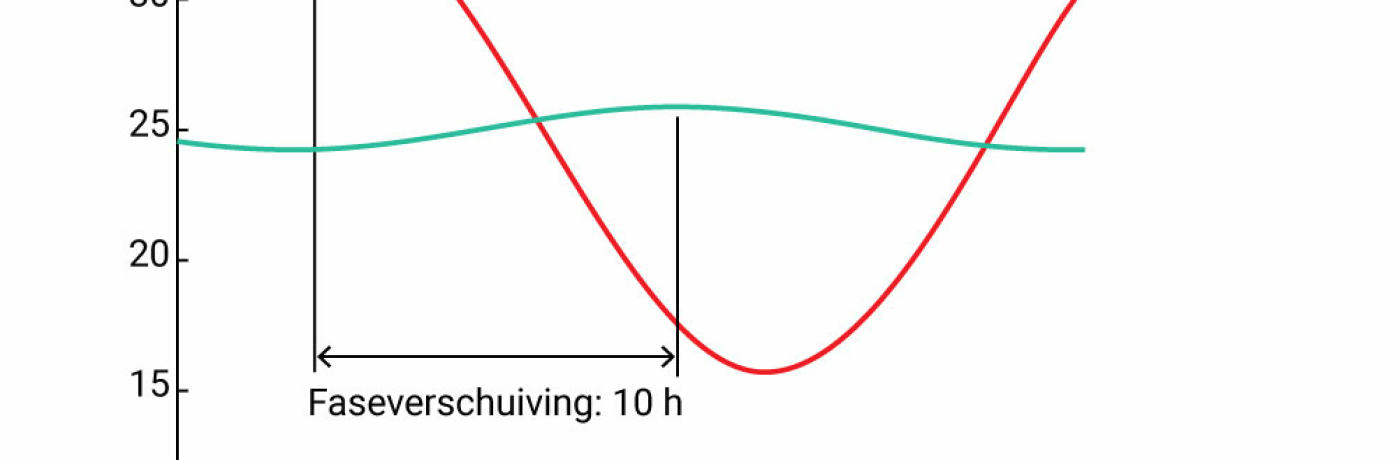
Phase shift indicates how long it takes for heat to pass through a material. Phase shift is the time between the peak external temperature and the peak internal temperature, expressed in hours. This value depends, among other factors, on the insulation thickness, heat storage capacity
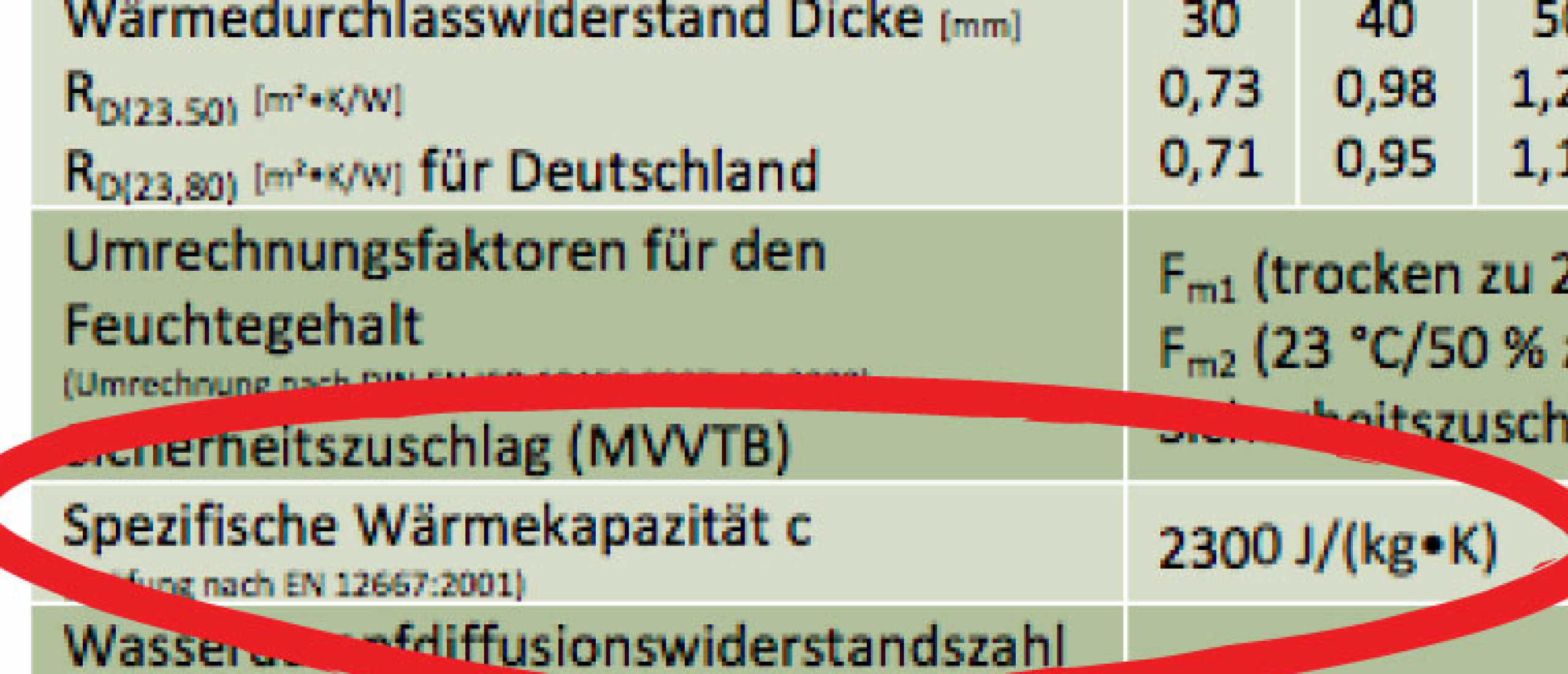
and the density of the insulation material.
_This article was first published on January 26, 2022, and updated on January 25, 2024._
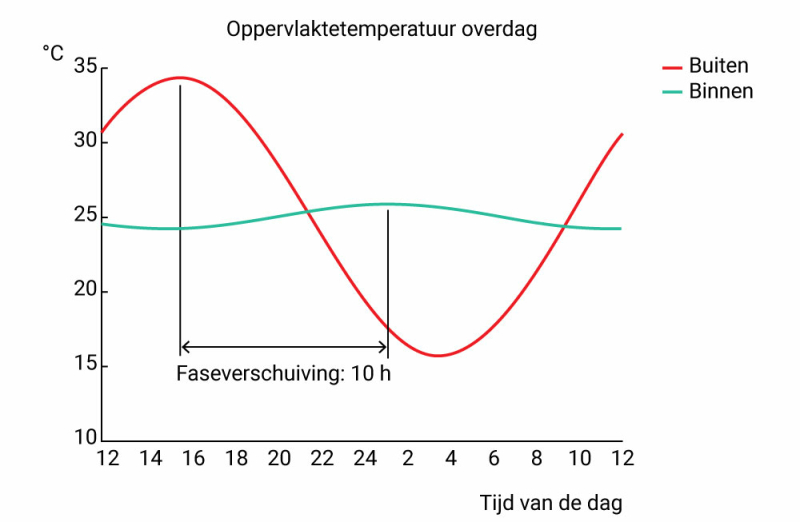
Insulation materials ranked by phase shift*:
9.2 h - Straw blow-in insulation
8.5 -7.5 h - Wood fiber insulation
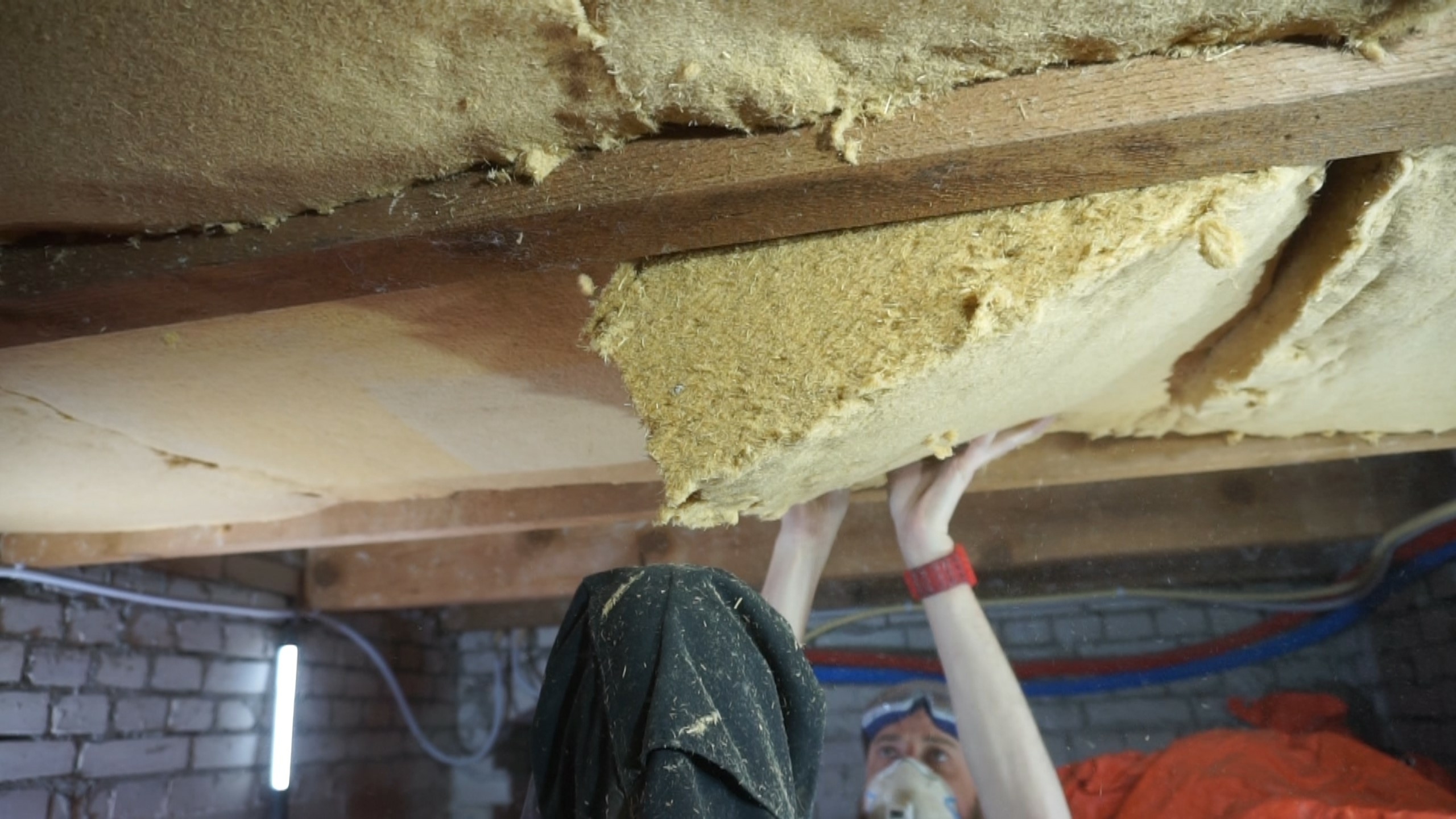
mats (various brands)
7.7 h - Cellulose blow-in insulation (various brands)
7.7 -6.5 h - Wood fiber blow-in insulation (various brands)
6.7 h - Hemp insulation (Thermo Hanf)
5.5 h - Grass fiber insulation (Gramitherm)
4.7 h - Rock wool
4.3 h - Flax insulation (Isovlas)
3.9 h - Cotton insulation (Metisse)
3.9 h - PIR insulation (Isover)
3.8 h - Sheep’s wool (Isolena)
3.3 h - Glass wool
* This indicates how long heat is kept out with an insulation thickness of 18 centimeters (average height of roof rafters).
In combination with a standard pitched roof with roof tiles.
Interior finishing with a single plasterboard sheet with an air gap adds approximately 1.5 hours.
Why is it beneficial for insulation to keep heat out for longer?
- Your roof can reach 80°C in the sun, leading to overheating inside.
- This is due to dark roof tiles and incorrect choices in roof insulation.
- The dark roof tile heats up because of its color, similar to black bitumen on flat roofs.
- Dark roof tiles are common on many roofs and widely used in new construction.
- Indoor temperatures can rise to 35+°C, even if it's not 30+°C outside.
made of glass wool does not keep that heat out for long. The same applies to PIR, which is frequently used on newly built roofs.