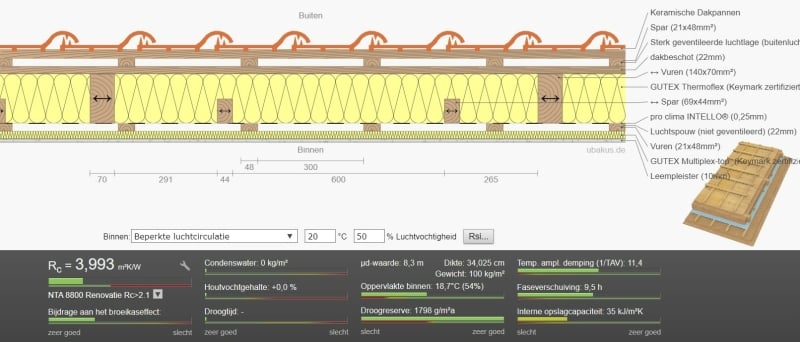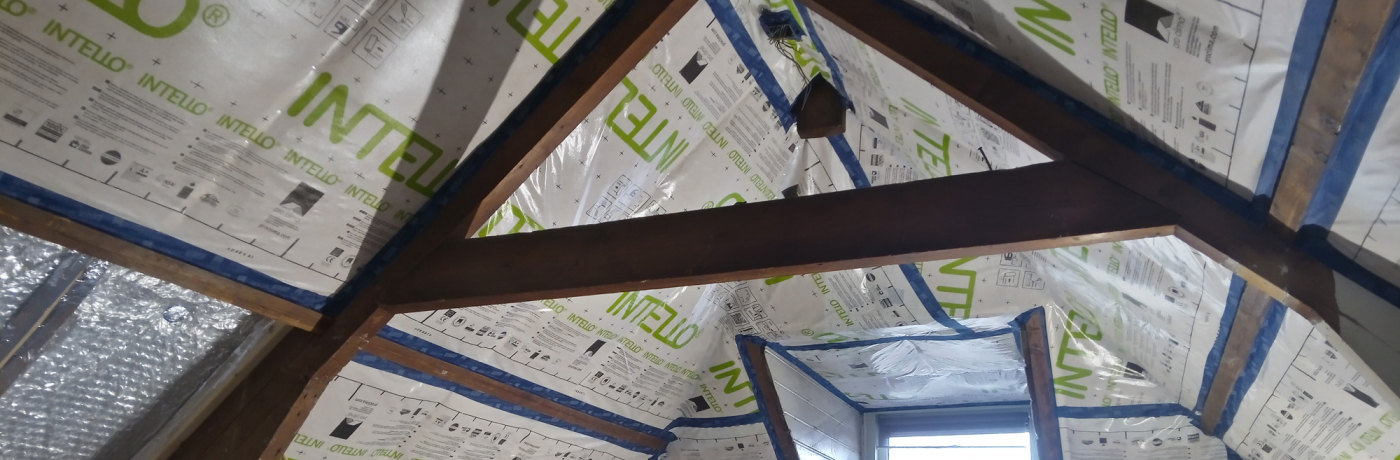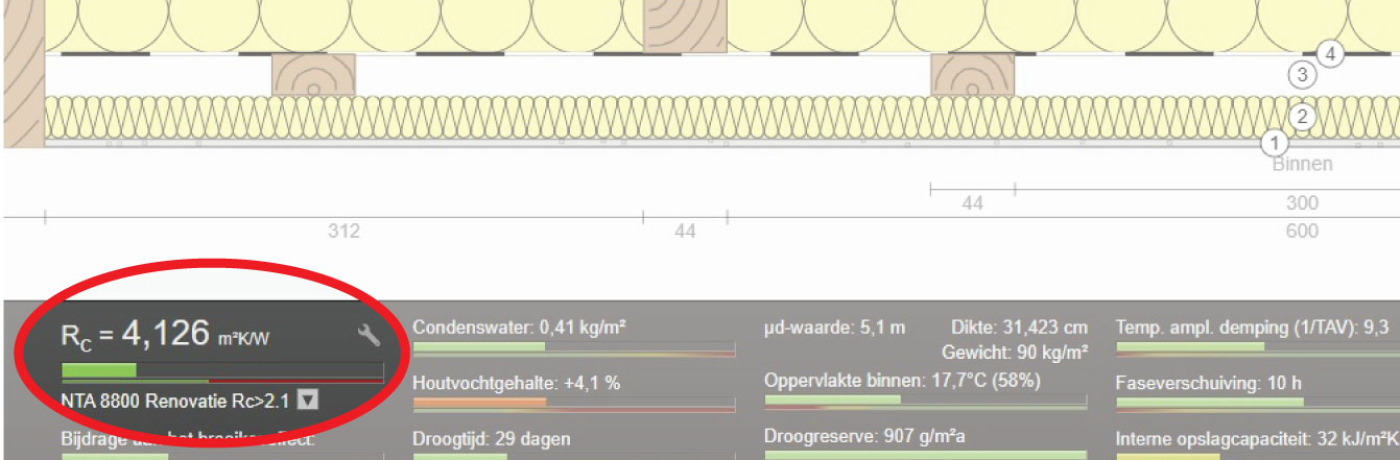
If you're looking to insulate your home, you'll quickly encounter the term 'Rc-value'. At first glance, this value might seem complex and technical. Yet, it's crucial to understand what the Rc-value means, because it largely determines how much heat you lose through your walls, roof, and floor – and thus, also your energy bill.
At Isoleerbewust, I help homeowners daily make the right insulation choices. Through my years of experience advising on and installing biobased insulation, I know exactly how to interpret the Rc-value for your specific situation.
In this article, I will clearly explain what the Rc-value is, which values you need for different parts of your house, and how this impacts your energy bill. After reading, you'll be able to determine which insulation values are optimal for your situation.
What is the Rc-value?
The Rc-value indicates how well a construction (e.g., your exterior wall or roof) insulates. Rc stands for 'Resistance Construction', meaning the thermal resistance of the total construction. The higher this value, the better the insulation. The unit in which the Rc-value is expressed is m²K/W.
For example: an uninsulated cavity wall has an Rc-value of approximately 0.4. The same wall with 14 centimeters of biobased

insulation has an Rc-value of 3.5. This means the insulated wall insulates almost 9 times better.
Minimum Rc-values according to Dutch Building Regulations
For new construction and major renovations, the following minimum requirements apply:
- Roof: Rc ≥ 6.3
- Facade: Rc ≥ 4.7
- Floor: Rc ≥ 3.7
For smaller renovations, more lenient requirements apply:
- Roof: Rc ≥ 2.1
- Facade: Rc ≥ 1.4
- Floor: Rc ≥ 2.6
What does this mean for your energy bill?
The Rc-value directly influences your energy consumption. A higher number means less heat loss and therefore a lower energy bill. Research shows that:
- The first 6-8 cm of insulation provides 60-70% energy savings
- The next 6-8 cm yields an additional 15% saving
- After that, savings become progressively smaller
Calculating the Rc-value
The total Rc-value is determined by adding up all layers in your construction. For a cavity wall, these include, for example:
- Inner and outer leaf (brick)
- Insulation material
- Air gap
- Plasterwork
Insulation thickness and material
Different insulation materials have different insulation values (lambda values). Therefore, for the same Rc-value, you will need different thicknesses:
Biobased insulation (λ=0.038):
- For Rc 3.5: 14 cm
- For Rc 4.7: 18 cm
- For Rc 6.3: 24 cm
Mineral wool (λ=0.035):
- For Rc 3.5: 13 cm
- For Rc 4.7: 17 cm
- For Rc 6.3: 23 cm
PIR/PUR (λ=0.023):
- For Rc 3.5: 8 cm
- For Rc 4.7: 11 cm
- For Rc 6.3: 15 cm
What to pay attention to?
- Subsidy requirements: For the ISDE subsidy, a minimum Rc-value of 3.5 is required for the roof, floor, and facade. For cavity wall insulation, a minimum of 1.1 applies.
- Underfloor heating: For underfloor heating, a minimum Rc-value of 5.0 is recommended for the floor.
- Thermal bridges: The theoretical Rc-value is not achieved in practice if there are thermal bridges, for example, at window frames or balconies.
- Ventilation: Good insulation also requires good ventilation to prevent moisture problems.
Conclusion
The Rc-value might seem complicated, but it is actually a simple measure of how well your house insulates. With the information from this article, you can now determine which insulation values are optimal for your situation.
Whether you are insulating for a lower energy bill or more comfort, the Rc-value is a crucial factor in your decision.
At Isoleerbewust, I help people daily make the right insulation choices. Through my experience, I know exactly which values are optimal in which situation.
Would you like to know which Rc-values are optimal for your home? Schedule a free consultation through our website. Together, we'll review your situation and create a customized plan.