You are looking for affordable and effective floor insulation for your ground floor. Chances are you've come across Tonzon floor insulation and biobased blown-in insulation, in addition to common insulation materials like glass wool.
But what exactly is the difference between these two types of floor insulation? And which should you choose? In this article, we will discuss the pros and cons of both options.
Differences between floor insulation with Tonzon foils and biobased blown-in insulation
Tonzon floor insulation and biobased blown-in insulation do not look very similar. This is because Tonzon consists of reflective foils, while biobased blown-in insulation is made from natural fibers such as cellulose, wood fiber, and straw. However, in terms of price and speed, these two types of floor insulation are quite comparable.
What actually insulates?
To make a good choice, you want to know how well your floor insulation performs. Often, it's still air that insulates well. But you also have heat reflection and something called phase shift.
How Tonzon thermal cushions work
The insulating effect of Tonzon thermal cushions is based on still air trapped between layers of heat-reflective foil. In addition, this air within the thermal cushions is heated, keeping the warmth at the floor level. The result is a warmer floor.
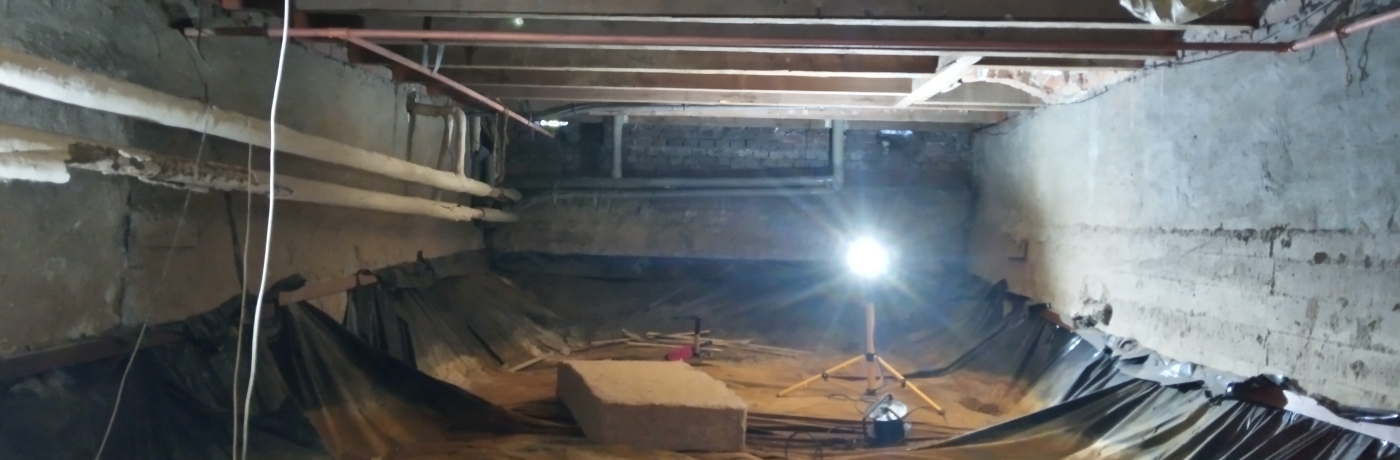
Tonzon floor insulation is suitable for all types of floors, including wooden floors and concrete floors. There needs to be a minimum crawl space height of 35 cm for wooden floors (measured from the bottom of the joist) and 45 cm for concrete floors.
The costs are €55 per square meter for 25 m², decreasing to €41 per m² for floor areas above 100 m². This includes VAT and installation.
These are basic prices for supplying and installing Tonzon foil. These prices can increase due to factors such as: narrow access to the crawl space, a very low or very high crawl space, multiple compartments, pipes, hanging brackets and electrical wiring, and (occasional) water in the crawl space. Additionally, there will be extra cleanup costs if the crawl space needs to be cleared first. However, these factors that increase the price also apply to biobased floor insulation.
Tonzon provides a 10-year warranty on the insulation's performance. It uses very little material and is not much more than a few layers of reflective foil. This also makes it somewhat vulnerable. In practice, the insulation value drops drastically if the foil is damaged, as the warm still air escapes.
In case of damage or improper connection, the insulation value can drop drastically
The effectiveness of Tonzon floor insulation depends entirely on a proper connection of the foil. It is important to prevent warm air from escaping through holes and gaps. If this happens in multiple places, it could be a reason to have the foil replaced. Whether this will happen, we cannot know for sure, as we cannot inspect every part under the floor, but it is good to be aware of this risk.
With the old Tonzon system, the bags hung under the floor. This allowed cold air to reach close to the floor. The latest development from Tonzon is "mirroring," especially between floor joists. The bottom foil layer is pulled taut until it almost forms a mirror. This allows it to achieve an even higher insulation value. It also means installers prefer to install the 3-chamber system and remove the outdated Tonzon floor system.

How biobased blown-in insulation works
The insulating effect of biobased blown-in insulation is determined by the still air between the natural fibers, the high density, and the airtight construction using building foils. The insulation values are also determined by the volume of material and the layered, airtight construction. The fibers are blown in between the floor and an airtight and vapor-retarding reinforced foil supported by wooden battens. This foil ensures that the still air between the natural fibers is not blown away, as there is ventilation in a good crawl space. In addition, the density and heat storage capacity
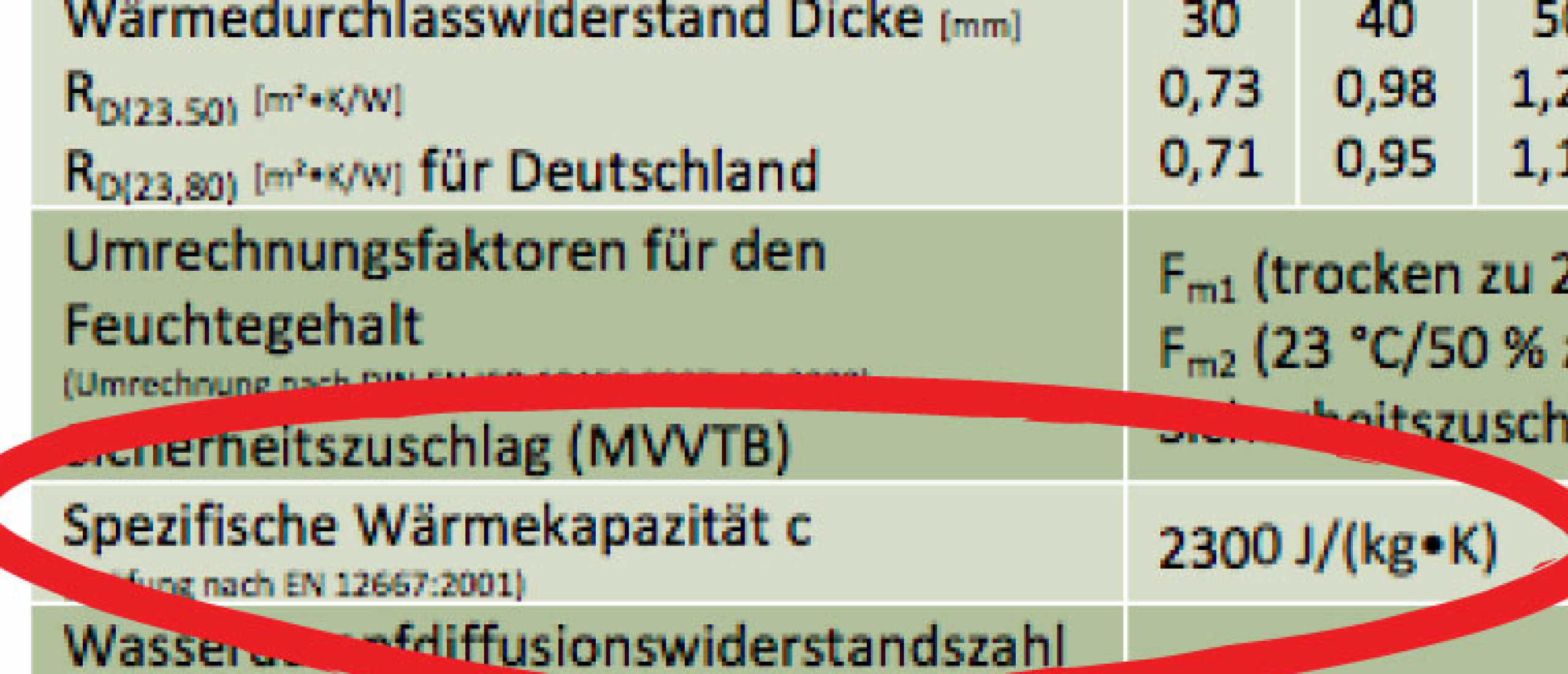
of biobased blown-in insulation ensures that heat passes through the insulating material much more slowly.
Biobased blown-in insulation is suitable for all types of floors: both wooden floors and concrete floors. There needs to be a minimum crawl space height of 50 cm for wooden floors (measured from the bottom of the joist) and 75 cm for concrete floors. For concrete floors, a sub-construction must first be created to which the reinforced foil is attached. This makes blown-in insulation somewhat more labor-intensive for concrete floors.
The costs are €40 per square meter for an insulation thickness of 20 centimeters. This includes VAT, material, and installation. The placement of the foil and battens costs around €20 per m² and the insulation itself €15 per m². For an insulation thickness of 25 cm, you only pay an additional €3.50 per m². For biobased floor insulation, you also receive an extra €2 per m² subsidy on top of the existing subsidy amounts from the RVO's ISDE scheme.
Claims from Tonzon and biobased blown-in insulation
Producers of both types of insulation claim to be environmentally friendly and provide good insulation. Biobased blown-in insulation is CO2-negative, meaning it is beneficial because it stores CO2 as a plant, tree, or crop. Tonzon foil is environmentally friendly because this insulation system uses very little material and thus requires little transport volume. Tonzon claims to be more “ecological” than biobased insulation for this reason.
Installation and costs of biobased blown-in insulation and Tonzon
How Tonzon works
Tonzon is a reflective foil that is attached under the floor. This can often be done in just one day. The speed of installation and affordability make Tonzon popular with many people. Tonzon has its marketing well organized. It is also available at many local DIY stores and building materials stores. It has good instruction videos and manuals available. Tonzon claims that its 3-chamber system can achieve an Rc value of Rc = 7.0 m²K/W.
How biobased blown-in insulation works
Biobased blown-in insulation is seen as a method to truly scale up biobased insulation. It is up to 3 times faster than using insulation mats, and the insulating material fills the "hollow space" beautifully. The construction is the same as with mats, but first you place the foil and then blow in the insulation. With a thickness of 20 centimeters of blown-in insulation between the floor joists, you achieve an Rc = 4.4 m²K/W. And a phase shift of 9.2 hours. That's how long it takes for heat to pass through. So, plenty long enough.
Conclusion
The comparison above is merely intended to highlight certain differences. Furthermore, it is a snapshot in time. Before choosing an option, we recommend that you compare the different products you are considering yourself and thoroughly understand how the products differ.
Disclaimer
We do our best to carefully compile the information on our website. However, it is possible that information may not be complete or that there are accidental inaccuracies on the website. In addition, older information may no longer be entirely up-to-date, so please pay attention to the publication date. At the top of each page