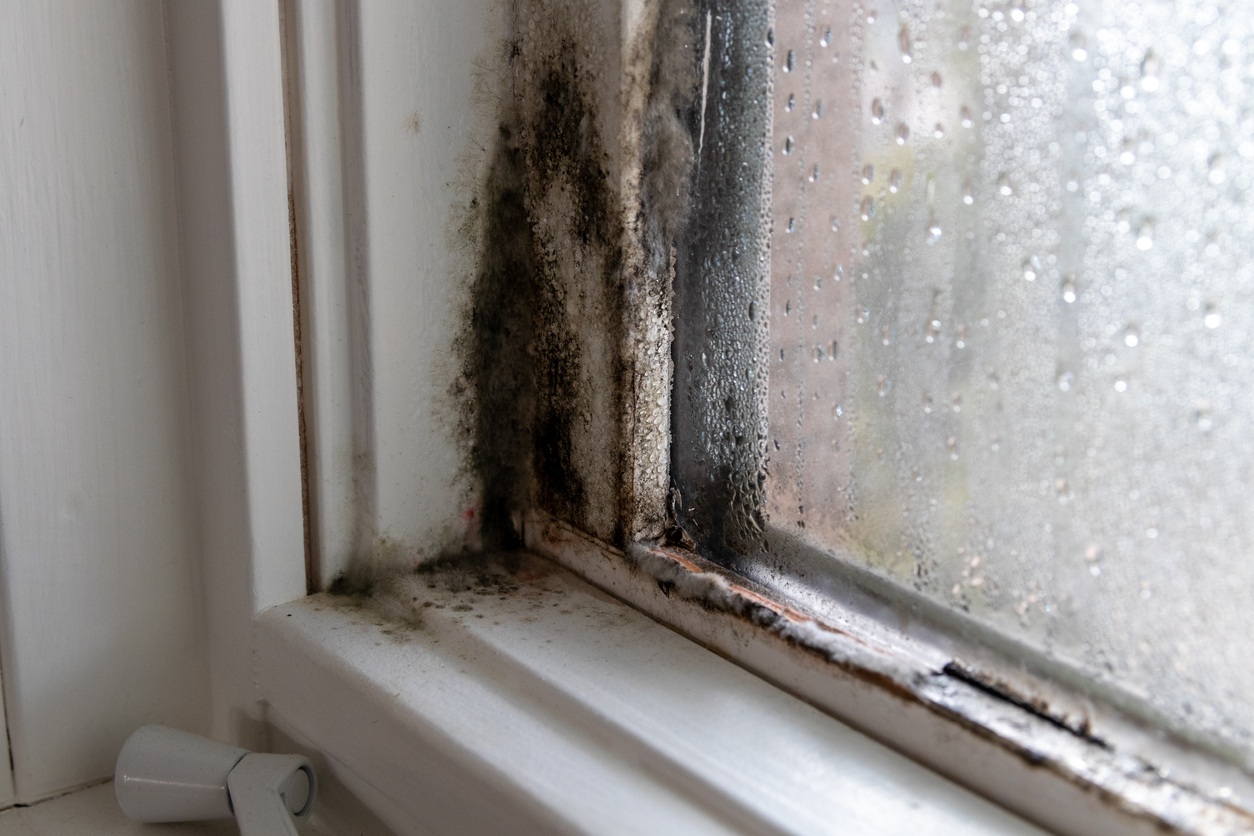
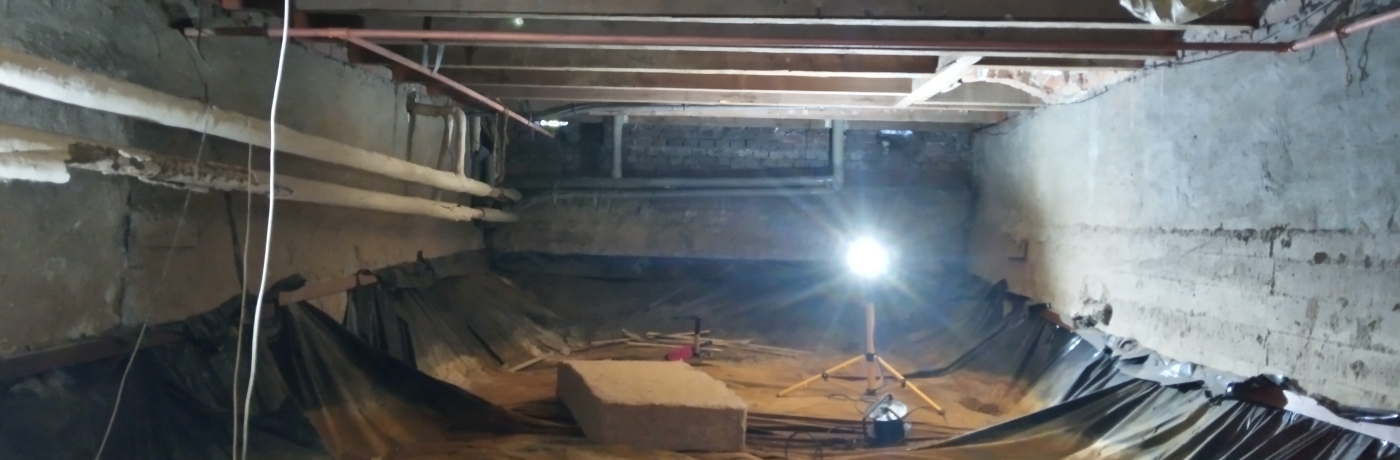
Your crawl space is a dark, damp area that can be a breeding ground for mould if you don't take the right measures.
One such measure is ground foil as a vapour barrier in the crawl space. It is also particularly useful if you have a dirty subfloor and are going to insulate.
What is ground foil in the crawl space?
You're probably wondering if ground foil is necessary in your crawl space?
Ground foil is mainly used when too much moisture enters your crawl space via the ground. You want to prevent this, as it can cause a lot of problems.
In a damp crawl space without ground foil, subfloor insulation or floor insulation
condensation can occur due to the cold air in the crawl space coming into contact with the underside of a warm floor. Condensation can make the floor feel cold and can cause rot to your wooden or concrete floor.
Excessive moisture can also lead to mould growth, which is unhealthy. Suppose you already have glass wool in your crawl space under your floor, without a vapour barrier, then it will retain moisture. This can lead to structural damage to your house, including rotting wood and rusted metal.
Without a vapour barrier, moisture entering your crawl space via the ground can lead to electrical short circuits. This creates a fire hazard. The moisture can also cause your pipes to rust and eventually break. That is why a moisture barrier under the house is so important, as it can help prevent such damage and potential dangers. By installing a vapour barrier, such as ground foil, in your crawl space, the space remains dry and healthy.
If your ground is not wet, you can also place the vapour barrier under the insulation. Use a variable-permeability membrane if you have a damp crawl space at the bottom if you use insulation mats made of, for example, wood fibre insulation
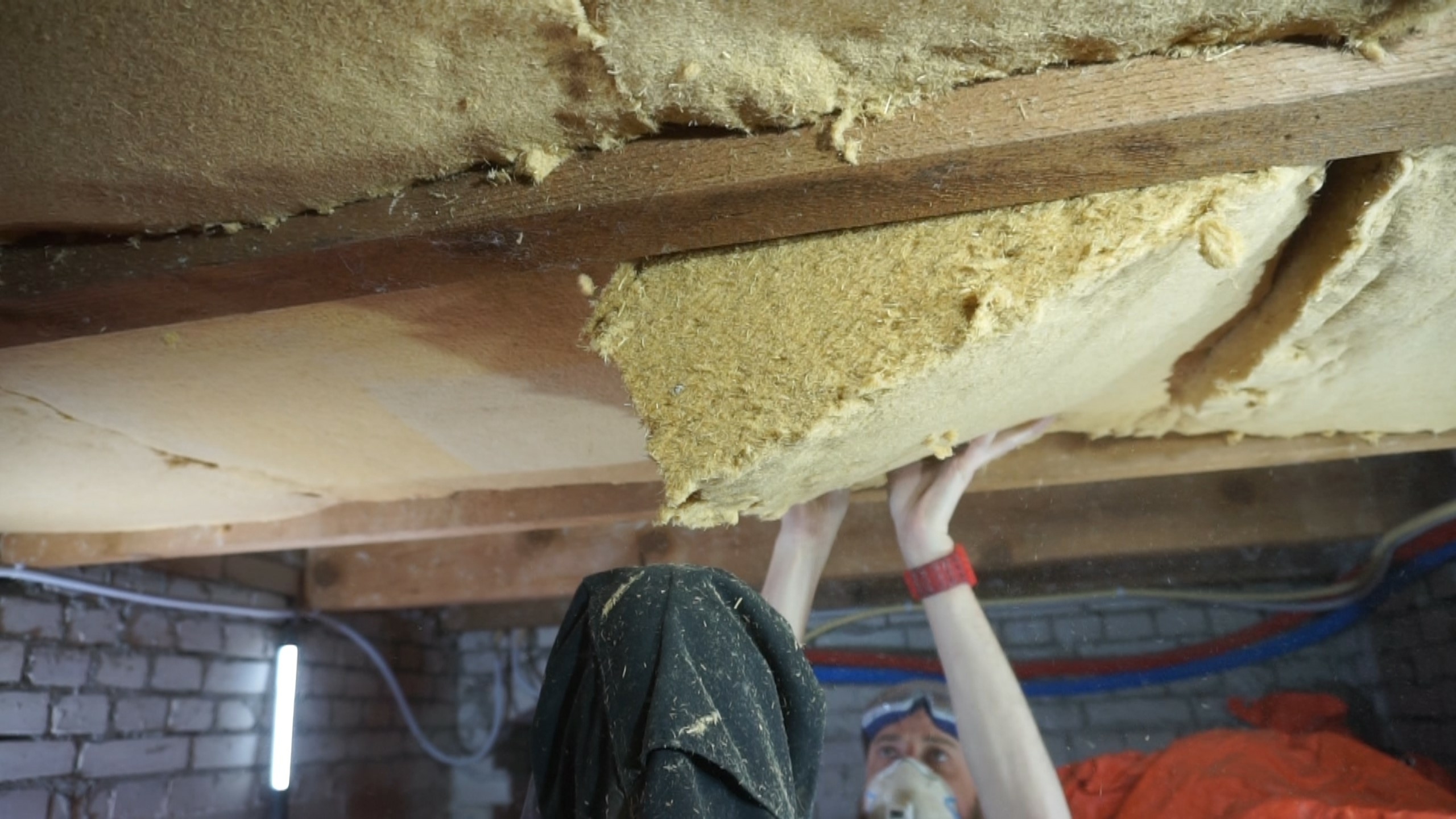
, hemp, flax insulation
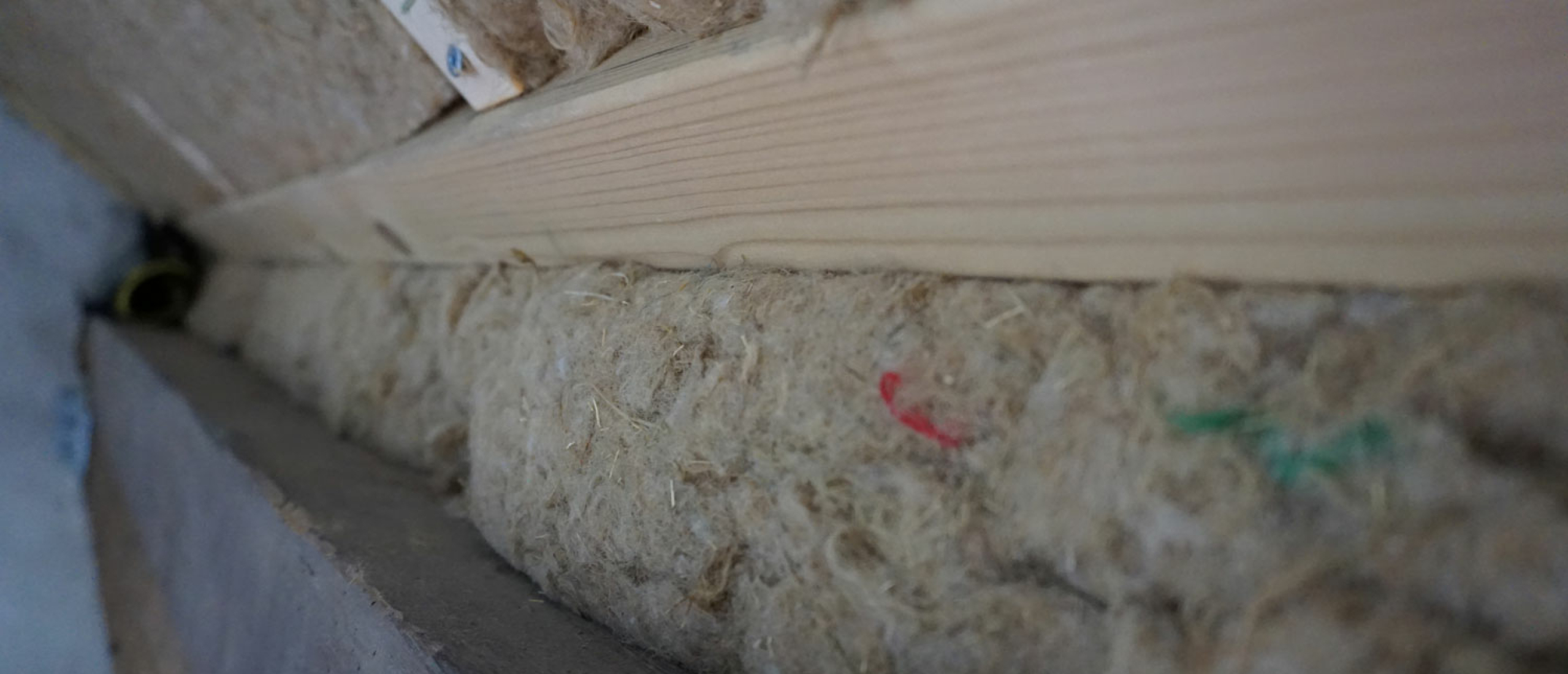
What is flax insulation? Flax insulation is a residual product from the linen industry. Companies like Isovlas produce this type of insulation material. Flax insulation is one of the most well-known natural.. or cellulose. This is a membrane that seals when the moisture load and vapour pressure are high.
Advantages of ground foil
- No more moisture and odour nuisance in your crawl space
- Wooden beams and floors remain well preserved
- No rust or short circuits to steel beams, electrics, metal heating pipes and sewerage
- Warmer floor due to lower humidity in the crawl space
- Fewer pathogens such as moulds
- Radon from the ground is also blocked
Disadvantages of ground foil
- Ground foil or subfloor insulation is not a full replacement for floor insulation
- Sewerage and pipes in your subfloor are more difficult or no longer accessible
- Ground foil is generally made from fossil raw materials