Are you considering insulating your ceiling? Great job! This will lead to a lower energy bill. But you might be wondering: what are the possibilities? Most people talk about insulating a roof, floor, and facades. If you want to insulate the ceiling of, for example, your living room, you have different options for insulation.
In this blog post, we will discuss the various ways to insulate your ceiling, along with the pros and cons of each option.
Insulating your ceiling without demolition
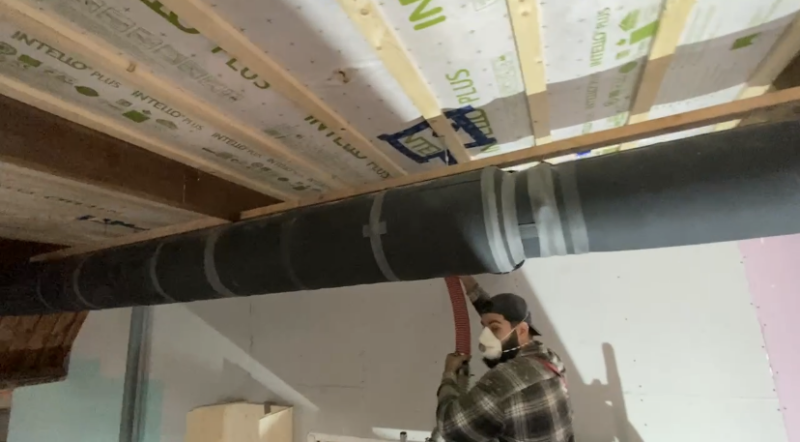
The most obvious solution is to leave your old ceiling in place and blow cellulose, wood fiber, cardboard, or straw insulation into it. Afterward, we seal the blow-in holes with cork stoppers. These can be plastered so that the hole is no longer visible. It is advisable to repaint the ceiling.
A great advantage of blowing in insulation is that the ceiling does not need to be removed for intermediate floors. This is in contrast to insulating with insulation mats such as glass wool, rock wool, etc. You can use various types of insulation materials between the floor joists. For example, flexible insulation mats such as glass wool, rock wool, wood fiber, etc. The disadvantage of insulation mats is that you always have to demolish the ceiling, even for intermediate floors. You then have to dispose of the demolition waste and subsequently rebuild and finish it to get a smooth ceiling.
You can blow in biobased insulation from underneath or above. From underneath, you will have holes in your ceiling where cork stoppers will be placed, which you can then plaster over. One hole is made between each floor joist. Or, you can have it blown in from above. Often, people remove a strip of laminate or a plank along the length of their house so that you don't see any of the holes in the subfloor.
Cellulose, wood fiber, and straw also provide good sound insulation. Good thermal insulation is not automatically good acoustic insulation. Pay attention to the Rd-value, sound insulation, but also density and mass, which ensure better sound damping.
Insulating a flat roof
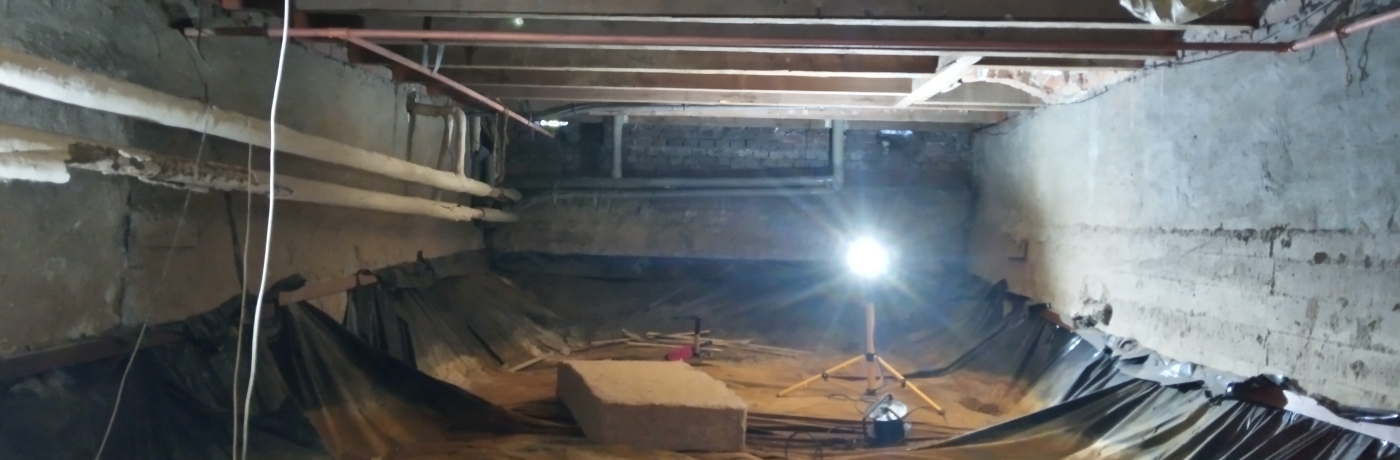
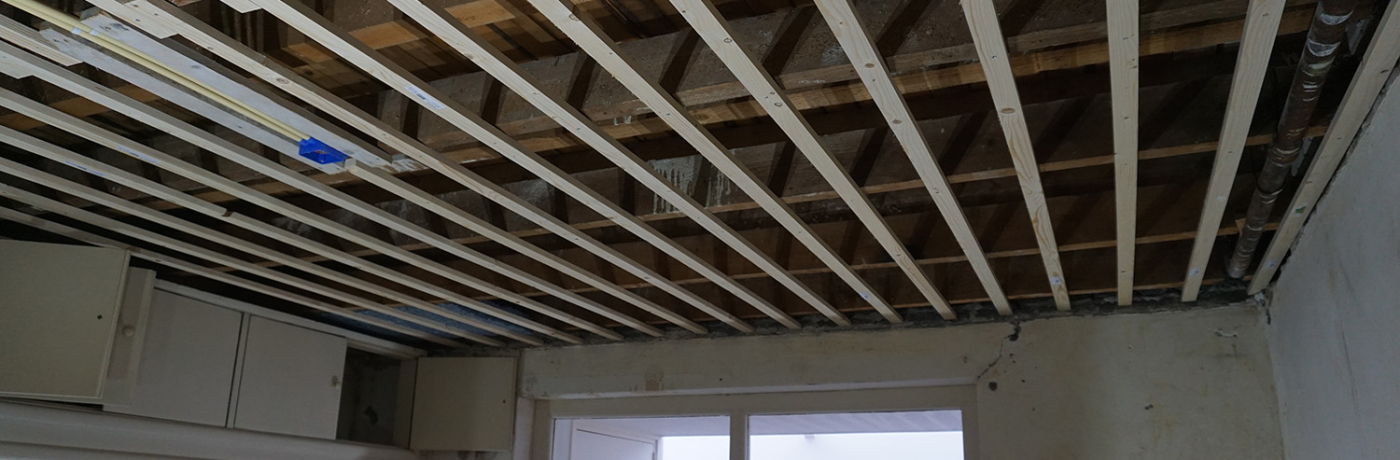
For a flat roof, the recommendation is to install a climate membrane. This is done by removing the existing ceiling, stretching climate membrane with battens, insulating between the floor joists, and then rebuilding. This is a good option if you have a wooden floor. The plasterboards with plaster on them, or plaster on reeds in older houses, are then demolished. This creates a lot of waste and causes a lot of dust in the house. Therefore, it is mainly done during major renovations before people move into their new home.
When reinstalling the ceiling, you can opt for rigid wood fiber board
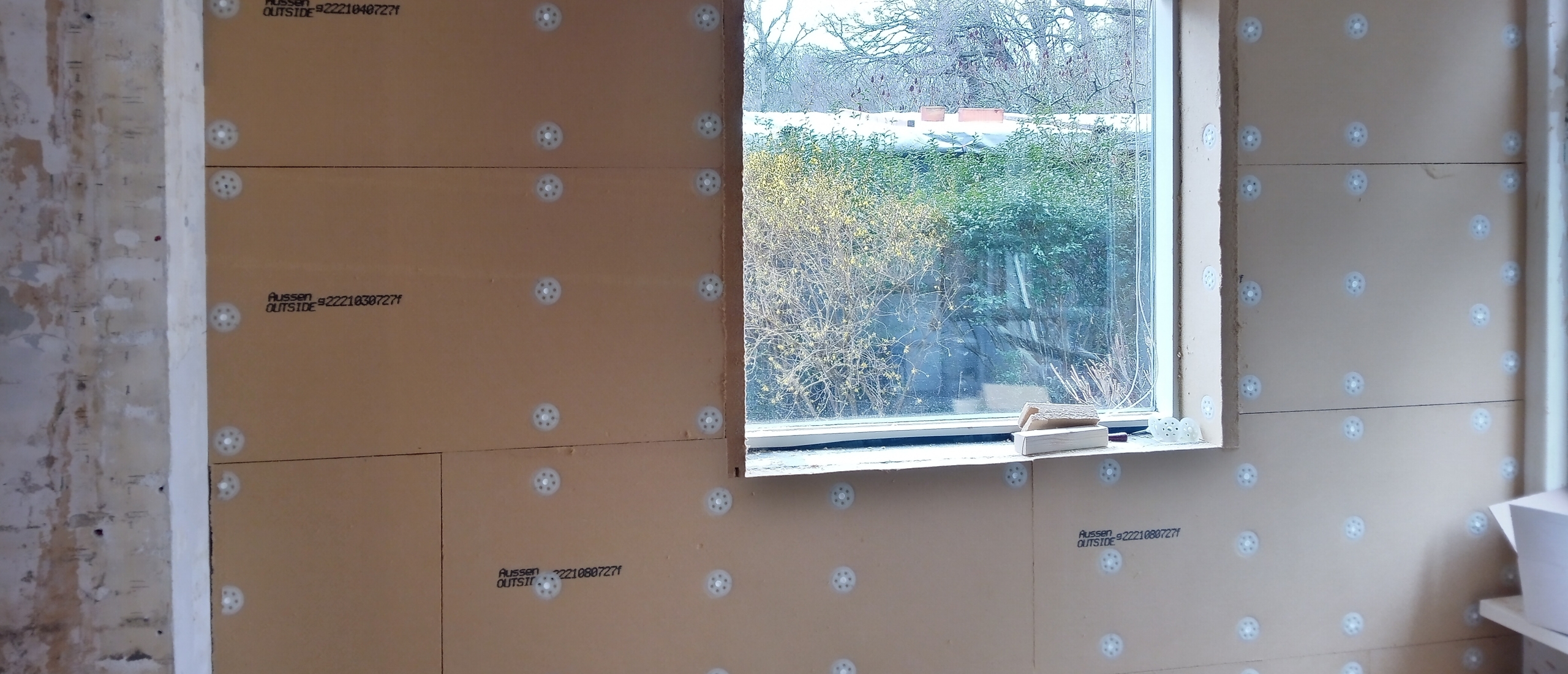
instead of plasterboard. This provides additional insulation as opposed to plasterboard. You can plaster this board with clay, lime, or natural lime plaster.
Attaching a rigid insulation board directly to the ceiling or floor
A third option using rigid insulation panels is mainly applied to concrete floors. These compression-resistant panels can be attached to the underside or top side of the floor. This is now often done with synthetic insulation panels but can also be done with compression-resistant ecological insulation panels such as wood fiber panels.
Does it make sense to insulate your ceiling?
Ceiling insulation is done for thermal comfort, to dampen sound, or both. You can apply it to a flat roof, the ceiling between you and your upstairs neighbors, or in the intermediate floors of your house.
> Note: when blowing insulation into a flat roof, a climate membrane must still be stretched on the warm side. Which can then be finished.
For example, between your living room and the bedrooms - where a window is always open, even in winter. Or your attic floor or attic floor to keep out cold and heat.
So, in some cases, it does make sense. But not always. Consider your goal with insulation beforehand. For example, ceiling insulation to prevent heat loss makes less sense between two heated floors. For instance, in a cellar where it never gets colder than 16 degrees, even with severe frost.
Ceiling insulation has recently been increasingly applied to thermal compartments. Here, for example, you insulate the floor between the living room and the bedrooms. This can easily be done with hollow wooden ceilings (also known as hollow wooden beam ceilings). With a concrete floor, this is a different story.
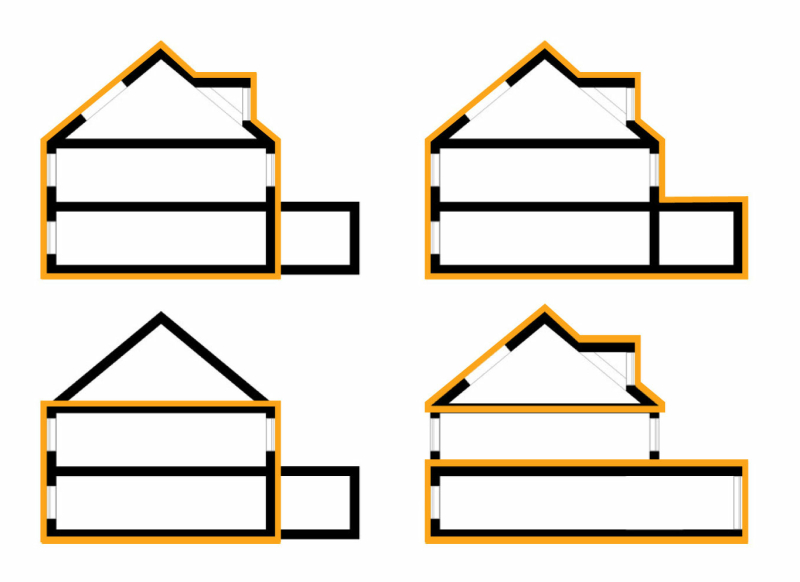
For example, you can think of the following thermal compartments:
• living area without garage (top left in image)
• living area with garage (top right)
• living area (bottom left)
• living area with extension and attic as two separate protected volumes (bottom right)
In this case, heat from the living room is not lost to the colder bedrooms above.
If you choose not to insulate the facades of bedrooms (where you always want a window open), then first carefully inventory your heating, cooling, and ventilation needs. After all, you insulate not only to keep heat in the house but also to keep it out during the warmer summer months.
How can I insulate my ceiling?
You have just decided to insulate your ceiling and look up. Now you might be asking yourself: “but how?”
With a wooden ceiling or wooden beam ceiling, people often think of demolishing the ceiling and insulating between the beams. But in that case, there are even more options with much less mess and dust. For a concrete ceiling or concrete floor, different principles apply. Below, I will cover a number of options, including the suitable type of insulation material. The best choice depends, among other things, on the type of ceiling.
What is the best ceiling insulation?
What the best option is for you depends on the type of floor or ceiling. Do you have a wooden floor? Then the fastest and easiest way is to blow in cellulose, wood fiber, cardboard, and straw. You don't have to demolish the ceiling and dispose of the waste.
If you have a concrete ceiling or concrete floor, rigid insulation panels on the top or bottom are easiest. Otherwise, you would have to create a sub-construction in the case of non-compression-resistant insulation materials. Please note that in the case of a flat roof with bitumen on the top side, it is best not to insulate too thickly with compression-resistant insulation panels on the underside. This is due to the risk of internal condensation. In this case, ask a professional for advice.
When insulating a ceiling in damp rooms, it is advisable to place a climate membrane on the underside so that little or no moisture enters your ceiling.
What does it cost to insulate your ceiling?
This depends on which method of ceiling insulation you choose. Is it just about blowing insulation into an intermediate floor? Then this costs between €30 and €50 per m2. The costs per m2 decrease with more square meters of surface area.
Must the existing ceiling first be demolished